


Low-Cost Home Construction Materials can reduce the overall cost of building a house when they are selected for the right application and installed correctly. The cheapest material is not always the most economical choice over the life of a building. Durability, local availability, labour requirements, transportation, maintenance and structural suitability can all influence the final cost.
For Indian homeowners, materials such as fly ash bricks, concrete blocks, AAC blocks, locally available stone, economical flooring and suitable roofing systems can provide different ways to control construction expenses. This guide explains which materials can help reduce costs, where they work best and how to balance initial savings with long-term performance.
Quick Answer
Low-Cost Home Construction Materials include economical options such as fly ash bricks, concrete blocks, AAC blocks, locally available materials, cost-effective flooring and suitable roofing products. The best choice depends on local availability, structural requirements, labour and transportation costs. Comparing the total installed cost, rather than only the purchase price, is the most reliable way to identify genuine construction savings.
Best Low-Cost Home Construction Materials in India
1. Bamboo
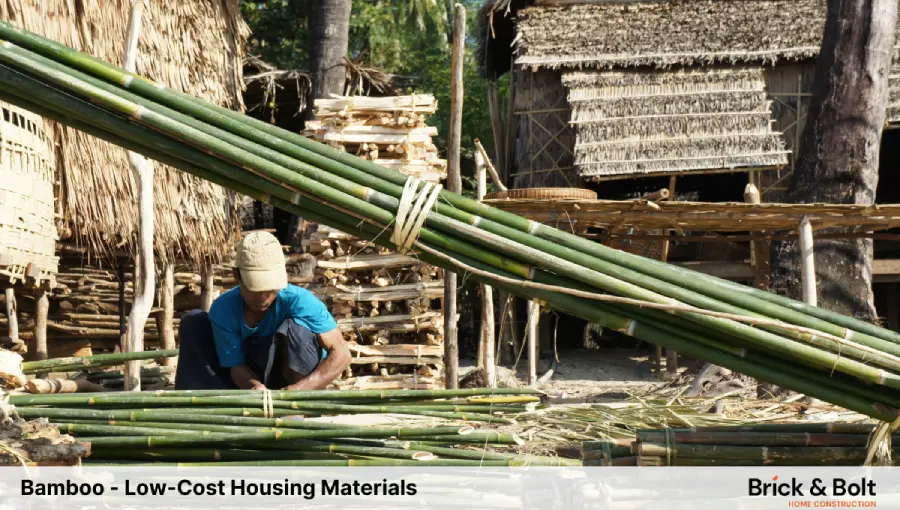
Bamboo is one of the most significant crops in India. The average yearly production of bamboo in India is 3.23 million tons. But no one knows the beneficial use of bamboo as a construction material. Some of the rural areas of countries in Asia and Africa are still constructing bamboo homes. Bamboo is a low-cost, low-weight and durable material compared to other materials. However, you should take some precautions when using bamboo in construction, such as treating it with appropriate chemicals to make it termite-resistant. Because its fibres run axially or along the length of the pole, bamboo has been discovered in some studies to have a stronger tensile strength than steel. This makes bamboo a carbon-smart substitute for steel structural members or rebar. People use advanced bamboo sheets as an alternative to housing steel sheets for roofing purposes in homes.
2. Fly Ash Bricks:
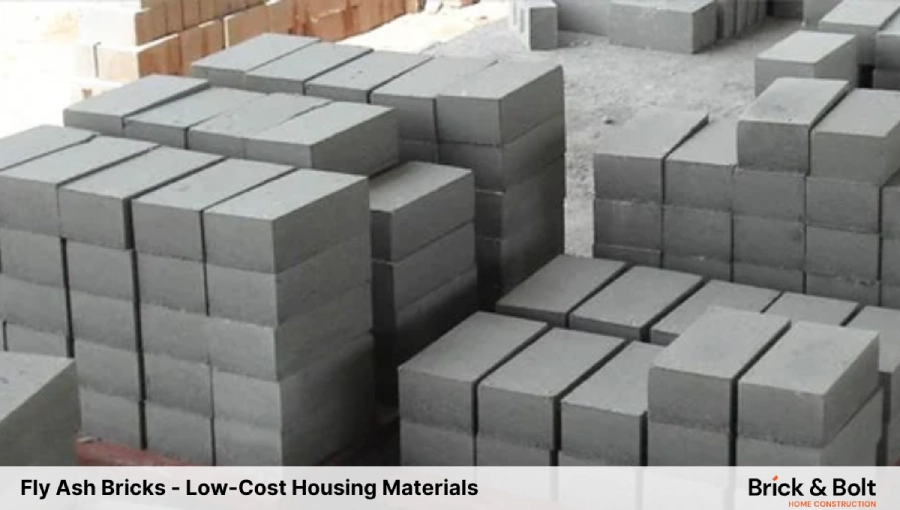
For Home construction, you need to choose the best quality bricks thus Fly ash bricks are high-quality bricks with lighter weight than clay bricks. Fly ash bricks are less porous and absorb less water to reduce dampness or other attacking properties from walls. The main advantages of fly ash bricks are that they are cost-efficient, eco-friendly, fire-resistant, and lightweight construction materials. Using fly ash bricks, you can save money with immense benefits.
3. Hollow Concrete Blocks:
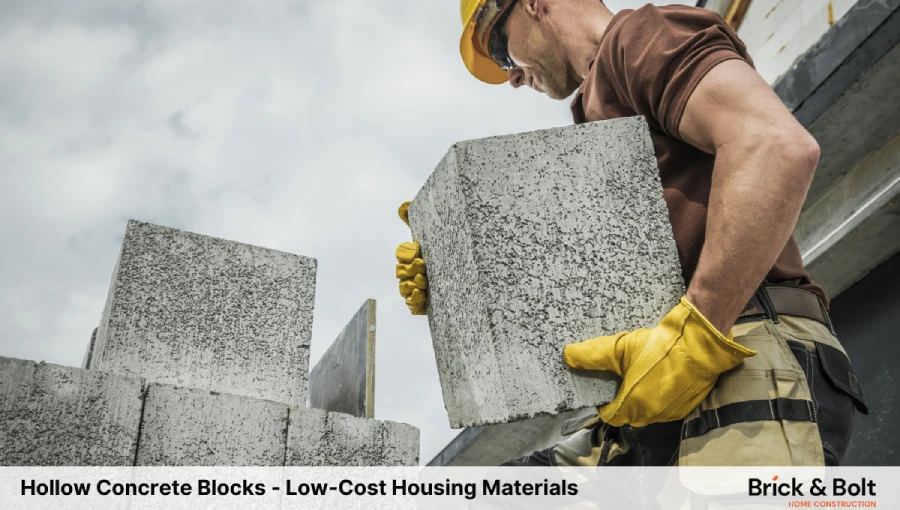
The hollow concrete blocks are one of the most beneficial low-cost building materials. Hollow concrete blocks are precast concrete blocks with open spaces or cavities in their interior. They are made by pouring concrete into a mould shaped to form the block’s exterior surface, leaving the interior hollow. Insulation, electricity, plumbing and other utilities use hollow concrete blocks. Hollow concrete blocks are widely used in buildings, railroad infrastructure, and other large construction projects. Hollow concrete blocks have various advantages, such as being cost-effective, eco-friendly, highly durable and requiring less time to work with.
4. Filler Slab Materials:
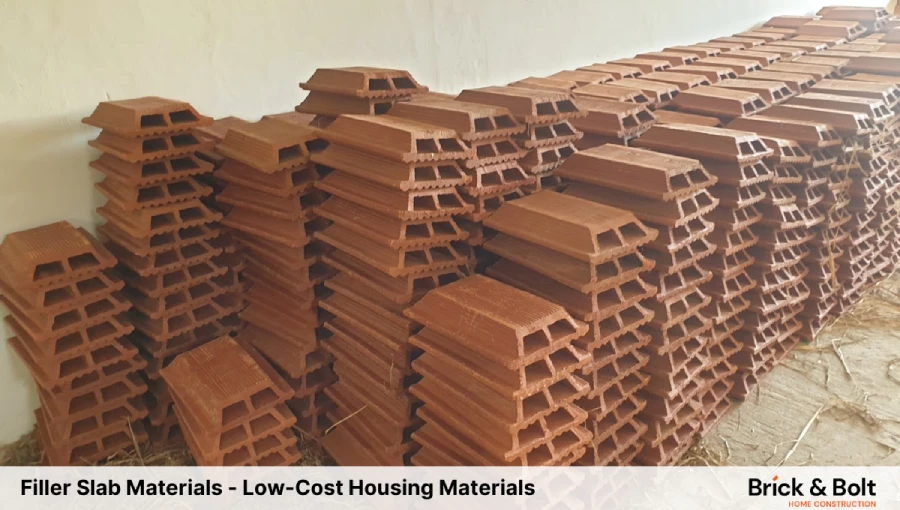
Filler slab materials, also known as lightweight aggregate, are a mixture of sand-sized particles made from various resources, such as crushed stone, glass, and slag. They are used in the production of concrete, as they help to reduce the overall weight of the concrete mixture while still providing structural strength. The main benefits of filler slab materials are that they can be used in a wide range of applications, including in the construction of buildings, highway overpasses, and other large-scale infrastructure projects.
5. Prefabricated Materials:
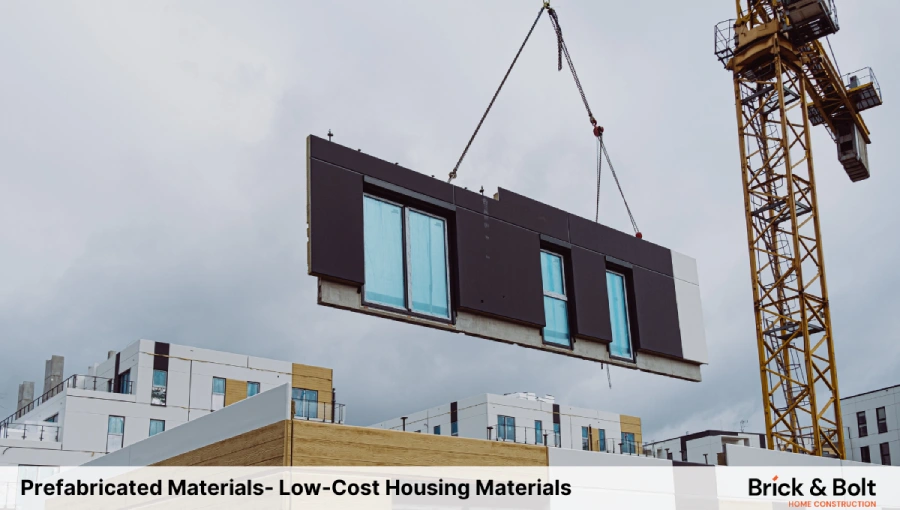
Prefabricated materials are made in a closed place or factory to protect them from exterior elements. They include doors, windows, and floor panels. A significant advantage of prefabricated materials is that they can use recycled materials. Prefabricated materials are eco-friendly construction materials that make construction work easier and faster and are highly durable.
6. Compressed Earth Block:
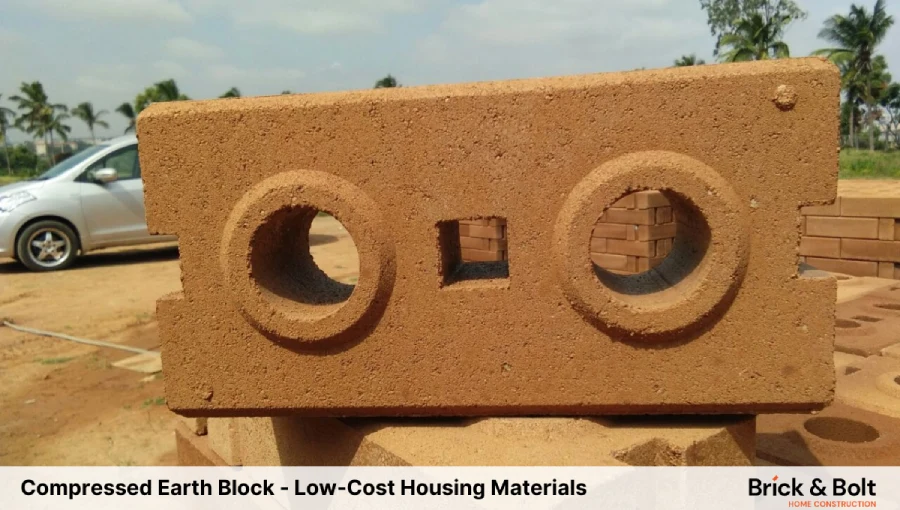
Compressed earth block mixes dry inorganic subsoil, clay, sand and aggregate. It requires dampening and mechanical pressing at high pressure. If you use a chemical cement binder along with these products, you will get a compressed stabilised earth block, which is highly water resistant. The main advantages of compressed earth blocks are fire resistance, insect resistance, mould resistance, temperature control, etc.
7. Precast Concrete Panels:
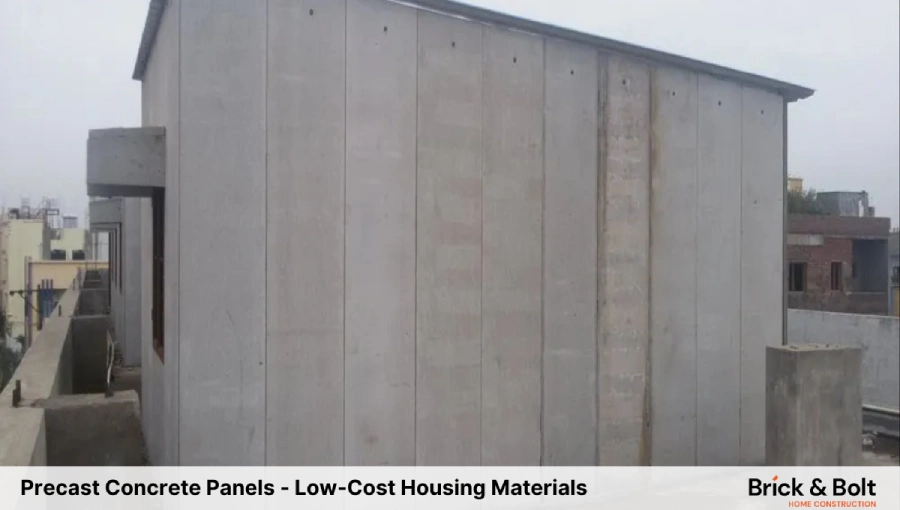
Precast concrete panels are prefabricated, reinforced concrete elements designed for easy installation and cost-effectiveness. These panels can be used in various construction projects for exterior and interior walls, floors, and ceilings. They provide strength, durability, and fire resistance and can be customised to suit specific project requirements. Precast concrete panels are built off-site in a controlled environment, which helps to minimise waste, increase productivity, and ensure consistency in quality. They are often used in multi-unit residential, commercial, and industrial buildings.
8. Glass Fibre Reinforced Gypsum Panel:
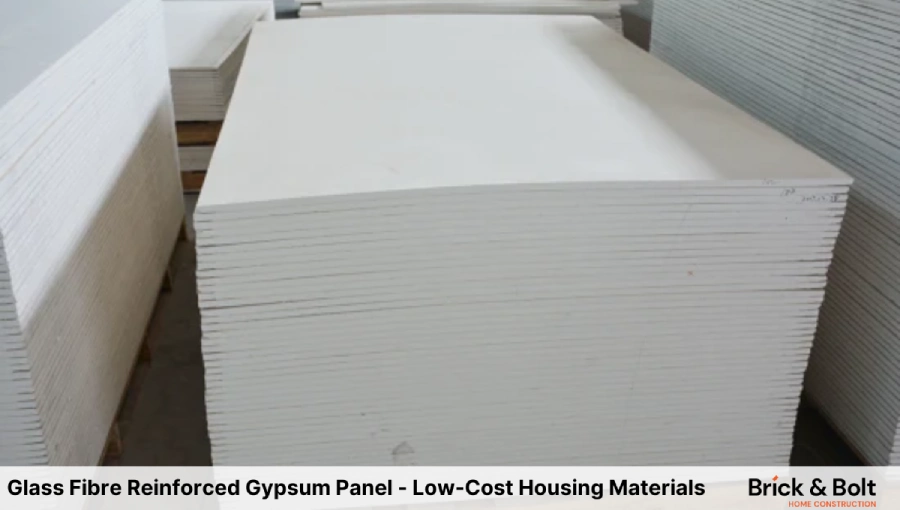
Glass fibre reinforced panel is a construction material that combines gypsum with glass fibres to create a strong, lightweight and durable panel. People commonly use these panels in exterior and interior construction, such as partition walls and decorative elements. The main benefits of glass fibre-reinforced gypsum panels are quick installation, lightweight, fire resistance, sound insulation, etc.
9. Shipping Container Homes:
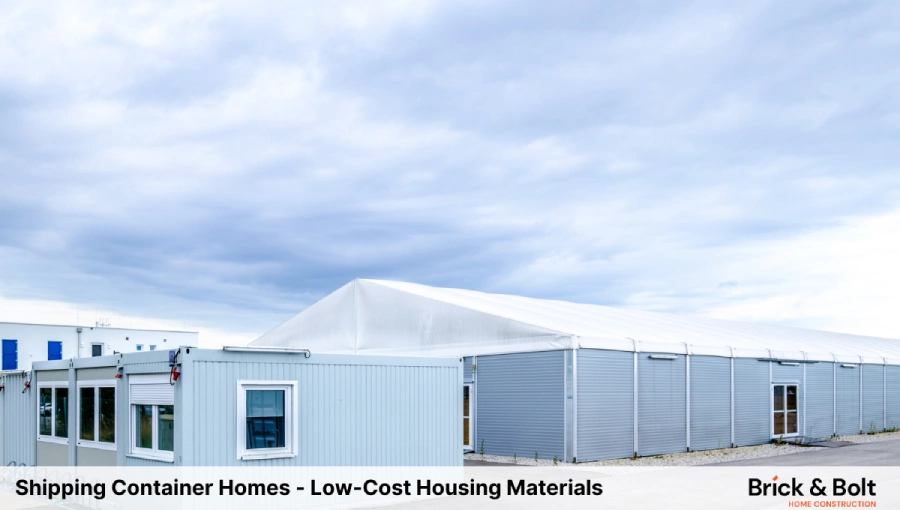
People construct container homes from repurposed shipping containers. They are often more affordable compared to other low-cost house construction materials. They are made from the steel containers used for transporting goods on ships. The main advantage of shipping container homes is that they are portable, and you can customise them based on your preference, they are also durable and affordable.
10. Autoclaved Aerated Concrete Or AAC:
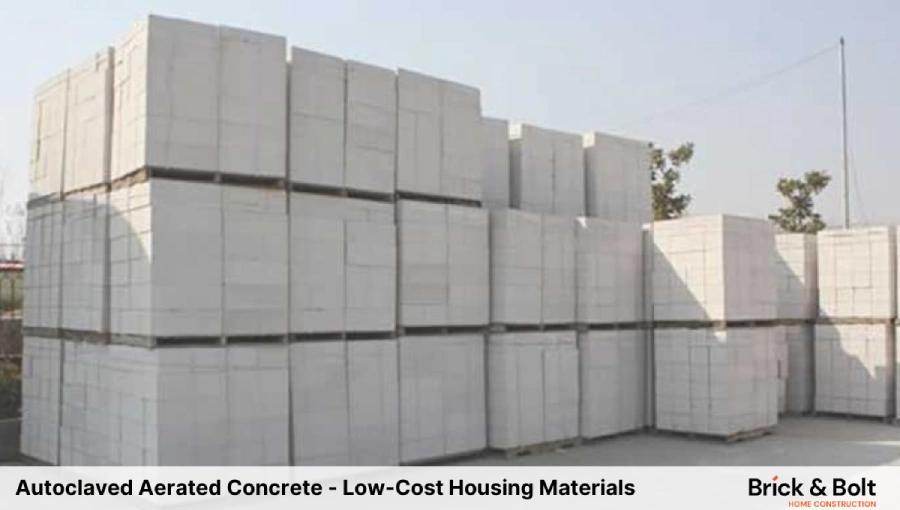
Autoclaved Aerated Concrete (AAC) is a building material produced by air bubbling through a mixture of cement and aggregates, usually sand and gravel. This process results in a lightweight, strong, and durable concrete with better insulation and sound absorption properties. The advantages of AAC are widely used in the construction industry for various applications such as walls, floors, ceilings, and columns. Autoclaving seals and solidifies the mixture, making it suitable for extreme environments. AAC is often compared to foam boards but is considered more durable and can be used in higher load-bearing structures.
In one way or another, low-cost home-building materials can help you save time and money. We’ve looked at many different types of low-cost building materials. These materials contribute to long-lasting, environmentally friendly, and energy-efficient building materials while lowering construction costs. To create a house in India using affordable building methods and supplies, you should be aware of Indian contractors or the top building firms in the country.
FAQs
Low-Cost Home Construction Materials can help reduce the cost of building a house, but the cheapest product is rarely the best measure of value. Compare materials based on purchase price, transportation, labour, wastage, installation and maintenance. Bricks, blocks, flooring, roofing, windows and finishes can all offer budget-friendly alternatives when selected appropriately. Structural, waterproofing, electrical and plumbing components deserve particular care because cutting costs in these areas can create larger expenses later. A well-planned design and material-selection process can deliver meaningful savings without compromising essential building performance.
FAQs
- Which are the best low-cost home construction materials in India?
There is no single best material for every house. Fly ash bricks, concrete blocks, AAC blocks, locally available stone, economical tiles and suitable roofing products can offer cost advantages depending on the location and application. Compare material, transportation, labour, wastage and installation costs before choosing an option for a specific project.
- Are AAC blocks cheaper than bricks?
AAC blocks may offer savings in some projects because they are lightweight and larger than many conventional masonry units, which can affect handling and installation. However, the final cost depends on local material prices, transportation, labour and the required construction system. A project-specific installed-cost comparison is more useful than comparing unit prices alone.
- Are fly ash bricks good for house construction?
Yes, fly ash bricks can be suitable for many masonry applications when they meet the required quality and specification. Their consistent dimensions can support efficient masonry work. However, suitability depends on the wall design, local availability and installation method. The selected product should be sourced from a reliable manufacturer and used according to the applicable construction requirements.
- How can I reduce home construction costs?
Start with an efficient design, reduce unnecessary complexity, source materials locally, compare multiple suppliers and control material wastage. Compare the complete installed cost rather than the material price alone. Avoid reducing specifications for structural, waterproofing, electrical and plumbing components simply to achieve short-term savings, because poor performance in these areas can lead to expensive repairs.
- Is local material better for low-cost construction?
Local materials can be more economical because transportation costs may be lower and suppliers or replacement products may be easier to access. However, local availability does not automatically mean suitable quality. Check the material’s technical properties, intended application, durability and installation requirements before using it in the house.
- Which materials should not be selected solely based on low price?
Structural materials, reinforcement, concrete, waterproofing systems, electrical components and plumbing products should not be selected solely on price. These systems affect safety, durability and long-term maintenance. The correct specification should be established by the relevant professional, and cheaper alternatives should only be considered when they meet the required performance and installation requirements.
- Are low-cost construction materials environmentally friendly?
Not automatically. Some affordable materials may have environmental advantages, such as certain fly ash-based or locally sourced products, but cost and sustainability are separate considerations. Transportation, manufacturing, durability, maintenance and end-of-life disposal can all affect environmental performance. Sustainable choices should therefore be assessed according to the material’s intended use and overall life cycle.
- How do I know whether a construction material is genuinely cost-effective?
Calculate its total installed cost by adding the material price, transportation, labour, wastage and installation requirements. Then consider maintenance and expected replacement needs. A product with a slightly higher purchase price can be more economical if it requires less labour or lasts longer. Comparing materials on this broader basis gives a more realistic view of value.
 Sowjanya Siddanoor