

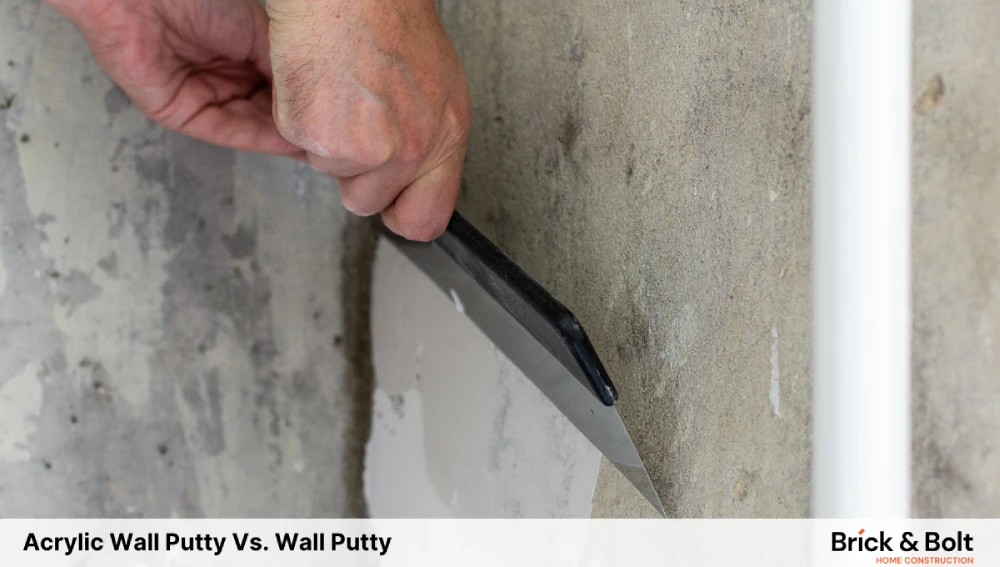
Acrylic wall putty vs wall putty mainly differs in composition, surface use, and moisture performance. Acrylic wall putty is a ready-to-use, water-based putty commonly used for smooth interior finishes, while regular wall putty usually refers to white cement-based putty used on plastered interior and exterior walls. The right choice affects paint adhesion, wall smoothness, dampness resistance, finishing cost, and long-term paint performance. This guide explains their differences, uses, advantages, limitations, application process, and how to choose the right putty for your home.
There are two types of wall putties you can choose from for your walls: acrylic wall putty and cement wall putty. Both of these are highly useful and have their own advantages and disadvantages. The trick here is to know when and where to use each of them.
In this article, we will learn all about these two types of putties and understand them clearly. This can help you choose between the two.
Quick Summary
Acrylic wall putty is best for smooth interior walls, minor dents, and ready-to-use finishing. Cement-based wall putty is generally better for plastered masonry surfaces, exterior walls, and areas needing stronger bonding and moisture resistance. For long-lasting paint finish, choose based on wall surface, exposure, dampness risk, and paint system.
What is Acrylic Wall Putty?
Acrylic wall putty is a water-based, alkali-resistant putty made of acrylic materials. It is considerably more expensive than cement wall putty. However, it is more water resistant, gives a smoother finish, and has higher durability.
Acrylic wall putty can be used on both exterior and interior wall surfaces. It gives a smooth wall that can be painted on without any cracks or flakes.
One of the main advantages of acrylic wall putty is its drying time. It dries within a short period of 30 minutes and can be painted soon after.
Acrylic putty is generally preferred for:
- Interior walls
- Ceilings
- Minor dents and scratches
- Smooth paint finish
- Repainting work
- Dry rooms such as bedrooms and living rooms
It is not the best choice for major surface levelling, damp walls, or exterior walls exposed to rain unless the product is specifically designed for that use.
What is Cement Wall Putty?
As the name implies, cement wall putty is made of cement. This is also applied to walls to give a smoother and longer-lasting finish that can be painted after drying.
Cement wall putty is commonly used in masonry wall surfaces and when there are huge gaps or cracks on walls. The putty is white in color, giving a clear and smooth canvas for painting.
Cement wall putty is water resistant and is good at preventing cracking and flaking.
Acrylic Wall Putty vs Wall Putty: Main Difference
|
Factor |
Acrylic Wall Putty |
Cement-Based Wall Putty |
|
Composition |
Acrylic binder with fillers |
White cement, minerals, polymers, and additives |
|
Form |
Usually ready-to-use paste |
Usually powder mixed with water |
|
Best surface |
Interior plastered walls and ceilings |
Cement plaster, masonry, interior and exterior walls |
|
Finish |
Very smooth finish |
Smooth and firm paint base |
|
Moisture resistance |
Moderate, product-dependent |
Generally better for masonry and exterior use |
|
Strength |
Good for minor surface defects |
Better for stronger base preparation |
|
Application |
Easier and quicker |
Needs correct mixing and application |
|
Cost |
Usually higher per kg |
Often more economical for larger areas |
|
Best use |
Interior finishing and repainting |
New construction, exterior walls, plastered surfaces |
The simple rule is: use acrylic putty for smooth interior finishing and cement wall putty for stronger plastered wall preparation, especially in new construction or external surfaces.
Advantages And Disadvantages Of Acrylic Wall Putty
| Advantages | Disadvantages |
| Highly water resistant. Ideal for areas that get wet often, like bathrooms, kitchen, etc. | It can be more expensive than cement wall putty. |
| Provides a smooth and flawless finish. | It is not as strong as to be applied on big cracks or holes. |
| Dries very quickly, within 30 minutes. | —- |
| Bonds well with various surfaces like plaster and masonry. | —- |
| Suitable for both outdoor and indoor wall surfaces. | —- |
| Gives an even, shiny look after painting and extends the lifetime of the paint. | —- |
Advantages of Cement-Based Wall Putty
Cement wall putty is widely used in construction because it works well with cement plaster and masonry walls.
|
Advantage |
Why It Matters |
|
Strong base |
Bonds well with plastered wall surfaces |
|
Suitable for larger areas |
Useful for new construction projects |
|
Interior and exterior use |
Can be used outside if product allows |
|
Better moisture resistance |
More suitable for masonry and exterior surfaces |
|
Good paint adhesion |
Helps paint hold better on prepared walls |
|
Economical coverage |
Often preferred for full-house finishing |
Many cement-based putties include polymers to improve adhesion, water resistance, and durability. Birla White notes that its WallCare Putty uses white cement formulation and added polymers for adhesion and paint base performance.
Limitations of Cement-Based Wall Putty
Cement wall putty requires proper mixing and skilled application. If water ratio, surface preparation, or curing conditions are poor, the finish may suffer.
|
Limitation |
Practical Impact |
|
Needs mixing |
Wrong water ratio can affect workability and bonding |
|
More labour skill needed |
Poor trowelling may leave marks |
|
Can dry quickly |
Application timing must be controlled |
|
Dust during preparation |
Powder mixing creates site dust |
|
Not for active dampness |
Moisture source must be repaired first |
|
Surface preparation required |
Loose plaster and dirt reduce adhesion |
Cement putty should be applied on a clean, stable, and properly prepared wall surface.
Which Putty Is Better for Interior Walls?
For interior walls, both options can work. Acrylic wall putty is better for a very smooth finish, repainting, ceilings, and minor surface correction. Cement wall putty is better for new plastered walls, larger areas, and surfaces that need stronger bonding before painting.
|
Interior Situation |
Better Option |
|
New plastered wall |
Cement-based wall putty |
|
Repainting a smooth wall |
Acrylic wall putty |
|
Ceiling surface |
Acrylic wall putty |
|
Minor dents and scratches |
Acrylic wall putty |
|
Rough cement plaster |
Cement-based wall putty |
|
Large-area house painting |
Cement-based wall putty |
For premium interiors, contractors may use cement putty for base correction and acrylic putty for final smoothness, depending on the paint system.
Which Putty Is Better for Exterior Walls?
For exterior walls, cement-based wall putty is usually the better choice. Exterior surfaces face rain, heat, dust, wind, and temperature changes. They need a stronger base and better resistance to moisture movement.
Acrylic putty should be used outside only if the manufacturer clearly specifies exterior suitability. Regular interior acrylic putty should not be used on exposed external walls.
For exterior walls, also check waterproofing, plaster cracks, parapet joints, window sill slopes, and seepage sources before putty work. Putty cannot replace proper waterproofing.
Application Process: Acrylic Putty vs Cement Putty
|
Step |
Acrylic Wall Putty |
Cement-Based Wall Putty |
|
Surface cleaning |
Clean dust, grease, loose paint, and flakes |
Clean dust, loose plaster, oil, and laitance |
|
Mixing |
Usually ready to use |
Mix powder with clean water |
|
Application |
Apply thin coats with putty knife or blade |
Apply coats with trowel or putty blade |
|
Drying |
Allow each coat to dry as per product guidance |
Allow drying between coats |
|
Sanding |
Light sanding for smooth finish |
Sanding after drying for uniform surface |
|
Primer |
Apply as per paint system |
Apply as per paint system |
|
Painting |
Apply selected topcoat |
Apply selected topcoat |
Always follow the manufacturer’s technical instructions for coat thickness, drying time, sanding, and primer compatibility.
Cost Comparison
|
Cost Factor |
Acrylic Wall Putty |
Cement-Based Wall Putty |
|
Material cost |
Usually higher |
Usually lower for large areas |
|
Labour time |
Faster for small work |
Efficient for full-wall application |
|
Mixing effort |
No or low mixing effort |
Needs correct water mixing |
|
Best value |
Interior touch-ups and smooth finish |
New construction and large plastered walls |
|
Repair frequency |
Low if used in the right area |
Low if surface prep and application are correct |
The cheaper option is not always better. Wrong putty selection can lead to peeling, uneven paint, poor finish, or repeated repairs.
Factors to Consider When Choosing Wall Putty For Your Home
As you can see, both acrylic and cement wall putty have their own advantages and disadvantages. So, how do you decide which one to use for your home?
Having some determining factors can help you with that. Below are some important factors to consider when choosing between acrylic and cement wall putties.
The type of surface
Both acrylic and cement wall putty work well on different types of wall surfaces. For example, both acrylic and cement wall putty can be used on plastered walls. However, for masonry and concrete walls, cement putty is often the best choice among the two.
Location
The location of usage plays an important role in the type of wall putty you can use. If your locality is highly prone to rain or your selected room easily gets wet, it is best to use acrylic wall putty as It is highly water-resistant and has a long life.
Budget
Acrylic wall putty can be more expensive than cement wall putty. If you want to lower the overall costs and go for a budget-friendly option, choose cement wall putty.
Desired finish
Acrylic wall putty gives a smoother and more flawless finish than cement wall putty. This acrylic wall putty design looks best in the living room. Cement putty is best for textured finishing but requires additional work. Choose the putty based on how you want the end product to look.
Drying time
If you are on a tight schedule and wish for quick work completion, acrylic putty is the best choice for you. It dries within 30 minutes of application. Cement wall putty takes about 4 to 6 hours to dry and is suitable for a strong and durable finish.
Quality
Whether you choose acrylic or cement wall putty, its quality is very important. Choose putties from a reputable brand with a good track record and customer satisfaction.
Practical Example: Choosing Putty for a Home
For a newly plastered house, cement-based wall putty is often practical because it bonds well with cement plaster and can be used across large interior and exterior surfaces. It gives a strong base for primer and paint.
For repainting a bedroom where the wall is already stable but has small dents or uneven patches, acrylic wall putty may be more convenient. It is easier to apply, creates a smooth finish, and is suitable for dry interior areas.
For bathrooms, balconies, and exterior walls, solve moisture issues first. Then choose a putty system recommended for that exposure.
Conclusion
From the above article, you must have understood that both cement and acrylic wall putties have their own advantages and are best for use in certain areas.
Before choosing the wall putty for your home, consider the factors we discussed above and determine the purpose and area of application. You can also consult a professional and choose the right type of putty for your home.
FAQs
- What is the main difference between acrylic wall putty and wall putty?
The main difference is composition and use. Acrylic wall putty is a ready-to-use paste for smooth interior finishing, while regular wall putty usually means cement-based putty used on plastered masonry walls and larger areas. - Is acrylic wall putty better than cement wall putty?
Acrylic wall putty is better for smooth interior walls, ceilings, and minor repair work. Cement wall putty is better for new plastered walls, exterior surfaces, and areas needing stronger bonding and moisture resistance. - Can acrylic wall putty be used on exterior walls?
Acrylic wall putty should be used on exterior walls only if the product is specifically approved for exterior use. Regular interior acrylic putty is not ideal for rain, heat, and outdoor exposure. - Which putty is best for interior walls?
Acrylic putty is good for smooth interior finishing and repainting, while cement-based putty is good for new plastered walls. The best choice depends on wall condition, finish requirement, and paint system. - Which putty is best for exterior walls?
Cement-based wall putty is usually better for exterior walls because it bonds well with masonry and handles exposure better. However, waterproofing defects and plaster cracks should be repaired before putty application. - Does wall putty stop dampness?
No, wall putty does not stop active dampness or leakage. It can improve surface smoothness, but seepage, cracks, plumbing leaks, or waterproofing failure must be repaired before applying putty. - Is primer required after wall putty?
Primer is usually required after wall putty unless the paint system or manufacturer specifies otherwise. Primer improves paint adhesion, reduces uneven absorption, and helps achieve a uniform final finish. - Can cement wall putty and acrylic putty be used together?
Yes, they may be used together in some finishing systems, but only if compatible. Cement putty may be used for base levelling, while acrylic putty may be used for final smoothness on interior walls. Follow product instructions.
 prasanthkumar
  wordpress-prod