


Cementing paste is a mixture of cement and water that forms the binding component in many cement-based construction materials. When water is added to cement, hydration begins, causing the mixture to gradually set and harden. The resulting paste helps bind aggregates in mortar and concrete and is also used directly in selected construction applications. Understanding cement paste is useful because its water content, consistency, mixing, and curing influence the performance of cement-based work. This guide explains what cementing paste is, how it works, how it differs from mortar and concrete, and where it is commonly used.
Quick Answer
Cementing paste is primarily a mixture of cement and water. The water starts the hydration process that causes cement to set and harden. Cement paste acts as a binding component in mortar and concrete and can also be used for selected filling, finishing, and bonding applications. Its performance depends on the cement type, water content, mixing, application, and curing conditions.
What is cement paste?
The cementing paste is the initial product of cement mixed with water and forms the basis for concrete and mortar. This paste undergoes a chemical reaction in the form of hydration whereby water and cement react to produce Calcium Silicate Hydrate(C-S-H) and CH, which is calcium hydroxide, thereby giving strength to the material.
When cement and water are combined, the paste occupies 25 to 40% of the concrete volume. The remaining volume is taken by other aggregates such as sand, gravel, or crushed stone. The regular water-to-cement ratio (W/C ratio) of cement paste ranges from 0.35 to 0.5. A paste with a higher water-to-cement ratio (W/C ratio) or greater volume of water has less strength, although its workability is higher.
Key Components of Cementing Paste
Two critical components of cementing paste are cement and water; however, sometimes admixtures are added to modify their properties.
1. Cement
The most significant constituent in cementing paste is the cement itself, with the majority made from Portland cement. It usually consists of, in weight percentages, the following:
- Limestone (60-65%)
- Silica 20-25%
- Alumina (3-8%)
- Iron oxide (2-5%)
It is all these that combine in a fine powder form, reacting with water under hydration to produce the hardened, rock-like structure of the cementing paste.
2. Water
The water acts as an activator in the cement paste. It makes the hydration process possible and initiates the chemical reactions that make the paste set. The main problem with cement paste is that the optimum dosage of water is of primary importance in obtaining appropriate strength and workability. For example:
- W/C ratio of 0.4: This can make a very strong and workable paste, quite suitable for making high-strength concrete.
- W/C ratio of 0.5: W/C gives an optimum mix of strength and workability, suitable for general construction.
- Higher W/C ratios than 0.6: It weakens the paste and increases the potential for paste cracking.
3. Admixtures
Sometimes admixtures are added to cement paste to modify its properties – such as setting time or workability. Admixtures that can be used include:
- Plasticisers: These improve flow without extra water.
- Accelerants: To fasten the hardening process.
- Retarders: These are meant to delay the setting time in hot weather conditions.
Uses of Cementing Paste
It is utilised in almost all construction activities, ranging from minor repairs to large-scale infrastructure. The following are the main applications of cement paste:
Concrete Production: The cementing paste makes up about 15-20% of the volume of concrete and is used to build buildings, bridges, and roads. It binds the aggregates to result in a strong and lasting material.
Mortar: The bonding of bricks, stones, and blocks is done by means of mortar, which is basically a cementing paste. Compared to concrete, mortar usually has a higher water content having a W/C ratio of about 0.6 to 0.7, to ensure better workability.
Manufacture and Repairs: The cement paste is utilised to repair cracks and fill structure gaps. For example, a paste of cement with a W/C ratio of 0.35 has already been found to be right for repairing damaged concrete sections because it presents high strength.
Types of Cementing Paste
There are many different types of cementing paste, and each of them is manufactured for specific uses. Some of the most common will include the following:
Portland Cement Paste
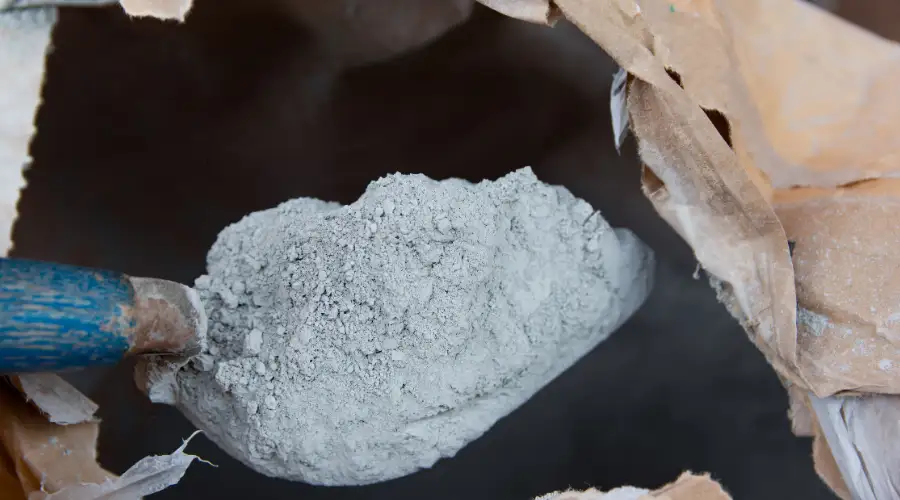
This one is the most used cementing paste, which comprises Portland cement and water. It forms the base for most of the concrete and mortar construction purposes. The normal W/C ratio that is generally taken by the paste made up of Portland cement lies between 0.4 and 0.5 on an average scale, giving enough strength and durability.
Polymer-Modified Cement Paste
Polymer-modified cement paste is polymer-based, enhancing the properties of cement paste. The two most important properties these polymers introduce into pastes are flexibility and adhesion. Pastel-like materials from such combinations find their applications in flooring, repairs, and even in cases requiring high bond strength, like tile adhesives. The addition of these polymers raises the tensile strength of the paste by as much as 30%.
Other Specialized Cementing Pastes
Other types of cementing pastes include high-alumina cement and magnesia-based cement. Some applications of such special cements are given below:
High-alumina cementing paste: This is known for its fast-setting properties; hence, it is excellent in cases that require emergency repair, finding applications at high temperatures.
Magnesia-based cement paste: This has excellent fire resistance and is used in refractory linings and industrial applications.
How Cementing Paste is Prepared
This paste must be measured and mixed with a minimum of accuracy to ensure optimum performance. Below is a technical guide to preparing cementing paste:
Ingredients:
- Portland cement: 1 part
- Water: approximately 0.4 parts or 40% of the weight of cement in case the W/C is 0.4
Procedure:
- Step 1: Measure the cement and water accurately. For example, for every 1 kg of cement, add 0.4 kg of water.
- Step 2: Mix water with cement in small quantities, then stir constantly to avoid lumps.
- Step 3: Mix well, using a mechanical mixer for larger batches of homogenous mixture.
- Step 4: Immediately after mixing, apply the cementing paste because in about 30-60 minutes, depending on the temperature and humidity, it starts setting.
Advantages of Using Cementing Paste
Following are some of the advantages of cementing paste in use at construction sites:
Strength: Cement paste leads to the compressive strength of concrete. Concrete mixes have achieved strengths as high as 50 MPa, on which the W/C ratio is dependent.
Durability: Once the cementing paste forms, the structure is protected by a water-resistant barrier against weathering and environmental damages, hence allowing long service life for buildings and infrastructures.
Versatility: Its versatility allows it to be used in applications ranging from high-strength concrete in bridges to low-strength mortar for bricklaying.
Cost Efficiency: The cost of the cementing paste is rather cheap compared to the other adhesives, and thus, it can be availed at a cost of approximately ₹300-₹400 per bag (50 kg) for Portland cement in India, and therefore is within easy reach for small and large-scale works.
Common Issues Related to Cementing Paste and How to Avoid Them
Despite many advantages, the cementing paste may sometimes have some issues if dealt in the wrong way. Here are common problems and how to avoid them:
Cracking: This could be caused by rapid drying or shrinkage while the paste is setting. Keeping the paste moist during setting, at least for the first 7 days, and keeping the temperature stable will greatly reduce problems of cracking.
Weakness: The water-to-Cement ratio (W/C) is a high ratio leading to a weak cementing paste; this is due to the added surplus water, which reduces the strength of the cementing action. When the ratio exceeds 0.6, there is a serious reduction in strength. Conclusion The water/cement ratio for ideal conclusions must be kept within the range strictly between 0.4 and 0.5.
Entrapment of Air: If the ingredients are mixed too quickly or in a careless way, it may entrain air bubbles in it. By this, the compressive strength is reduced by 5-10%. Hence, the mixing should be carried out slowly and thoroughly.
Is Cement Paste the Same as Concrete?
No. Cement paste and concrete are different materials.
Cement paste contains cement and water, while concrete also contains aggregates.
The cement paste acts as the binding matrix around the aggregates in concrete. The proportions and properties of all concrete ingredients are designed together to achieve the required performance.
Using cement paste in place of concrete where structural concrete is specified is not an acceptable substitution.
Cement Paste in Residential Construction
For homeowners, understanding cement paste is particularly useful when discussing masonry, plastering, concrete, repairs, and other cement-based work with contractors.
However, different construction activities require different material formulations.
For example, structural concrete should follow the approved mix design and structural specifications. Masonry mortar should follow the project’s requirements. Specialised repairs may require proprietary repair materials rather than ordinary cement paste.
The correct material should always be selected according to the actual application.
How to Improve Cement Paste Quality on Site
A few basic practices can improve consistency:
- Use specified cement.
- Measure water accurately.
- Keep mixing equipment clean.
- Mix thoroughly.
- Avoid uncontrolled water addition.
- Prepare manageable quantities.
- Follow application requirements.
- Protect fresh work from unsuitable conditions.
- Follow the specified curing procedure.
- Use trained workers for specialised applications.
These practices are generally more reliable than trying to improve performance through trial-and-error changes to the mix.
Final Thoughts
Cementing paste is a basic but important component of cement-based construction. Its essential ingredients are cement and water, while its properties depend strongly on water content, cement characteristics, mixing, application, and curing. It forms the binding matrix in mortar and concrete and can also serve selected construction purposes. The key is to use the right formulation for the right application rather than treating cement paste as a universal construction material. For structural work or specialised applications, follow the approved specifications and seek qualified technical guidance where necessary.
FAQs
- What is cementing paste?
Cementing paste is a mixture of cement and water that forms a binding material. When water reacts with cement through hydration, the mixture gradually sets and hardens. Cement paste forms the binding matrix in mortar and concrete and may also be used directly for selected construction, filling, finishing, or bonding applications.
- What is the main use of cement paste?
The main use of cement paste is to act as a binding component in cement-based materials. In concrete, it surrounds and binds aggregates into a hardened matrix. In mortar, it binds the fine aggregate. It can also be used for selected surface, filling, grouting, and bonding applications depending on the specification.
- Is cement paste the same as cement slurry?
Not necessarily. Both can contain cement and water, but the terms are often used according to application and consistency. Cement paste generally describes a cohesive cement-and-water mixture, while cement slurry often refers to a more fluid mixture intended to flow, coat, fill, or be injected.
- What is the water-cement ratio?
The water-cement ratio is the mass of water divided by the mass of cement in a mixture. It is an important factor affecting cement paste and concrete performance. The correct ratio depends on the application and specifications. Adding excess water simply to improve workability can negatively affect the hardened material.
- Can cement paste be used instead of mortar?
No, not generally. Mortar contains fine aggregate, usually sand, along with cement and water. Cement paste lacks that fine aggregate. The two materials have different properties and applications. Masonry, plastering, and other specified work should use the material and mix required by the relevant construction specification.
- Does cement paste need curing?
Yes, cement-based work generally requires appropriate curing conditions so hydration can continue. Curing helps support strength development and reduces the risk of moisture-related defects. The appropriate method and duration depend on the particular application, material, environmental conditions, and project requirements.
- What happens if too much water is added to cement paste?
Excess water can make cement paste easier to mix and spread initially, but it can increase porosity after hardening and affect strength and durability. Water should therefore be measured according to the required specification rather than added freely to improve workability.
8. Can cement paste be used for structural construction?
Cement paste alone should not be substituted for specified structural concrete or mortar. Structural construction requires materials designed for the intended loads and conditions. Concrete contains cement paste together with aggregates and is designed according to structural requirements. Any change to a specified structural material should be reviewed by the responsible technical professional.
 Sowjanya Siddanoor