


Have you ever wondered how large skyscrapers, long-span bridges, or intricate foundations are erected or constructed at such rapidity and exactitude? There is a powerful machine working behind the scenes, a quiet revolution in modern-day construction.
If you are a contractor, builder, or somebody simply interested in construction technology, the next few paragraphs may well change your perspective on construction. Faster schedules, cleaner pours, and higher efficiency-more-or-less start here. Would you care to know the unsung hero in concrete work? Let’s jump right in.
Understanding the Basics of Concrete Pumps
A concrete pump is a machine that transfers freshly mixed concrete from a mixing truck or a batching plant to the required location on a construction site, especially when access is difficult or when large volumes of concrete must be moved quickly and efficiently. It is a crucial piece of equipment for any significant construction project, where it pumps pneumatic concrete mix through an outlet pipe. Unlike traditional methods, the concrete pump has hydraulic pressure to push concrete through the pipes or hoses. Various types of concrete pumps are tailored for different projects, ranging from high-rise projects to small residential foundations.
Types of Concrete Pumps
Boom Pumps
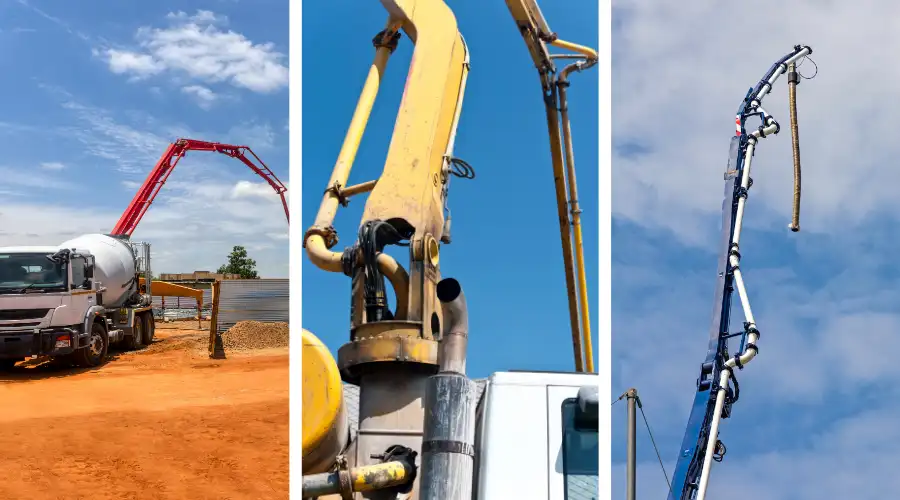
Boom pumps are truck-mounted concrete pumps that are highly flexible and are commonly used for pumping equipment. It consists of a long hydraulic arm, called the boom, and is mounted on large trucks. This pump helps reach very high places and extends to a very long distance, offering maximum flexibility and accuracy.
This pump is good for high structural buildings or hard-to-reach areas, and big construction projects, where large volumes of accurate pours are crucial.
Line Pumps
Line pumps are also called trailer-mounted concrete pumps, as they are comparatively smaller as well as portable. These pumping systems are often mounted on a trailer or skid, allowing the option to move from one location to another. This pump involves flexible hoses attached to the pump. It covers only short distances; however, it can fit any tight spaces or areas where boom pumps are restricted. It is highly versatile and can be used for constructing residential foundations, sidewalks,measuring concrete ratio for slabs, and commercial works or repairs.
Speciality Pump (Concrete Surry Pump)
Speciality pumps, such as concrete slurry pumps, are suited for performing certain applications within industries that work with highly viscous or dense materials. These pumps are built to accommodate a slurry mixture of concrete. This pump is ideal for transferring fluid and fine-grained concrete mixtures for specialised construction activities.
While conventional concrete pumps are suited for handling coarser mixes in standard structural applications, slurry pumps are better suited for narrow pipelines, underwater operations, and confined construction zones. They are commonly used in tunnelling, excavation support, trenchless technologies, grout injection, and underwater concreting.
Static Pumps
Static pumps remain static in one place, while the concrete is pumped for long distances at high volumes. These pumps do not require a mobile pump and are excellent for industrial, commercial buildings, or large civil construction projects.
The Operation of Concrete Pumps
Concrete Loading Procedure
Concrete is loaded into the hopper of the pump, usually from the transit mixer. It has an agitator to keep the concrete in motion to prevent segregation.
Piston Mechanism and the Movement of Concrete
Two hydraulically controlled pistons operate alternately: one piston draws concrete into the cylinder while the other pushes it into the delivery pipe. This alternating operation allows for a continuous flow.
Hydraulic System Pressure
Hydraulic cylinders provide the force to push concrete through the pipeline. The pressure has to be sufficiently high, maintaining a consistent flow despite long distances or great vertical heights.
Transporting Concrete to the Pouring Location
Concrete is delivered to the final pour site through steel or rubber hoses. Concrete pump operators can control the flow rate or move the hose or boom around for exact placement.
Benefits of Utilizing Concrete Pumps
- Efficiency: Faster concrete placement than manual procedures.
- Precision: Placement directly on the spot minimises waste and rework.
- Labour-Saving: Fewer labourers are needed, and that reduces costs.
- Access: Enables the placement of concrete that conventional equipment cannot achieve, including above-ground stories or in narrow urban sites.
- Consistency: It reduces delays, which can impact the setting and strength of concrete.
Application of Concrete Pumps
Concrete pumps are used in every phase of construction, including:
- High-rise buildings
- Bridge constructions
- Residential developments
- Tunnel and mining infrastructures
- Foundations for industrial plants
- Hydrographic Cement
Since they can be used in fast-tracked jobs or those requiring difficult access or complex structural designs, concrete pumps are highly valued.
Essential Factors for Choosing the Right Concrete Pump
The right selection of a concrete pump depends on several critical factors that affect performance, price, and appropriateness for the job. The most important ones are:
Size and Classification of the Project
Large projects, such as bridges or high-rises, employ boom or static pumps due to the need for high-volume, long-distance pumping. Smaller jobs for residential slabs or patios are typically completed with line pumps due to their portability and ease of setup.
Height and Distance Criteria
Next comes the question of how far and high the concrete has to be pumped. Boom pumps are good for long vertical and horizontal distances, while line pumps hold their advantages for short-range or difficult access sites.
Concrete Mix Consistency
Thicker or specialty mixes might require a more powerful pump or wider hose. Make sure the pump can handle the flowability and aggregate size of your concrete mix ratios.
Site Access
Inquire about how easy it is to set up equipment in the area. Regions that are too narrow or completely inside might not be good for boom trucks; trailer-mounted pumps will be a better option.
Pump Output Requirements
Match the delivery rate of the pump with the required rate and volume of the pour. High-output pumps are used in continuous, large-volume pours. The small ones are suitable for light and occasional use.
Budget and Availability
Consider the price of purchase or rental, operation, and how frequently you intend to use the pump. Rental is good for short-term needs, while purchase is more convenient for regular use.
Concrete Pump Price Based on the Types in India
The following table indicates the average costs of concrete pumps:
| Concrete Pump Type | Price Range (INR) | Notes |
| Boom Pumps | ₹85,00,000 – ₹90,00,000 | Examples: Aquarius Engineers 36 ZX, suitable for large construction projects |
| Line Pumps (Trailer Mounted) | ₹12,00,000 – ₹43,00,000 | Electric and diesel variants available, used for building, road, bridge construction |
| Specialty Pumps (Concrete Surry/Slurry Pump) | ₹5,00,000 – ₹12,00,000 | Used for specialized concrete slurries, smaller capacity |
| Static Pumps | ₹50,000 – ₹5,00,000 | Suitable for small scale or stationary operations |
| Mini Concrete Pumps | ₹12,00,000 – ₹25,00,000 | Compact, portable, good for small residential or interior projects |
Concrete Pump Machine Maintenance Guidelines
- Regular cleaning: It is very important to prevent concrete from hardening and causing damage.
- Inspect seals and hoses: Check for any signs of wear or cracking that could lead to leaks or failure.
- Maintain the hydraulic system: Maintain proper fluid levels and change filters regularly.
- Lubricate moving parts: Lubrication is needed for the smooth operation of the pump; it prevents rust.
- Routine Inspection: Scheduled checks allow early discovery of any problems, guaranteeing a long life for the pump.
The Importance of Pump Maintenance Scheduling
The following are the significance of pump maintenance scheduling:
- Ensures pumps operate at peak efficiency by addressing wear and tear early.
- Helps detect minor issues like leaks, unusual noises, or vibrations before they escalate.
- Reduces unexpected breakdowns and costly downtime, maintaining steady productivity.
- Extends the lifespan of pumps, delaying expensive replacements or major repairs.
- Lowers overall operational and repair costs through preventive upkeep.
- Maintains safety by preventing hazardous mechanical failures or leaks.
- Supports consistent pump performance, improving reliability in operations.
- Facilitates better planning and reduces emergency maintenance through scheduled servicing.
- Helps keep a thorough maintenance history to anticipate future needs effectively.
5 Critical Maintenance Challenges for Concrete Pumps and How to Solve Them
The following are major maintenance issues for concrete pumps, along with respective solutions:
- Wear and Tear on Delivery System: Pipeline and valves suffer abrasion from the concrete mix. It can be solved by regularly rotating pipelines, inspecting valves, and using lubricants designed for concrete pump machines.
- Hydraulic System Failures: Contamination and pressure fluctuations reduce efficiency. It can be solved by performing daily fluid checks, inspecting for leaks, and replacing filters in a timely manner.
- Boom Structural Integrity: Stress cracks and misalignment can cause breakdowns. It can be resolved through routine inspections and repairs performed by qualified personnel.
- Concrete Buildup: Residue reduces flow and performance. It can be solved by strict end-of-day cleaning protocols.
- Power System Wear: Continuous stress causes premature failure. It can be solved by comprehensive, scheduled servicing beyond basic engine care.
Conclusion
Concrete pumps are an indispensable tool on modern construction sites, used to reliably and efficiently convey concrete to destination points with utmost precision. By familiarising themselves with the types, uses, and upkeep of pumps, contractors can ensure their machines perform optimally and benefit them in the long run. Towering skyscraper or a suburban patio; concrete pump machines go a long way in turning architectural plans into reality, quickly and accurately.
Frequently Asked Questions
What type of pump is best for concrete?
Boom pumps are best for large, high-rise, or complex projects due to their hydraulic arm reach and precise concrete placement, while line pumps suit smaller or confined projects.
How far can a 47 meter concrete pump reach?
A 47-meter concrete boom pump can reach a horizontal or vertical distance up to 47 meters, allowing concrete placement at difficult-to-access points within that radius.
How big is a 52M concrete pump?
A 52M concrete pump refers to the maximum reach of its boom arm, typically mounted on a truck chassis, with boom sections extending up to 52 meters in length.
What is the price of used concrete pumping machine?
Used concrete pumping machines vary widely, roughly ranging from ₹10 lakhs to ₹40 lakhs depending on model, condition, and capacity.
What is a concrete line pump?
A concrete line pump is a smaller, trailer-mounted pump that uses flexible hoses to deliver concrete, ideal for small to medium-sized projects or locations with limited space.
 prasanthkumar
  wordpress-prod