


Concrete is one of the most common options for the construction process. This material’s durability depends on more than just mixing cement, water, and aggregates. Sand plays a crucial role in determining the final strength and performance of the concrete. However, not all sand is suitable for construction. Although beach and desert sand look somewhat similar, their fine and smooth texture makes them unsuitable for binding in concrete. Instead, use concrete sand specially designed for concrete mix that has a coarser texture and angular grains, which help create a strong bond with cement and aggregates.
To learn more about the properties of concrete sand, its uses and benefits, continue reading this blog.
What is Concrete Sand?
Another name for concrete sand is sharp sand or grit sand. Concrete sand is mainly used during the mixing of concrete. This sand’s manufacturing process results in a special, unique, gritty texture, removing impurities. This specific texture is crucial as it improves the concrete’s internal drainage and directly contributes to the final structure’s stability and durability. Because of its ability to create a strong, solid final product, concrete sand is ideal for building durable, load-bearing structures like foundations, driveways, and pavements.
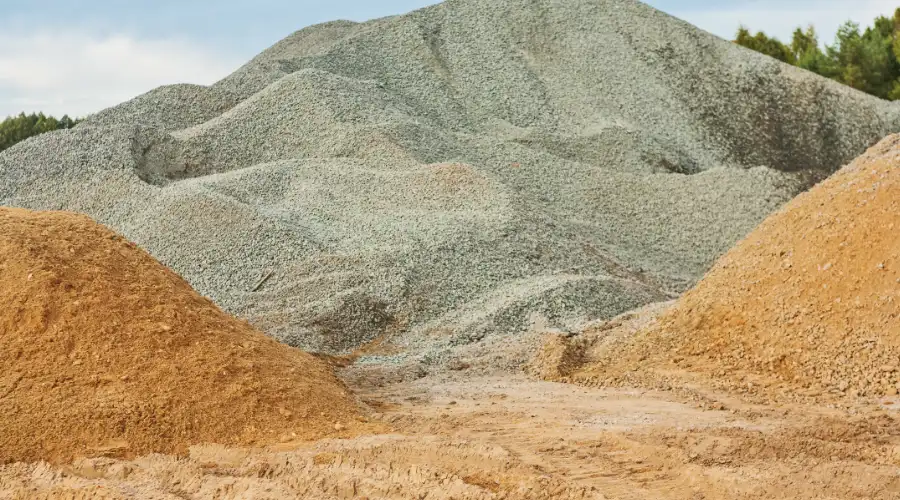
Concrete sand is a coarse sand that is primarily utilised for the production of concrete. It’s the rough-around-the-edges type of sand; it’s hard and long-lasting. Concrete sand is a washed, coarse-grained sand composed of angular aggregates ranging from 0.075 mm to 4.75 mm in size. It is typically made by crushing quartz, granite, limestone, or other hard rocks and then washing to remove impurities like silt, clay, and dust.
Properties of Concrete Sand
- Particle Size Distribution: Concrete sand has a well-graded particle size, typically ranging from 0.075 mm to 4.75 mm, ensuring proper compaction and minimal voids in the concrete mix.
- Cleanliness: High-quality concrete sand is free from clay, silt, and organic matter, reducing the risk of shrinkage and structural cracks and enhancing bond strength with cement.
- Shape and Texture: Particles are angular to sub-angular with a rough texture, improving mechanical interlock and overall strength in concrete.
- Specific Gravity: Ranges between 2.60 to 2.65, indicating its weight and compatibility with other mix materials.
- Moisture Retention: Has optimal water absorption, supporting hydration without over-saturating the mix.
- Durability: Chemically inert and resistant to weathering, making it suitable for long-term structural performance.
- Fineness Modulus: The fineness modulus (FM) of sand directly impacts concrete quality—coarse sand (high FM) improves strength and economy up to a limit but reduces workability. In contrast, fine sand (low FM) enhances workability but raises cement demand, cost, and risk of cracking. Typically, for concrete sand, FM ranges from 2.3 to 3.1, providing a balanced grading that supports workability and finish.
- Compatibility: Works well with various admixtures and cement types in reinforced and plain concrete applications.
Applications of Concrete Sand
- Concrete Production: Concrete sand finds maximum application in the production of concrete. When mixed with cement, water, and coarse aggregates like gravel or crushed stone, concrete sand occupies the voids between such coarse particles to produce a compact mixture. The mixture is used to construct foundations, slabs, walls, and other structural elements that contribute to increasing the strength and durability of buildings.
- Production of Mortar: Concrete sand is equally useful in producing mortar. It creates a paste when combined with cement and water, which serves as a binder to hold together bricks, blocks, or stones. The adhesive function enhances the strength and longevity of masonry structures. It provides stable and lasting structures.
- Paver Bedding: Concrete sand makes an excellent bedding for interlocking pavers. The angular aggregates of concrete sand will interlock and form a solid base that the pavers can sit on, level out, and provide adequate drainage. This application is critical to constructing strong and aesthetically pleasing exterior surfaces.
- Pipe Bedding :Concrete sand has a general application in underground utility construction as a pipe bedding product. Its compatibility offers a solid foundation, inhibiting uneven settlement and ensuring long-term structure stability. Concrete sand’s smooth texture ensures even loading, minimizing the likelihood of underground system damage.
- Playgrounds and Sporting Fields: Due to its purity and homogeneity, concrete sand is becoming a common surfacing material for playgrounds and sports fields. It is a safe, smooth surface for playing and recreation, and allows efficient drainage of the surface to keep the ground dry and usable.
Advantages of Concrete Sand
- Enhanced Strength and Structural Integrity: Concrete sand acts as a fine aggregate in the concrete mix, improving compressive strength and minimizing shrinkage. Its angular particles interlock effectively, providing a dense matrix that resists cracking and structural movement under load.
- Superior Workability and Mix Uniformity: Due to its well-graded particle size distribution (as per IS: 383), concrete sand enhances the cohesiveness of the mix, allowing for smoother placement and finishing. It reduces segregation and bleeding, which is critical for pumpable and high-performance concrete.
- Cost-Effective Aggregate Choice: Readily available and affordable, concrete sand reduces the dependency on more expensive binders or additives. It lowers the overall material cost without compromising strength or durability.
- Eco-Friendly and Sustainable: When sourced responsibly, it’s a great alternative to river sand and supports sustainable construction aligned with green building codes like GRIHA or IGBC.
- Thermal and Acoustic Performance: It improves the thermal mass of walls and slabs, enhancing insulation and energy efficiency. Its dense packing also dampens sound transmission, supporting better acoustic performance in buildings.
- Versatile Application: Compatible with various cement types, admixtures, and reinforcements, making it suitable for slabs, beams, columns, pavements, and precast elements.
Disadvantages of Concrete Sand
- Availability: It is hard to obtain good-quality concrete sand in some regions. Builders and contractors can be compelled to seek alternative supplies or be obliged to use manufactured sand as an alternative.
- Demand for Water: Concrete sand has a higher surface area, hence sometimes absorbs more water than natural sand, which results in high water demand in the mix. A rise in the water-to-cement ratio can lead to a loss of strength in the mixture.
- Transportation Issues: Transporting huge quantities of concrete sand to building sites might be logistically challenging. Efficient transport techniques need to be employed to ensure a constant supply.
How to Choose the Right Concrete Sand?
- Understand Project Requirements: Choose sand based on the type of project. Use coarse sand for drainage-based applications like landscaping or golf courses, and well-graded, compactable sand for structural work like slabs and foundations.
- Check Fineness Modulus (FM): Ensure the sand meets IS 383:2016 standards. The fineness modulus should typically range from 2.3 to 3.1 for concrete applications. Avoid overly fine or overly coarse sand as it affects mix proportion and strength.
- Verify Particle Grading and Distribution: Opt for well-graded sand with uniform particle size. Poor gradation leads to segregation, bleeding, and reduced workability in concrete.
- Avoid Sand with Excessive Dust or Clay: Sand should be free from silt, clay, and organic matter. Conduct a silt content test (should not exceed 8% by volume) to avoid reduced Concrete bonding and increased shrinkage.
- Check Water Absorption and Moisture Content: Use sand with predictable water absorption properties. Adjust the water-cement ratio based on the actual moisture content at the site.
- Assess Texture and Shape: Angular or sub-angular particles provide better mechanical interlock than rounded ones, improving concrete strength.
- Ensure Source Consistency and Supply: Choose sand from a reliable, tested quarry to ensure consistency. Local sand reduces logistics costs and environmental impact.
- Evaluate Appearance Factors (if exposed): For architectural concrete, consider colour uniformity and blending ability with cement and aggregates for aesthetic outcomes.
- Review Test Certificates and Technical Specifications: Always request a material test report or lab certification. Check for compliance with BIS codes and verify through sieve analysis if needed.
- Calculate Quantity Accurately: Estimate sand requirements in cubic meters or cubic yards to plan procurement, transportation, and cost accurately.
Using the right sand enhances structural strength, workability, and the overall performance of your project.
How Concrete Sand Affects Construction Projects?
Sand is a core constituent of mortar, and is therefore crucial in construction. The size and composition are very significant factors in determining the strength and durability of such materials. It renders construction materials safe and durable, which is crucial in residential, commercial, and infrastructure development.
In addition, the type of sand utilized may affect the final product. For example, grain shape and texture determine the manner in which grains will stick together in concrete mixtures. Therefore, the selection of sand is of specific interest in the provision for desired structural performance. Such a decision is not only technical but also necessitates attention to the environmental implications of sand utilization and extraction.
Concrete Sand vs. River Sand: Key Differences
The following are the major differences between concrete sand and river sand:
| Aspect | Concrete Sand | River Sand |
| Source | Manufactured (quarries) | Natural (riverbeds) |
| Particle Shape | Coarse, angular, rough | Rounded, smooth |
| Purity | Free from clay/silt impurities | May contain organic impurities |
| Strength | Higher bonding, durable | Good, but variable |
| Workability | Moderate, may need more water | Better workability |
| Environmental | Sustainable, reduced impact | Causes river erosion, habitat loss |
| Availability | Consistent supply | Scarce due to over-extraction |
Key Takeaways and Conclusion
Concrete sand serves various purposes in specific ratios. Each construction has a requirement, so the strength and durability should be the same, but the mixing ratio of sand, cement, and water should be in an appropriate manner.
Concrete sand is an essential material in building construction, improving workability, functionality, durability, and strength. Additionally, concrete sand is employed to fill cavities, decrease cracks, and improve effective bonding. There’s no better time than now to understand why concrete sand is the best choice for you. Choose the right concrete sand with proper testing and research to ensure long-term performance!
Frequently Asked Questions (FAQs)
What is concrete sand?
Concrete sand is a special type of sand featuring a unique, gritty texture and is mainly manufactured for concrete mix to enhance strength, durability, and workability.
What type of sand is used in concrete?
The best sand for concrete is typically coarse or sharp sand, also known as concrete sand, because its larger, angular particles provide better binding and interlocking with cement, resulting in a stronger, more durable mix.
Is sharp sand the same as concrete sand?
Yes, sharp sand is the same as concrete sand.
Is concrete sand the same as paver sand?
No, concrete sand and paver sand are not the same.
What is another name for concrete sand?
Another name for concrete sand is sharp sand or grit sand.
 Sowjanya Siddanoor