


Deck flooring is an essential component for creating outdoor living spaces, offering both aesthetic appeal and durability. It serves as the surface layer of a deck, providing a safe, attractive area for relaxation, dining, or entertainment. Available in a variety of materials such as wood, composite, and PVC, deck flooring is designed to withstand outdoor elements while maintaining its integrity. Proper installation, maintenance, and material selection are key to ensuring that deck flooring remains functional and visually pleasing over time.
In this blog, we will explore the different types of deck flooring, their benefits, and how to choose the right flooring option for your outdoor space.
What is Deck Flooring?
Deck flooring is defined as the surface material that covers the floor of an outdoor deck, patio, etc. Most deck flooring surfaces are made from wood (cedar, redwood, pressure-treated lumber), composite (generally wood fibers and plastic), PVC, and vinyl.
Each decking material has certain advantages. Deck flooring surfaces must be installed properly and maintained to ensure a long lifespan, and a warranty is necessary to guarantee a safe, lasting, and functional outdoor living space.
Deck Flooring Options
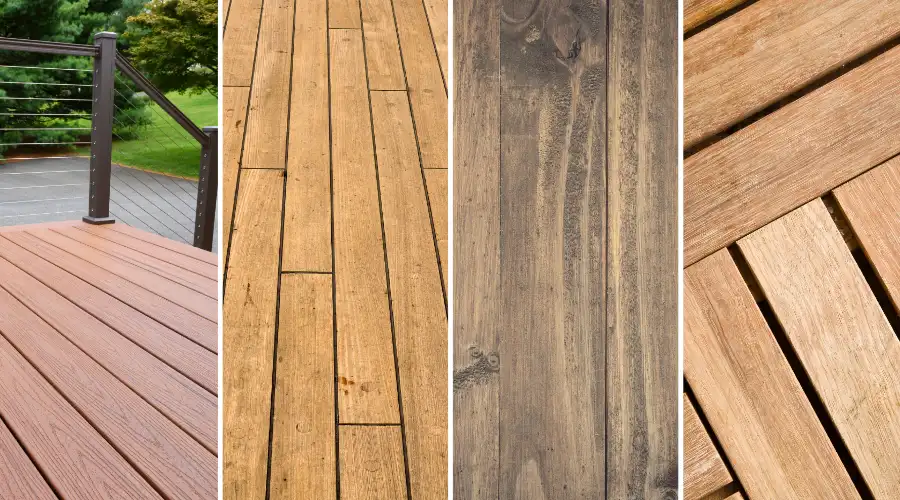
1. Wood Decking
Wood decking, the conventional and at the same time, inspirational one, is a choice liked by many due to its natural beauty and warmth. Cedar, redwood, and pressure-treated lumber are the most commonly used wood types.
The use of wood as a building material ensures that your house always has a rustic and traditional look. But you have to remember that such materials need to be stained and covered with some weatherproofing agent from time to time to prevent them from decaying.
2. Composite Decking
Made from a combination of wood fibers and plastic, composite decking is maintenance-free, resistant to mold, and comes in various colors and textures. It is a typical wood-referred product without requiring the same care.
3. PVC Decking
PVC (polyvinyl chloride) decking is 100% plastic and has high durability, long lifespan, low maintenance, and water resistance which are attractive qualities. This is a good choice for spots with high humidity, as it can come in different colors and textures. It is more protective as it offers protection from all kinds of mishaps, providing warmth and style.
4. Vinyl Decking
Vinyl decking is a type of artificial product that is not only highly resistant to stains and scratches but also to all types of weather. The durability and easy cleaning properties make UPVC a preferred option, although it can be harshly affected by the sun.
5. Ipe (Wood Alternative)
Famous for its strength and sophisticated appearance, Ipe is a hardwood that can resist rot and termites with only a minimum amount of attention and care, therefore, it is considered suitable for luxurious projects.
Key Differences: Wood vs. Composite vs. PVC
The PVC vs wood vs composite decking comparison is as follows:
| Aspect | Wood | Composite (WPC) | PVC |
| Material Composition | Natural timber (hardwoods like teak, sal, ipe, or treated pine) | Wood fibers combined with recycled plastics | 100% synthetic plastic polymer (PVC) |
| Appearance | Warm, natural wood grains, highly authentic | Wood-like appearance with consistent color/texture | Uniform, artificial look, available in multiple colors but less natural |
| Durability | Moderate; 7-15 years with maintenance; prone to rot, warping, and pests | High; 15-25 years; resistant to rot, insects, and weathering | Very high; 25-50 years; resistant to moisture, fading, and mold |
| Maintenance | High; requires regular sealing, staining, and cleaning | Low; only periodic cleaning needed, no sealing | Very low; simple washing, no sealing or staining |
| Water & Pest Resistance | Moderate; susceptible without treatment | Excellent; highly moisture and pest resistant | Excellent; does not absorb water, immune to pests |
| Environmental Impact | Biodegradable but depends on source (FSC certified preferred) | Eco-friendly, uses recycled materials | Generally less eco-friendly, fully synthetic but recyclable |
| Installation | Moderate difficulty; sensitive to moisture and weather | Moderate; boards can expand/contract | Easy, but expansion/contraction can be an issue with heat |
| Surface Texture & Safety | Natural wood texture, can be slippery when wet | Usually slip-resistant surface | Smooth but can be slippery; some are textured |
| Suitability | Best for classic appearance in dry climates or where maintenance is feasible | Suitable for wet, high-traffic areas needing durability | Ideal for humid, coastal, or highly exposed areas needing durability and low upkeep |
| Cost | Lower upfront cost but higher maintenance cost over time | Mid to high upfront cost; lower upkeep costs | Highest upfront cost; lowest maintenance over lifespan |
| Average Price Range (₹/sq.ft.) | ₹200 – ₹600 | ₹350 – ₹700 (standard), up to ₹975 premium | PVC deck flooring price in average is ₹120 – ₹300 |
Pros and Cons of Deck Flooring
Always consider the pros and cons before choosing the best deck flooring options.
Advantages of Floor Decking
- Aesthetic Appeal
The wood flooring of a deck, especially choices like wood and composite, is a turn-on virtually to the eyes of your outdoor premises.
- Increased Property Value
Having a well-constructed, and high-quality floored deck will create a major boost to the worth of your property.
- Variety of Materials
Different looks, durability, and maintenance levels provided by woods, composites, PVC, and vinyl give homeowners the freedom to choose based on personal preference and budget.
- Compression Strength
Practically all the materials in building a deck, especially composites and PVC, are designed to be durable and require a minimum amount of maintenance.
Cons of Floor Decking
- Maintenance
Materials made of wood are such that they must be properly taken care of every single day so that they remain new and undamaged, otherwise, you may need to repair and paint them again. However, composite materials may have color fading over prolonged use.
- Cost
The best materials in the market like IPE and composite come at a very high price.
- Moisture and Weather Sensitivity
Wood and some other materials like mosaic flooring are very vulnerable to weather conditions, making them very susceptible to rotting, warping, or changing color when exposed to water and heat.
Key Considerations for Selecting Deck Flooring
Deciding the most fitting deck flooring involves taking a few significant factors into account, in particular, functionality, appearance,
- Feature
There are choices such as wood, composite, PVC, red oxide flooring and vinyl with each of them having their benefits. Consequently, wood is the one to give you the most natural look.
- Environmental Conditions
Materials like composite or PVC would be the best choice in hot, sunny climates just because they are resistant to fading and moisture.
- Cost
Consider wood, composite wood, and PVC. According to the pros and cons of these materials, wood is the most budget-friendly whereas composite and PVC’s maintenance.
- Visual Preferences
Wood is the best option for those who want a warm and cozy feeling at home. On the other hand, composite and PVC wood flooring come in rich colors and various styles.
- Care
It is estimated that the time spent on maintenance efforts should also play a part in selecting the deck material.
If you think about the above properly, then you can be sure to purchase the best deck flooring there is for you.
Top Deck Flooring Brands in India
The following are the best composite decking brands in India:
Floresta:
This manufacturer provides high-quality Wood Polymer Composites (WPC) products for decking and other house components. Their products are 100% water, termite, borer, and moisture-proof, ensuring longevity and reliability. Floresta offers ISO 9001-14001-certified, eco-friendly, and durable deck floors.
Alstone
Alstone is a well-known player in the Indian WPC industry, known for its versatile product range that includes decking boards, doors, decorative panels, and more. Their products are engineered for durability and resistance against termites, moisture, and weather, making them suited for both indoor and outdoor use. Alstone focuses on innovative designs and sustainability, offering eco-friendly alternatives to traditional wood, which is essential to fulfill modern construction demands.
CenturyPly
CenturyPly, a name trusted for plywood and laminates, has expanded into the composite decking segment with robust WPC products designed to withstand severe weather conditions. Their portfolio includes decking, fencing, and cladding solutions tailored for durability and aesthetic appeal. CenturyPly leverages its extensive manufacturing experience to ensure high quality and lasting performance, particularly in outdoor applications.
VIVA
VIVA has carved a niche with its stylish and sustainable WPC products. Their offerings span decking, cladding, and interior design solutions created using environmentally friendly materials. VIVA combines innovation with eco-conscious manufacturing to produce boards that are durable, moisture-resistant, and safe for both users and the planet. Their focus on aesthetics and sustainability places them among the top choices in the WPC market.
BeautexWood
BeautexWood is better known for premium timber decking and cladding products sourced sustainably. They specialise in natural wood decks that highlight the beauty of Indian hardwoods through a variety of finishes while maintaining environmental responsibility. BeautexWood’s products target customers seeking authentic wood looks with a focus on durability and ecological practices.
Installation Process for Deck Flooring
Setting up deck flooring, particularly WPC (Wood-Plastic Composite) decks, is a series of well-prepared steps that guarantee that the final result comes out very well.
Step 1: Plan the Deck Layout
- How to Plan: Use a measuring tape to measure the floor’s area to know the size of your deck.
- Prepare a Drawing: Make an outline showing the lengths with an indication, then decide how to place the boards, whether it is horizontal, vertical, or diagonal.
- Allow for Growth: Keep a 5-10 mm distance between the boards to allow for expansion.
- Check Surface: Ensure the base for the deck is dry, level, clean, and free from decay, wear, or structural damage. If the deck will be installed on the ground, then clean out the roots and the weeds.
Step 2: Select Boards and Fasteners
- WPC Boards: Hollow or solid boards that not only offer weight but also long-lasting property. The second aspect of the product is the lightweight and the long-lasting property of the product.
- Fasteners: Go for concealed clips to ensure that the deck appears to be seamless. The starter clips need to be present to begin and end the deck.
Step 3: Decking with Joist
- Mark the Joists: Fasten the joist by drawing a line on every board every 300-400 mm.
- Lay the Joist: Use wooden, aluminum, or composite joists attaching them with expansion screws.
Step 4: Frame the Deck
- Attach the Starter Clip: Place the clips on one edge, and then fasten the first board.
- Check the System: Make it a point to ensure that the frame is flush at every point.
Step 5: Position the Remaining Boards
- Position and Secure Boards: Place boards with invisible fasteners, and maintain equal spacing with a spacer tool.
- Tap Boards into Place: Use a rubber mallet to fix the boards.
Step 6: Cut Deck Boards to Fit
- Trim Excess: Saw out the parts left over the edge to get a neat look.
- Install Skirting Boards: Optional, for a sophisticated exterior.
Step 7: Quality Check and Site Cleanup
- Check Stability: Try the deck out by walking on it for security concerns.
- Clean: Brush off the dirt, and then wipe it clean with a damp cloth. Your deck is ready for use.
Essential Care for Long-Lasting Deck Durability
Regular maintenance plays a big role in the longevity of your deck. To this effect, the following practices are necessary,
- Always remove debris, dirt, and leaves to keep off molds and spills. For the cleaning, every couple of months, use a mild detergent and water to wash the surface.
- Do regular checks to find loose wood, nails, or signs of wear. You should immediately fix any damage to the shield from the next more huge damage.
- For wood decks, apply a fresh coat of sealer to the boards once every 1-2 years to protect against water and UV rays. Composite decks may require a special cleaner for occasional cleaning.
- Keep heavy furniture or equipment from being stationary for a long time, thus causing indentations or damage.
- During a period of a harsh climate, use covers or tarps to protect against the sun, which can cause exposure to the stores during that season.
Conclusion
Selecting flooring for a deck is key to properly utilize outdoor space. Proper installation and regular maintenance, such as cleaning, sealing, and checking for damages, will extend the life and enjoyment of the deck while referring to your material’s specific instructions.
By making informed decisions based on your preferences, climate, and budget, you can enjoy a beautiful and lasting deck that enhances your property’s value and your outdoor experience.
Frequently Asked Questions (FAQs)
What is the best material for deck flooring?
Compared to all other available options, PVC Decking Material are best for deck flooring.
What is a deck flooring?
Deck flooring is defined as the surface material that covers the floor of an outdoor deck, patio, etc. Most deck flooring surfaces are made from wood (cedar, redwood, pressure-treated lumber), composite (generally wood fibers and plastic), PVC, and vinyl.
What is the cost of deck flooring per square foot?
The cost of deck flooring in India typically ranges from ₹200 to ₹700 per square foot for composite/WPC decks, depending on quality and design. Wooden decking costs vary more widely, from around ₹200 to ₹600 per square foot, influenced by wood species and finish, while PVC decking is usually priced between ₹120 and ₹300 per square foot.
Is decking better than tiles?
Neither decking nor tiles is naturally “better” than the other; the best choice relies on factors like budget, maintenance, desired aesthetic, and safety concerns.
What is PVC decking?
PVC decking is a low-maintenance, synthetic deck board made entirely from polyvinyl chloride (a plastic), with no organic materials like wood fibers.
What is the cost of composite deck flooring per square foot in India?
The cost of composite deck flooring in India typically ranges from ₹200 to ₹700 per square foot, depending on the quality, design, and brand. Premium composite decking boards with enhanced durability and finishes can have a price increase that exceeds this cost.
 Sowjanya Siddanoor