


Defects in bricks are manufacturing, burning, handling, storage, or material-related problems that reduce brick strength, durability, shape, appearance, and masonry performance. Common defects include underburning, overburning, spalling, efflorescence, lime blowing, lamination, cracks, bloating, blisters, spots, chuffs, and black core. Identifying these issues before construction helps prevent weak walls, poor bonding, water damage, uneven alignment, and expensive repairs. This guide explains major brick defects, their causes, how to identify them, prevention methods, storage practices, and quality checks. Brick & Bolt notes that poor-quality bricks can seriously affect the strength and appearance of a construction project.
Quick Summary
Defects in bricks are flaws that appear due to poor clay quality, improper moulding, excess water, incorrect kiln temperature, lime lumps, soluble salts, air voids, poor compaction, or bad storage. They reduce compressive strength, increase water absorption, spoil appearance, weaken masonry bonding, and may make bricks unsuitable for construction or exposed brickwork.
Different Types of Defects in Bricks
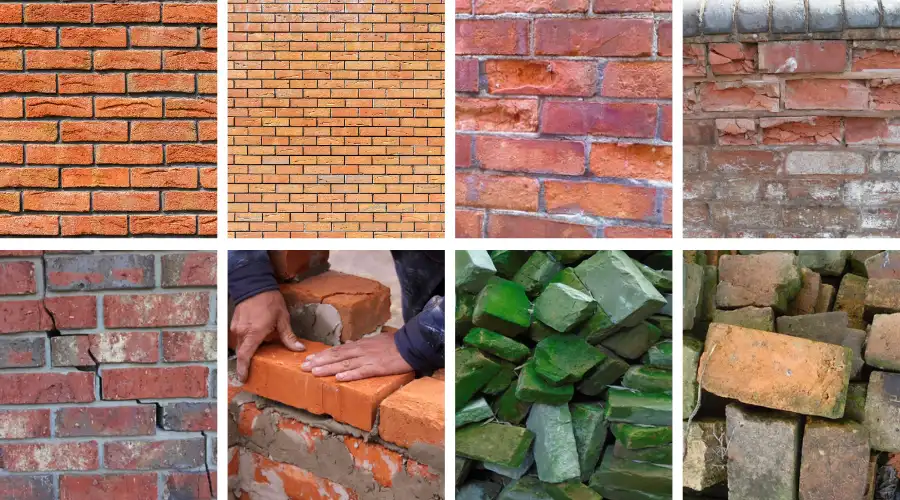
Poor Quality Bricks are vulnerable to numerous defects, and some of the most common defects in bricks include:
- Underburning
- Spots
- Spalling
- Overburning
- Lime Blowing
- Lamination
- Efflorescence
- Chuffs
- Checks or Cracks
- Bloating
- Blisters
- Black Core
Underburning
When bricks are not burnt to complete vitrification, the clay softens, and pores remain open due to insufficient heat. This results in low compressive strength and high water absorption, making them unsuitable for construction work.
Spots
It is a dark spot on the bricks’ surface caused by iron sulfide in the clay. The spots affect the structural integrity and visual appeal, making it unsuitable for exposed masonry work.
Spalling
Spalling refers to flaking, cracking, peeling, crumpling, or chipping of bricks, resulting in the irregular portions of the bricks breaking or falling off. This is caused by the heating of water inside the bricks.
Overburning
This is caused by over-burning due to excess temperature inside the kiln or burning faces. The overburnt bricks result in a soft molten mass. The bricks lose their shape and become unsuitable for construction.
Lime Blowing
The disintegration of bricks causes lime blowing in bricks. If bricks contain a lime lump, the lime absorbs water and expands after firing, resulting in lime blowing. It can be identified by immersing a brick in water. If the soaked brick develops fractures or powdery lumps, the brick has a blowing defect.
Lamination
It is a defect where a thin lamina is produced on the surface of the brick, which flakes out due to atmospheric conditions. The lamination of the brick is due to the air voids in the clay, resulting in weak bricks. This reduces the load-bearing capacity and durability of the bricks in masonry work.
Efflorescence
Efflorescence is the formation of a crystalline, salty deposit on the surface of the brick due to the excess alkali present in the brick. It occurs when the bricks are exposed to moisture, where the brick absorbs water and alkali crystallises. It can be identified by soaking a brick in the water. If the soaked brick forms a drying grey or white powder patch after 24 hours, it indicates efflorescence in bricks. The efflorescence can be prevented by selecting proper clay materials and providing necessary water-repellant materials in mortar and damp-proof courses.
Chuffs
It is the deformation in the shape of bricks due to the exposure of hot bricks to rainwater. The irregular shape of the bricks could affect the alignment and interlocking of bricks, weakening the structural integrity of the structure.
Checks or Cracks
The bricks are subjected to two types of cracks: straight and random cracks. Straight cracks occur parallel to the short surface of the brick due to rapid drying. In contrast, random cracks occur on different brick surfaces due to lumps of lime and excess water. This happens when an excess of water is added to the bricks during manufacturing, leading to shrinkage and burning cracks.
Bloating
Bloating is the spongy, swollen mass forming on the surface of burnt bricks. It occurs due to excess carbonaceous matter and sulfur in the bricks.
Blisters
Blisters in bricks occur on the surface of sewer pipes and drain tiles. This is due to poor compaction during the molding process. The air voids imprisoned in the brick are the main reason for the blistering of bricks.
Black Core
It is the presence of circular or semi-circular shaped black or grey spots around the core of the fire clay bricks. It is caused by the bitumen or carbon content in the earthy clay and improper burning of bricks. These bricks have reduced strength, low structural integrity, and reduced load-bearing capacity.
Why is Proper Storage of Bricks Important?
Bricks are made of clay and natural materials and are prone to moisture, temperature changes, and exposure to sunlight. To maintain their quality and durability, proper brick storage is crucial. It prevents the bricks from potential damage or deterioration caused by external factors and keeps the bricks with their original physical properties.
How to Store Bricks Properly?
- Create a foundation of loose gravel outside to keep the bricks dry. The selected space should be free from exposure to rain or sun.
- Dig a shallow hole and cover it with plastic for an outdoor solution with all the benefits of being under a roof.
- Stack the bricks in a way that they cannot fall and cause damage.
- Clay and cement bricks should be stacked and stored separately to retain their durability and longevity.
- Solid, perforated, and hollow bricks should be stacked separately to avoid fluctuation and loss of density.
- It is important to note that the stacking of bricks should not exceed 10 bricks in height.
Conclusion
Defects in bricks can weaken masonry, increase water absorption, spoil exposed finishes, reduce load-bearing capacity, and create long-term repair issues. Underburning, overburning, spots, spalling, lime blowing, lamination, efflorescence, chuffs, cracks, bloating, blisters, and black core all indicate problems in clay quality, drying, firing, moulding, or storage. The safest approach is to inspect bricks before use, test samples when needed, reject visibly defective pieces, and store bricks correctly on site. Good bricks support stronger walls, better alignment, lower maintenance, and more reliable construction quality.
FAQs
- What are defects in bricks?
Defects in bricks are flaws that affect brick strength, shape, colour, texture, durability, or water resistance. They may appear as cracks, stains, flakes, swelling, lime spots, white deposits, dark cores, or distorted shapes. These defects can reduce masonry quality and structural performance. - What are the common types of brick defects?
Common brick defects include underburning, overburning, spots, spalling, lime blowing, lamination, efflorescence, chuffs, checks or cracks, bloating, blisters, and black core. Brick & Bolt lists these as major defects found in poor-quality bricks. - What causes efflorescence in bricks?
Efflorescence is caused by soluble salts and moisture movement through bricks or mortar. When water evaporates, salts crystallise on the surface as white or grey powder. It can be reduced through proper clay selection, damp-proofing, water control, and suitable mortar. - Are underburnt bricks suitable for construction?
No, underburnt bricks are not suitable for quality construction because they have low compressive strength and high water absorption. Brick & Bolt explains that underburning happens when bricks do not receive enough heat for complete vitrification. - How can lime blowing in bricks be identified?
Lime blowing can be identified by soaking a brick in water and checking whether fractures or powdery lumps develop. Brick & Bolt states that lime lumps absorb water and expand after firing, causing the brick to disintegrate. - What is black core defect in bricks?
Black core is a defect where black or grey marks appear near the brick core due to carbon content in clay and improper burning. These bricks have reduced strength, lower structural integrity, and poor load-bearing capacity. - How should bricks be stored on site?
Bricks should be stored on a dry, stable surface, protected from rain and excessive moisture, and stacked safely. Brick & Bolt recommends separating clay and cement bricks, storing different brick types separately, and keeping stacks within 10 bricks in height. - How do I choose good quality bricks?
Choose bricks that are well-burnt, hard, uniform in size and colour, free from cracks, low in water absorption, and without white deposits, lime lumps, swelling, or distorted shape. For important construction, test sample bricks before purchasing in bulk.
 prasanthkumar
  kunalmeel