

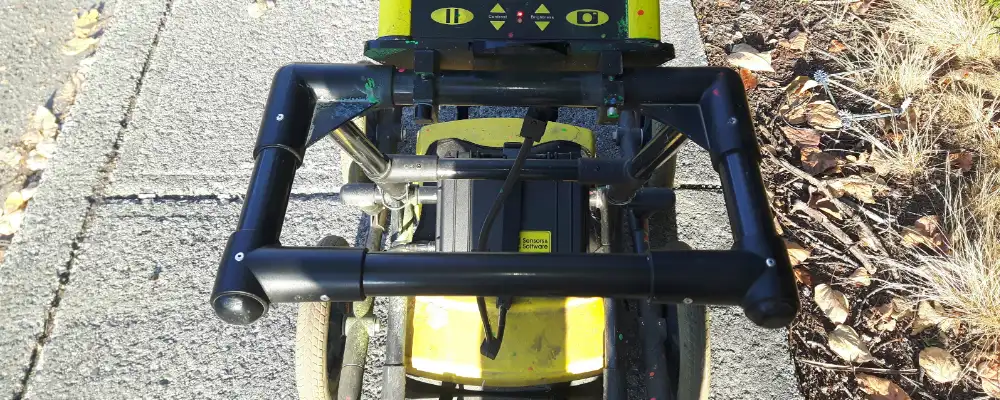
Have you ever considered what might be beneath the surface before you dig or drill? If you work for a construction team, then you have probably experienced the risk of inadvertently breaking into unknown pipes, cables, or vulnerable areas underground. Digging without checking can create delays, expenses and safety risks.
Enter Ground Penetrating Radar (GPR)- this technology enables you to ‘see’ beneath the surface of the ground without digging, exposing, or removing it, hence the term ‘ground penetrating.’ GPR enables you to locate hazards/objects such as pipes, rebar, rocks, or voids without putting a shovel in dirt.
GPR is useful for virtually all types of construction, whether it be residential, commercial or major civil or infrastructure projects. We, at Brick & Bolt, leverage GPR to make projects safer, avoid costly mistakes, and – most importantly- get projects done on time.
In the following blog, we will discuss: how GPR works, its benefits, some use cases, and some factors to consider when using it.
What is Ground Penetrating Radar?
Ground Penetrating Radar (GPR) is a non-destructive construction and geophysical technology used to detect and map objects buried underground or embedded within concrete structures, without the need for excavation, concrete coring, or demolition.
GPR works by emitting high-frequency electromagnetic (EM) waves into the ground through an antenna. When these waves encounter a material with contrasting electrical properties—such as a metal pipe, plastic conduit, rock, rebar, or air void—part of the signal is reflected back to the surface. These reflections are recorded by a receiver and processed by onboard software to create real-time subsurface images or 3D data maps.
Construction companies like Brick & Bolt use GPR to identify underground utilities, rebar while drilling into concrete, and holes in the ground. This allows for planning work safely, avoiding accidents, employee injuries, and mistakes, and reduces costs, which leads to smarter construction technology as well as a smarter construction process.
Advantages of Ground Penetrating Radar in Construction
1. Non-Invasive and Non-Damaging:
Unlike most other methods of exploration that require breaking or drilling to access beneath the surface, GPR offers a non-intrusive option that leaves the site undisturbed while still producing maximum subsurface detail.
2. Immediate Results:
GPR scans yield immediate results on-site; engineers and contractors do not have to wait days for lab reports instead they receive data immediately allowing for faster decisions.
3. High Accuracy and Depth of Coverage:
GPR is able to detect objects up to several meters deep, depending on material type and antenna frequency. This means that it can locate cables, voids, pipes and rebar effectively, while also considering depth and minimizing human error.
4. Reduced Risk of Utility Strikes:
One of the most common causes of construction delays is caused by hitting an underground utility. By using GPR you will surface utilities – electrical lines, water pipes and even old foundations, before you put a shovel in the ground.
5. Better Project Planning:
With the advantage of identifying ground conditions early, project managers can more effectively plan excavation, foundation footprint, and material requirements, resulting in less waste to deal with and fewer delays.
Disadvantages of Ground Penetrating Radar in Construction
Ground Penetrating Radar (GPR) has its benefits for construction, but it also has limitations. Recognizing these limitations helps construction teams determine when GPR is the best tool for the job.
1. GPR Doesn’t Work Well in Wet or Clay Soils
GPR does not work well in certain soil conditions. If the soils are too wet or too much clay is present, radar signals may become blocked, and a scan may not penetrate deeply.
2. Too Much Metal Underground Can Confuse the GPR
If there are too many metal pipes or reinforcements too close to each other, the radar signals may bounce too wildly, and get too confused to produce a good picture of what is below the surface.
3. Surface Conditions Contribute To The Scanning Accuracy Also
If the surface is too rough, dirty or has too much debris, then the scan would be inaccurate if it is not even removed or leveled out first.
4. GPR Must Be Close to the Surface to Conduct Effective Scanning
In order for the GPR device to work, it needs to be placed directly over the surface that you want to scan. Thus, it is not effective if it is not used on a flat surface.
Why GPR is a Non-Negotiable for Your Construction Project
The following are reasons why GPR is a non-negotiable for any construction project:

- Accurate Utility Detection & Enhanced Safety: GPR is used to locate underground utilities such as electrical conduits, water pipes, and gas lines, reducing excavation violations and preventing accidents.
- Cost Savings & Time Efficiency: GPR prevents costly damages to utilities and structural elements, reducing rework and project delays. It offers faster, non-destructive scanning compared to traditional methods, improving project timelines and budgets.
- Non-Destructive Testing: GPR emits radar pulses that scan concrete and soil without the need for coring or digging, preserving structural integrity while providing real-time imaging.
- Versatile Applications & Risk Mitigation: Used for foundation scans, slab analysis, detecting voids, rebar, and post-tension cables, GPR ensures structural safety and accurate planning for new construction, renovations, and infrastructure projects.
- Safety Impact: Use of GPR contributes to safer job sites by identifying hidden hazards, reducing strike incidents with utilities and embedded materials, and lowering insurance claims.
How Does GPR Work? – Principle and Components
Principle of Operation
Ground Penetrating Radar (GPR) operates by sending pulses of electromagnetic energy into the ground using a transmitting antenna. A signal will reflect back as an echo when it hits either an object or a boundary with different dielectric characteristics. The time it takes to return and how strong the signal is in relation to the transmitted signal can be used to create a visual cross-section or 3D image of what is beneath the surface.
Key Components of a GPR System
- Transmitting Antenna – send out the radar pulses into the surface.
- Receiving Antenna – receives reflected signals.
- Control Unit – processes signals and converts them into visual data.
- Power Source – usually battery powered, allowing for mobile scanning.
- Data Display Device – allows for visuals in real time on a screen.
The depth of a scan can change depending on the antenna frequency; lower frequencies will go much deeper while higher frequencies provide more clarity in the images.
GPR in Action: Real-World Scenarios for Your Project
The following are major applications of Ground Penetrating Radar (GPR):
- Utility Mapping: Locates buried pipes, cables, and conduits before excavation, preventing costly damages and project delays.
- Structural Integrity Checks: Detects rebar, post-tension cables, and voids in concrete slabs and foundations for safe renovation and retrofitting.
- Archaeological Surveys: Identifies buried artifacts and fossil-bearing strata without disturbing sensitive sites, aiding heritage conservation.
- Groundwater and Environmental Studies: Maps subsurface water pathways and contamination zones for environmental impact assessments.
- Road and Infrastructure Projects: Assesses subsurface conditions for road expansions and utility relocations, optimizing design and execution.
- Urban Planning: Supports detailed subsurface profiling for smart city and urban infrastructure developments.
Why Ground Penetrating Radar (GPR) Services become Important for Safe & Smart Construction
1. Prevents Utility Damage
Accidental strikes on gas pipelines, electric lines, or water lines can create severe accidents with potential for death, as well as code violations. GPR surveys greatly reduce these risks.
2. Compliance With Municipal Codes
Most municipalities require utility scans and involve building permits or other requirements to be completed by a local authority before any construction can commence. Utilize GPR as a part of pre-construction checklists, and remain fully compliant with all legal requirements and safety codes.
3. Aids in Meeting Environmental Safety Goals
GPR minimizes excavation and environmental impact, which are elements of green building design and reduces carbon footprint for the designer and building owner.
4. Prepares Sites for Advanced Smart City and Utility Infrastructure
Smart utilities and underground networks have exploded as the future of urban environments unfolds. GPR enables effective planning without cross-disciplined disruption.
5. Insurance & Legal Inoculation
Contractors that utilize GPR, whether adopting safety principles or code compliance, are perceived as less of a risk, which builds credibility. If damage does occur, the presence of GPR analyses is imperative to successful and timely insurance remediation, and mitigates all liability.
How GPR Improves Construction Project Efficiency
1. Minimizes Project Delays
Understanding what is beneath the surface will allow you to be free of surprises that halt construction. For example, if a previously unknown pipeline is uncovered, appropriate rerouting can happen before excavation begins.
2. Provides Better Budgeting Assumptions
The fewer mistakes made, the less bad financial assumptions. A contractor doesn’t need to reallocate costs for repairs, legal damage, or work stoppage.
3. Enhances Permits and Approvals
Deep Ground Penetrating Radar (GPR) is an excellent way to make very accurate subsurface maps, which speeds approvals from the community/municipality or compliance agencies.
4. Facilitates Group Decision Making
When engineers, architects, and site coordinators all utilize the same GPR latest data, it makes decision making more collaborative and therefore faster.
5. Establishes Client Trust
Large investments for clients mean they want to guarantee there is no unaccounted for. GPR guarantees a professional edge, especially in a transparent, quality-oriented delivery systems like Brick & Bolt.
Conclusion
In today’s construction ecosystem, price, speed and safety are paramount. Ground Penetrating Radar provides the potential for all three. In everything from scanning subgrade to locating utilities, to confirming compliance, GPR allows you to achieve more smartly and quicker.
For top construction firms like Brick & Bolt, adopting GPR establishes a workflow that is less theoretical and more about producing high-quality buildings, mitigating risk and staying competitive.
So if you have a commercial or residential project on the books, make sure you are not building on assumptions. Build on clarity with Ground Penetrating Radar.
Frequently Asked Questions(FAQs)
What is ground penetrating radar GPR used for?
GPR is used to detect underground utilities, voids, and structural elements non-destructively, aiding construction, archaeology, and infrastructure projects.
How much does a GPR device cost?
In India, GPR devices range from around ₹1.5 lakh to ₹35 lakh depending on specifications and depth capabilities.
Why is GPR so expensive?
GPR devices incorporate advanced radar technology, precise data processing, and durable components, requiring high R&D and manufacturing costs.
What is the function of GPR?
GPR transmits radar pulses into the ground to capture reflections from subsurface structures, creating detailed images for analysis.
What is the basic principle of GPR?
GPR works on electromagnetic wave reflection, detecting changes in material properties to map subsurface features.
 prasanthkumar
  wordpress-prod