

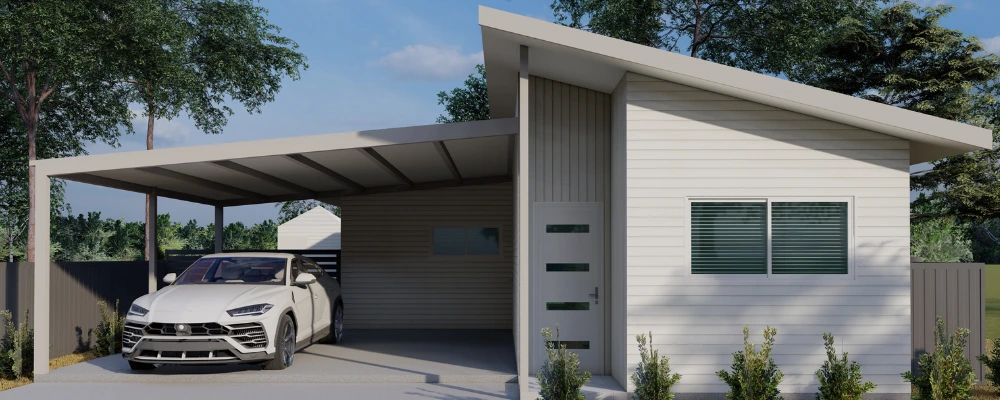
A lean-to roof is one of the simplest and most practical roofing styles used in residential, commercial, and utility structures. It consists of a single sloping roof surface supported by one wall that is higher than the other, allowing efficient rainwater drainage and straightforward construction. Lean-to roofs are commonly used for house extensions, garages, verandas, sheds, and outdoor spaces due to their cost-effectiveness and modern appearance. This guide explains the design, components, advantages, construction process, materials, and maintenance of lean-to roofs.
Quick Summary
A lean-to roof is a single-slope roof, also called a skillion roof or shed roof, commonly used for sheds, carports, patios, verandas, and small extensions. It is popular because it is simple to build, space-saving, economical, and good for water drainage. Proper design must include roof slope, rafters, ledger support, flashing, gutters, and wind resistance.
What is a Lean-to-Roof?
A lean-to roof is a special type of roof that is also called a skillion roof, mono-pitched roof or single-slope roof. Since it is often included in lean-to structures like sheds, it is usually called a shed roof.
These types of roofs will be leaned against the existing wall of the building with a slope. This stylish roof structure enables easy snow and water drainage, minimising the requirements for additional waterproofing efforts. They are single-sloped roofs mainly used in heavy rainfall and snowfall areas.
The construction of skillion roofs will be the most cost-effective and labour-friendly. Thus, they are commonly included in the construction of sheds, carports, verandahs, porches and simple additions.
This roof type is commonly used for:
- Carports and bike shelters
- Garden sheds and storage areas
- Verandas and porches
- Patio covers
- Utility spaces
- Greenhouses
- Small home extensions
The design is simple, but it should not be treated casually. The connection to the existing wall, rafter spacing, slope, roof covering, and gutter system must be planned properly.
What are Major Structural Components of a Lean-to Roof?
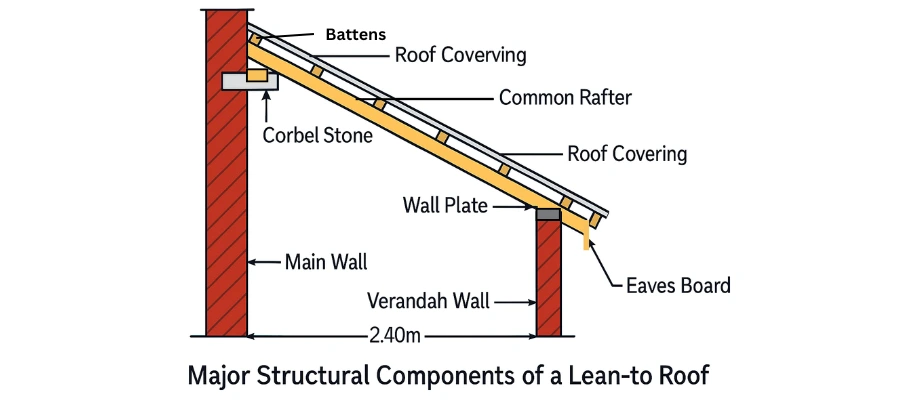
- Slope (Pitch): The roof slopes in one direction, usually between 10° and 30°, to help rainwater and snow slide off easily. The exact angle depends on your local weather and how you plan to use the roof, like adding solar panels or handling heavy snow.
- Rafters: These are the slanted beams that support the roof’s weight. They run from the wall to the outer edge and need to be spaced properly—usually 16 to 24 inches apart—to keep the roof strong and prevent sagging.
- Ledger Board: A strong horizontal board fixed to the main wall, holding the rafters in place.
- Roof Covering: Materials like metal sheets, asphalt shingles, or clear panels for light and style.
- Trim & Flashing: These are strips of metal or plastic placed around edges and joints to seal gaps. They prevent water from leaking in, protecting your roof and walls from damage over time.
Lean-to Roof Design Benefits and Construction Basics
The main idea behind lean-to roof design benefits and construction is to create a practical roof with fewer parts while still protecting the space below. A typical lean-to roof includes:
|
Component |
Purpose |
|
Roof pitch |
Helps rainwater flow away |
|
Rafters |
Support the roofing material and load |
|
Ledger board |
Connects the roof to an existing wall |
|
Posts or beams |
Support the lower roof edge |
|
Roof covering |
Protects against sun and rain |
|
Flashing |
Seals wall and roof junctions |
|
Gutters |
Direct rainwater away from the structure |
Brick&Bolt notes that lean-to roofs often use a slope between 10° and 30°, with the final pitch depending on weather, roof material, and use case. The exact slope should also follow the roofing material manufacturer’s guidance and local building requirements.
What are Different Lean-to-Roof Design Ideas?
You can include lean-to roofs for both the main structures and lean-to structures. The following are some innovative design ideas:
Modern Home Extensions
If you want to add an extension to your existing modern home, you can complete this project in a cost-effective way by including skillion roofs. As they include simple design, they help enhance the house’s minimalism. You can include a mono-pitched roof made of metal, zinc, or timber as per your house style to complement the main building.
Carports & Bike Shelters
When it comes to carports and bike shelters, people often choose lean-to roofs. They can offer better weather protection with simple construction. A lean-to carport typically consists of a single-sloped roof supported by posts on one side and attached to an existing wall on the other, providing shade and shelter for vehicles. For bike shelters, modern designs often use steel frameworks and transparent polycarbonate or PETG thermoplastic panels, which allow natural light while blocking harmful UV rays and offering robust vandal resistance.
Greenhouses & Garden Sheds
If you are building greenhouses or garden sheds near your house in urban areas, lean-to roofs made with polycarbonate panels are best suited. This single-sloped roof set at a suitable tilt angle maximises sunlight exposure, which is vital for plant growth, and facilitates efficient rainwater drainage to protect both plants and stored equipment. The lean-to design’s simplicity allows for relatively quick installation and easier maintenance for greenhouses attached to a house or as a standalone structure.
Tiny Homes & ADUs
As you know, tiny homes and Accessory Dwelling Units (ADU) are becoming a trend. With minimal floor area and minimum budget, it works well with a mono-pitched roof. The single-slope design of the roof minimises the building’s overall height while maximising interior volume and headroom on one side. This approach facilitates efficient water runoff and allows for creative window placement to enhance natural light and ventilation.
Porch & Patio Covers
Lean-to roofs are common options, including porches and patios. These skillion roofs can adapt well to all types of modern architectural styles. You can create a rustic look by including timber beams and corrugated metal or polycarbonate sheets. Other modern styles like minimalism include sleek metal or glass panels.
Lean-To-Roof Advantages And Disadvantages
Before deciding on the roof selection, you need to understand the following lean-to-roof advantages and disadvantages:
The Skillion Roofs Advantages
- Cost-effective: Compared to other types of roofs, the lean-to roofs design and installation process is simple and budget-friendly, requiring less labour and materials.
- Easy to Build: The simple design of lean-to roofs can also be done as a DIY with the guidance of experts. It saves considerable time and effort.
- Great Drainage: The mono-pitched roof design eases water flow, enabling efficient water and snow drainage and reducing the need for extensive waterproofing.
- Space-saving: A skillion roof is ideal for small homes, sheds, carports, verandas and extensions.
- Solar panel-friendly: This single-slope roof’s optimal angle works well for solar installation. Make sure the tilt angle matches the site’s latitude—about 10° for southern regions, 15° for central, and 20° for northern India. South-facing orientation is ideal for maximum sunlight.
Limitations of Single-slope Roofs
- Skillion roofs are ineffective for big or luxury homes.
- Mono-pitched roofs are often used for modern house designs, but they won’t suit traditional-style homes.
- Single-slope roofs can become a burden, putting a lot of strain on the gutters.
- You may miss the chance to include an attic room in your house.
- The house with a lean-to-roof cannot handle high winds, as they can easily pull this kind of roof.
Best Uses of Lean-to Roofs
A lean-to roof works best where the structure is small, simple, and connected to an existing building.
|
Use case |
Why it works |
|
Carport |
Provides quick shade and rain protection |
|
Patio cover |
Creates a usable outdoor sitting area |
|
Veranda |
Extends covered space along the house |
|
Garden shed |
Simple and economical roof form |
|
Greenhouse |
Allows easy use of transparent roofing sheets |
|
Utility area |
Protects laundry, storage, or service space |
|
Small extension |
Connects easily to an existing wall |
For large rooms, luxury homes, or wide spans, another roof system may be more suitable unless the lean-to roof is engineered with stronger beams, trusses, or intermediate supports.
Lean-to Roof Materials
The right material depends on cost, style, heat comfort, noise, durability, and roof load.
Metal sheets
Metal sheets are lightweight, quick to install, and cost-effective. They are suitable for carports, sheds, and utility roofs. They need proper fasteners, overlap, slope, and corrosion-resistant coating, especially in coastal areas.
Polycarbonate sheets
Polycarbonate sheets allow natural light and are useful for patios, greenhouses, and covered walkways. They are lightweight but need proper support spacing and UV-resistant grades.
Clay or concrete tiles
Clay and concrete tiles provide a more traditional appearance, but they are heavier than metal or polycarbonate sheets. The rafters and supporting structure must be designed for the extra roof load.
Glass roofing
Glass roofing gives a premium look and brings in light, but it is costly and needs careful structural support, safety glass selection, sealing, and maintenance.
Construction Steps for a Lean-to Roof
The basic construction process includes the following steps:
- Choose the location
Select the area where the roof will be attached or supported. Check wall strength, access, drainage direction, and property setbacks. - Decide the roof pitch
Choose a slope that suits the roofing material and local rainfall. A low pitch can cause drainage problems if the material is not suitable. - Fix the ledger board or wall plate
The ledger board connects the roof to the existing wall. It must be level, strongly anchored, and protected with flashing. - Install posts and beams
The lower side of the roof needs stable posts or beams. These supports should transfer load safely to the ground or foundation. - Place rafters
Rafters are fixed between the higher wall support and lower beam. Brick&Bolt notes that rafters are commonly spaced around 16 to 24 inches apart, depending on load and design. - Add roof covering
Install the selected roofing material according to manufacturer instructions. Overlap, fastener spacing, and sheet direction matter. - Install flashing and gutters
Flashing protects the wall-roof junction from leakage. Gutters collect rainwater from the lower edge and direct it away from the building.
Cost Factors For Lean-to Roof in India
Lean-to roof cost depends on more than roof area. Material, labour, span, support frame, wall connection, waterproofing, guttering, and local rates all affect the final price. Brick&Bolt notes that lean-to roofing costs in India vary by material, roof size, labour, and regional pricing.
Key cost factors include:
- Roof size and slope
- Steel, timber, or RCC support frame
- Roofing material selection
- Flashing and waterproofing details
- Gutter and rainwater pipe installation
- Labour charges
- Need for structural strengthening
- Local permit or approval requirements
A basic metal sheet lean-to roof may cost less than a tiled or glass roof, but it may need insulation or better coating depending on comfort and weather exposure.
Permits to Build a Lean-to Roof in India
Before starting your lean-to-roof project, make sure to understand local zoning laws and the National Building Code of India (NBC). These regulations can help you build a lean-to roof structure that maintains safety, aesthetics, and property values in your community.
Some major points you need to consider are :
Permits: Most urban and semi-urban areas in India require you to obtain a building permit from the local municipal authority before starting construction. This process typically involves submitting detailed building plans for official approval to ensure compliance with safety and zoning standards.
Setbacks: Local bye-laws specify minimum setbacks that must be maintained from property boundaries, roads, and adjacent buildings. These distances vary by city and zone.
Height Restrictions: Building height is regulated by local development control rules. The maximum allowed height for extensions or lean-to structures may be limited, which can affect the design and slope of your roof.
Design Requirements: In some areas, especially gated communities or heritage zones, there may be specific guidelines regarding the appearance, materials, and colour of new structures to maintain a cohesive look.
Structural Load Capacity: The NBC and local codes specify minimum load requirements for roofs, including the ability to withstand wind, rain, and snow loads. Using certified materials and proper construction techniques is mandatory.
Egress and Access: As per fire safety norms, if your lean-to is part of a habitable space, it must not disturb your house evacuation plan and obstruct emergency exits or access pathways.
Best Materials for a Lean-to Roof
Roof material is very important to ensure the longevity of lean-to roofs. You can choose from the following best roofing options for lean-to:
Clay Roof Tiles: In the Indian market, clay roof tiles are available in various colours, such as brown, white, orange, and others. Mangaluru clay tiles are a more durable option.
Concrete Tiles: Although concrete tiles seem more pricey compared to other types of tiles, they pay back with their long life and durability.
Metal Sheets: For a more budget-friendly and versatile colour option, you can use metal sheets as a roof cover. But make sure to maintain it regularly.
Glass Roofing: This can be a more costly cover option for lean-to-roof. This can work well if you want to let in sufficient light within the building. Make sure to handle it carefully because it can be dangerous when it breaks.
Polycarbonate Sheet: These lightweight roof sheets are easy to handle. They are considerably durable and have a great degree of flexibility. Polycarbonate sheets can be available in a variety of shapes to suit the needs of the structure.
Asphalt Shingles: Asphalt shingles were one of the first roofing materials used in construction. They are also one of the good fire-resistant building materials.
Expert Note
Lean-to roof design should be reviewed by a roofing contractor, architect, or structural engineer when the span is large, the roof is attached to an existing building, or heavy roofing material is used. The final design should consider roof pitch, wind load, dead load, drainage, waterproofing, fasteners, and local building rules.
Conclusion
A lean-to roof offers a practical combination of simplicity, affordability, and versatility. Its single-sloped design provides efficient drainage, easy construction, and flexibility for a wide range of residential and utility applications. By selecting suitable materials, designing the correct roof pitch, and following proper construction practices, homeowners can create a durable and visually appealing roofing system that performs well for years.
FAQs
- What is a lean-to roof?
A lean-to roof is a single-sloped roof attached to a higher wall and supported by a lower wall or posts. It is commonly used for extensions, sheds, patios, and garages. - What are the advantages of a lean-to roof?
Its main advantages include simple construction, efficient drainage, cost-effectiveness, modern appearance, and suitability for many building types. - Which materials are suitable for a lean-to roof?
Common materials include metal sheets, clay tiles, asphalt shingles, polycarbonate sheets, and fibre cement sheets, depending on the project’s requirements. - Is a lean-to roof suitable for heavy rainfall?
Yes. When designed with an appropriate roof pitch and proper drainage system, a lean-to roof can effectively handle heavy rainfall. - Can a lean-to roof be added to an existing house?
Yes. Lean-to roofs are frequently used for home extensions, verandas, porches, and covered outdoor spaces attached to existing buildings. - How is a lean-to roof different from a gable roof?
A lean-to roof has one sloping surface, while a gable roof has two slopes meeting at a ridge. Lean-to roofs are generally simpler to construct. - Does a lean-to roof require regular maintenance?
Yes. Periodic cleaning, gutter maintenance, and inspections help maintain its performance and extend its lifespan. - Should an engineer or architect be involved in lean-to roof construction?
Yes. Professional guidance helps ensure the roof is structurally sound, properly drained, and compliant with local building regulations.
 Sowjanya Siddanoor