


Brick masonry is one of the most widely used construction methods for creating strong, durable, and long-lasting walls and structures. It involves arranging bricks with mortar in specific patterns to form stable masonry units. Understanding brick masonry basics, types, materials, bonding techniques, and construction practices helps builders and homeowners achieve better structural performance. This guide explains how brick masonry works, its different types, advantages, limitations, and important factors to consider during construction.
Quick Answer
Brick masonry is a construction technique where bricks are joined together using mortar to create walls and other structures. Common types include load-bearing brick masonry, reinforced brick masonry, and composite brick masonry. Proper brick selection, bonding, mortar quality, and workmanship are essential for durable brickwork.
What is Brick Masonry?
Brick masonry is a procedure of setting bricks in an organized way in the mortar. It is a long-lasting and proficient method in construction. Various types of mortars and bricks, with different applications and characteristics, compose a brick wall that withstands external loads.
Here, the bond that binds the bricks together results from filling suitable mortar in the joints between the bricks. The placement and mixing of mortar need special focus in brick masonry as they are central to the longevity and functionality of the structure.
Types of Brick Masonry
Brick masonry comes in several forms, each with its own features and uses:
1. Solid Brick Masonry
Solid brick masonry uses bricks placed together with mortar, leaving no gaps or spaces. Builders often use this type to create walls that can bear heavy loads, as it offers great strength and lasts a long time.
2. Hollow Brick Masonry
Hollow brick masonry uses bricks with empty cores. These bricks weigh less and provide better insulation than solid bricks. Builders often use them on non-load-bearing walls.
3. Facing Brick Masonry
Facing brick masonry employs high-quality bricks on the exterior walls to make them look good. These bricks have more even colors and shapes. Masons use them to create attractive patterns.
4. Reinforced Brick Masonry
Reinforced brick masonry adds steel rods or mesh into the mortar joints to make walls stronger. This type works well in places that are susceptible to earthquakes or other stresses on buildings.
5. Composite Brick Masonry
Composite brick masonry combines bricks with other materials, like stone or concrete blocks, to boost strength and reduce costs. People use this type in different projects where they need specific qualities from various materials.
Significance of Brick Masonry
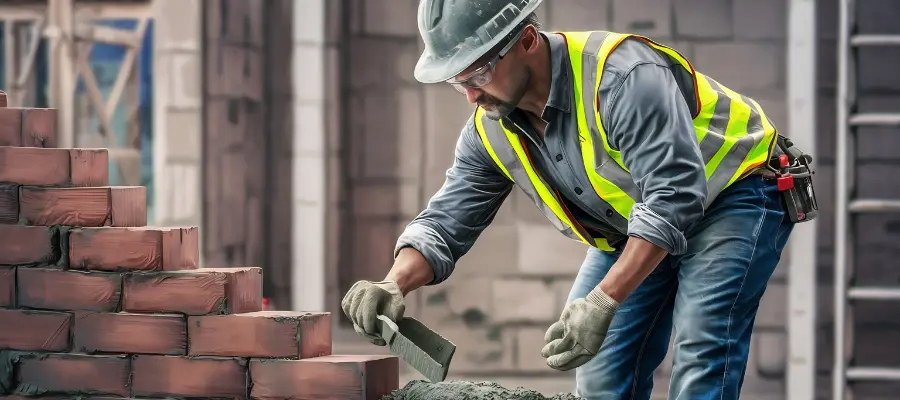
Brick masonry carries significant importance in construction for many reasons:
Energy Efficiency
Brick masonry reduces the heat transfer through masonry brick walls. Irrespective of the hot and sunny outside, the bricks take a long time to absorb that heat and transfer it to the interiors completely. Also, it maintains the heat inside the home remains trapped for a longer duration during the cold months. So it is energy efficient.
Better Longevity
Brick masonry is a good choice for enduring and economical construction Because it neither fades nor needs continuous maintenance like drywall.
Fire Protection
One of the major advantages of brick masonry is its inherent fire safety. It does not fuel fires or emit toxic gases, even in the case of fire. This makes it a natural fire barrier, ensuring the safety of your buildings and the people within them.
Reduction of Noise
The mass of brick masonry also prevents the noise outside from pervading the interiors, and the thickness of the walls decreases sound transmission in the interiors.
Some Basics for Brick Masonry
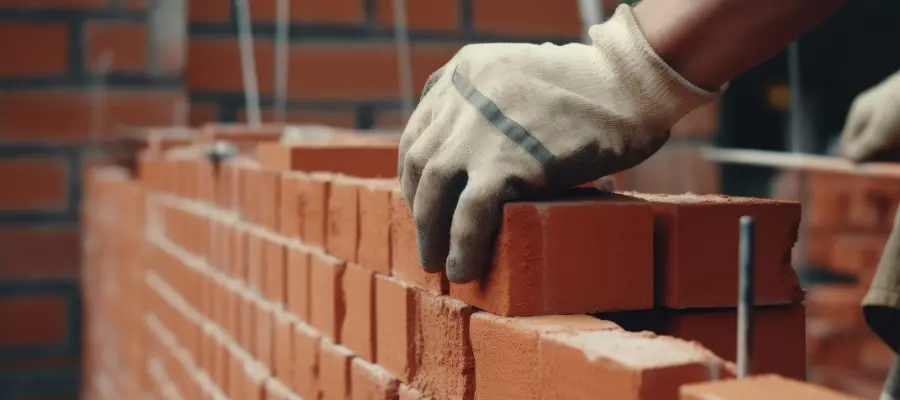
Understanding the basics of brickwork, including types of bricks (like clay and concrete) and bonds (such as stretcher and header), is crucial for ensuring structural stability and aesthetic appeal. Knowledge of these fundamentals helps to choose the right materials and techniques for better masonry construction.
Types of Bricks Used in Brick Masonry
Following are the general types of bricks used in brick masonry
Common Clay Bricks
These bricks are made by baking wet clay in an oven at high heat. They’re strong and tough, so they’re used a lot in building houses, especially where there’s plenty of clay around.
Engineering Bricks
Engineering bricks are super tough and made with the best clay. They’re heated at high temperatures to make them strong and resistant to chemicals and water. They’re used in buildings where strength is crucial.
Fly Ash Bricks
These bricks are a smart way to recycle materials from coal power plants. They mix the leftovers from burning coal with other materials and convert them into bricks. They’re strong and good for the environment.
Concrete Bricks
These bricks are made from sand, cement, water, and big bits of stone. They’re convenient because you can make them right where you need them and change their size to fit different jobs. They’re used for lots of different building projects.
Types of Bond in Brick Masonry
There are numerous types of bonds used in brick masonry. The major types are:
Stretcher Bond
When you lay bricks so only the long sides show, halfway covering the ones above and below, that’s a stretcher bond. It’s the simplest brick pattern.
Header Bond
In this type of bond, each row of bricks is placed with the short end facing out, which is called a header. You can also call it a heading bond.
English Bond
The bricks are laid with a mix of long and short sides. Some rows have the short end facing out (header), while others have the long side showing (stretcher). Sometimes, special bricks are placed at the corners to break up the straight lines.
Flemish Bond
This is a unique and eye-catching pattern where each row has a mix of long and short sides showing, like an English bond. But in Flemish bond, each row alternates between headers and stretchers, creating a captivating checkerboard effect that’s sure to impress.
Tools and Materials for Brick Masonry
Effective brick masonry work needs the right tools and materials. Here’s a list of key tools and materials used in brick masonry:
Tools
- Trowel: A flat tool with a point that spreads mortar and shapes joints.
- Brick Hammer: Cuts bricks and takes off extra mortar.
- Spirit Level: Makes sure bricks are even and straight.
- Brick Chisel: Cuts bricks with precision.
- Jointing Tool: Smooths and forms mortar joints.
- Masonry Saw: Cuts bricks to exact sizes.
- Mixing Tools: These include a board or trough to mix and a hoe or shovel to blend mortar.
Materials
- Bricks: Available in different sizes, shapes, and materials such as clay, concrete, and fly ash.
- Mortar: A blend of cement, lime, sand, and water that sticks bricks together.
- Reinforcement: Steel bars or mesh used in strengthened masonry.
- Waterproofing Agents: Help to shield masonry from water seepage.
Brick Masonry Types
The brick masonry types can be divided into mud brickwork and cement brickwork.
Brick Masonry with Mud
Mud/clayey soil has been used as a building material for ages. In mud brick masonry, mud serves as the mortar. Bricks are bonded through a mud mixture, which is more flexible than cement mortar. This particular type of brick masonry offers different benefits, including cost-effectiveness due to its usage of local materials, good insulation against heat, ease of work with and repair, and buildings with natural shine.
Mud brickwork is the cheapest way to build with bricks, but it has some drawbacks. Instead of cement mortar, builders use mud to fill the gaps between the bricks. These mud gaps can only be 12 milli meters wide. Mud brickwork works best for buildings that are no taller than four meters.
Cement Brickwork
As the name suggests, bricks are laid in cement mortar in this case. Cement brickwork can be further subdivided into three categories: first class, second class, and third class.
Brick masonry with cement is the most commonly used type in modern construction. It uses cement mortar as the binding agent to create robust and long-lasting structures. Bricks are arranged in various patterns, like stretcher or header bond, based on the design needs. This brick masonry type provides strong, stable, and durable buildings.
This brick masonry type offers benefits such as high structural strength and durability, resistance to moisture, fire and pests, a wide range of design possibilities, and a modern and clean aesthetic.
Brick Masonry Techniques
The right methods play a key role in producing high-quality brick masonry work. Here are some basic techniques used in brick masonry:
1. Bricklaying
As for bricklaying, it is a construction process that involves placing bricks in a specific pattern with a preset interlock and joining the adjoining bricks with mortar. The four basic bond patterns are stretcher bond, header bond, English bond, and Flemish bond. All are dissimilar, and every one has its own structural characteristics.
2. Mortar Mixing
The mortar requires the right ratio to set. Normally, it is prepared with a ratio of cement to sand of 1:3 and sufficient water to enable one to work the mix easily. They could also place the lime in order to enable it to be workable and to retain water.
3. Joints and Jointing
The spaces between bricks need to be even and filled with mortar. A jointing tool smooths and shapes these spaces, making the masonry look better and resist weather more.
4. Curing
Curing keeps the masonry damp for a few days after building to let the mortar harden right. This step helps to prevent cracks and makes the masonry stronger.
Construction Procedure for Brick Masonry
- First, mix the mortar with water until it’s smooth and easy to work with.
- Then, spread the smooth mortar evenly along the base-line using a wide tool called a trowel.
- Next, place the first row of bricks in the mortar. Put mortar on the end of each brick and firmly press it into place so the mortar squeezes out from the sides.
- Use a level to make sure the row is straight.
- Add another layer of mortar on top of the first row to start the second row.
- Start the second row with half bricks to make sure the rows are staggered for stability.
- Continue adding bricks, making sure to keep them straight and using a level to check at each step.
- Continue doing this process for every row until you reach the desired height.
How to Improve the Quality of Brick Masonry?
Following are some tips to make your brickwork better:
- Make sure walls are at a perfect 90-degree angle and avoid gaps between rows of bricks.
- Fill every vertical joint with mortar during the pointing in construction to keep moisture out and make the structure strong.
- You must know before plastering that scrape the brick surface 12 mm deep for a smoother finish.
- Spray a bit of water on the surface before laying new bricks.
- Keep mortar joints less than 12 mm thick.
- Build brick structures at a pace of one meter per day.
- Wait at least seven days for the mortar to fully set before using the brickwork.
- Over time, brick masonry has improved, making it even more valuable in construction.
Common Problems and Fixes in Brick Work
Even with good planning and execution, brick projects can run into some usual problems. Knowing these issues and how to fix them helps make sure your project turns out well:
1. Salt Stains
Salt stains are the white, powdery stuff you sometimes see on brick surfaces. They happen when salts that can dissolve in water inside the bricks or mortar move to the surface and form crystals as the water dries up.
- Solution: Make sure to waterproof and drain to reduce water exposure. Use cement with a low alkali content and clean the surface with a mild acid solution if you see efflorescence.
2. Cracking
Many things can lead to cracks in brick masonry, such as temperature variations causing expansion, settling structures, or improper drying.
- Solution: Put in expansion joints to handle movement, let bricks dry, and fix any building issues that might put stress on the masonry.
3. Spalling
Spalling happens when the surface of bricks flakes or breaks off. This often occurs because of freeze-thaw cycles or water infiltration.
- Solution: Pick bricks that don’t absorb much water, treat them to keep water out, and make sure water can drain away from the walls.
4. Poor Bonding
When bricks and mortar don’t adhere well, it can make the whole structure weak and fall apart.
- Solution: Mix the mortar properly and make sure the bricks are clean and a bit wet before you lay them. Fill the gaps, but don’t use too much mortar.
Conclusion
Brick masonry remains one of the most commonly used construction methods because of its durability, versatility, and reliable performance. Proper brick selection, mortar quality, bonding techniques, and skilled workmanship are essential for creating strong masonry structures. Different types of brick masonry serve different purposes, from load-bearing walls to decorative applications. Understanding construction basics, common defects, and maintenance requirements helps ensure long-lasting brickwork and reduces future repair needs.
FAQs
- What is brick masonry?
Brick masonry is a construction method where bricks are arranged in layers and joined together using mortar to create walls and structures. It is widely used for residential, commercial, and structural applications.
- What are the main types of brick masonry?
The main types of brick masonry include load-bearing brick masonry, reinforced brick masonry, composite brick masonry, and brick veneer masonry. Each type is selected based on strength, design, and construction requirements.
- Which brick bond is strongest for masonry construction?
English bond is considered one of the strongest traditional brick bonding patterns because it provides good strength and stability. It is commonly used for load-bearing brick walls.
- What materials are used in brick masonry?
The main materials used in brick masonry are bricks, mortar, and water. Mortar is typically made using cement, sand, lime, or combinations of these materials.
- Why is curing important in brick masonry?
Curing helps mortar develop strength and improves the durability of brick masonry. Proper curing reduces the chances of weak joints and improves the overall performance of the wall.
- What causes cracks in brick masonry walls?
Cracks in brick masonry walls can occur due to foundation movement, thermal changes, moisture problems, poor workmanship, improper bonding, or structural stress. Identifying the cause is necessary before repair.
- How can brick masonry defects be prevented?
Brick masonry defects can be reduced by using quality materials, following correct construction methods, maintaining proper mortar proportions, ensuring skilled workmanship, and providing regular maintenance.
- Is brick masonry suitable for modern construction?
Yes, brick masonry continues to be suitable for modern construction. It is used in residential and commercial projects due to its durability, availability, thermal performance, and design flexibility.
 Sowjanya Siddanoor