


In the modern AEC (Architecture, Engineering and Construction) industry, many alternatives to solid wood are being used for various purposes. These alternatives are typically more sustainable and cost-effective while retaining physical characteristics that are similar to solid wood. One such material is Medium Density Fibreboard. Continue reading to learn all about what this Medium Density Fibreboard is, types of MDF boards, their uses in construction, advantages and limitations and the MDF price in India.
What is MDF?
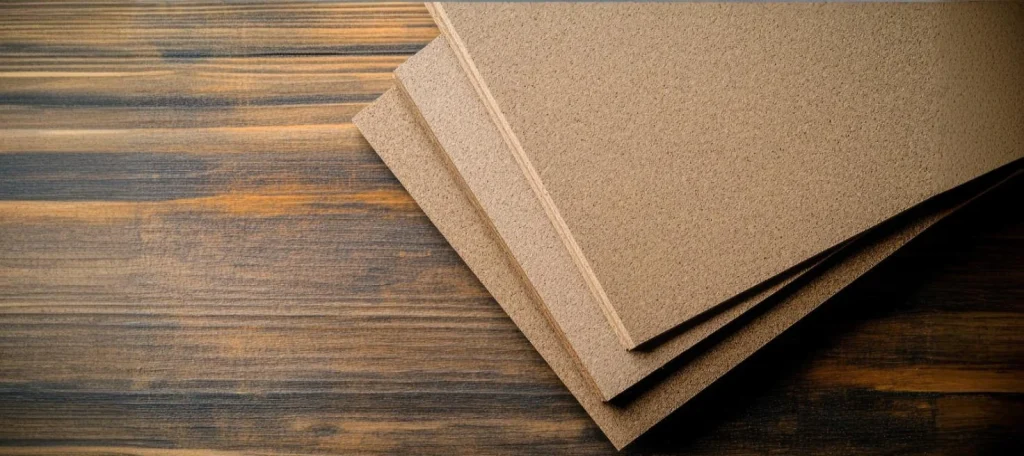
Medium Density Fibreboard (MDF) is a product made by combining wood residues such as fibres, chips and shavings with binders made of wax and/or resin. An MDF sheet or panel is an engineered wood material produced as a result of the wood residuals being subjected to high pressures and temperatures. Functioning as a substitute for natural solid wood, Medium Density Fibreboard has been a popular material since its development in the 1980s and has many diverse applications in buildings.
Properties and Advantages of Medium Density Fibreboard Material
- Cost Effective: Since they are mass-manufactured in factories, Medium Density Fibreboard products are much cheaper than natural wood and even other engineered wood products like plywood.
- Compressive Strength: These boards have high density and compressive strength, giving them the ability to bear light to moderate loads well.
- Finishes: Laminates, veneers, paints and stains that can mimic natural wood patterns or any other finish desired can easily be applied to this material, depicting its versatility.
- Uniformity: Defects in timber, such as cracks, knots and shakes, are common issues in natural wood products. However, Medium Density Fibreboard has a uniformly smooth and hard surface with repetitive patterns and no such defects, as it is a result of factory manufacturing processes.
- Sustainability: Waste materials (i.e., residual fibres/ chips/ shavings) from the manufacture of other natural wood products are used to make these boards. This means that no trees have to be cut to produce them. They are also completely biodegradable and recyclable, making them sustainable construction materials.
- Resistance to Pests: Unlike natural wood, it is resistant to attacks by pests like termites, fungi and insects. This is because various chemicals are used for the manufacturing and finishing of Medium Density Fibreboard products.
MDF vs Plywood vs Solid Wood
The differences between Medium Density Fibreboard, plywood and solid wood can be summarised as follows:
| MDF | Plywood | Solid Wood | |
| Composition | Wood residues like fibres, chips and shavings combined with binders made of wax and/or resin | Different layers of wood veneers are glued together to form plywood boards | Natural wood from trees processed into usable forms |
| Strength | Good compressive strength, but lower than the other two types, cannot be used for structural applications | High strength, can be used for temporary load-bearing applications | Extremely high strength, especially in hardwood varieties |
| Weight | Heavier than plywood, but lighter than solid wood | Very lightweight | Very heavy |
| Durability | Can absorb water very easily, making it more vulnerable to warping | Good water resistance and durability | Very high durability, although it can rot with prolonged water exposure |
| Cost | Extremely cost-effective | Cost-effective, but more expensive than MDF | Very expensive |
| Applications | Interior applications like lightweight furniture, acoustic insulation, cladding, decor | Both interior and exterior applications like shuttering, interior partitions, cladding, heavy furniture, kitchen cabinets, etc. | Both structural (beams, columns, rafters, walls, etc.) and non-structural applications (flooring, furniture, storage, decor) in interiors and exteriors. |
Types of MDF Board
Apart from standard boards, the following types of MDF are commonly available:
- Ultralight MDF Board: Low density matrices of wood fibres makes these boards around 30% lighter than typical fibre boards. These are generally used to make products that do not bear any loads.
- Fire Resistant MDF Board: Fire-retardant chemicals are added to the wood fibres during the manufacturing process of such boards. Compliance with guidelines defined in different national codes (such as the Indian Standard Code IS 12406:2003) ensures that these boards do not help in the spread of fires.
- Moisture Resistant MDF Board: Water-resistant resins are utilised to manufacture these boards, which can be used even in wet areas like bathrooms and kitchens.
- Laminated MDF Board: A pre-laminated or laminated sheet/ board has an additional thin layer bonded to it for decorative and functional purposes. Laminates can have different colours, textures and finishes and protect the underlayers from damage.
- Veneered MDF Board: A thin layer of natural wood (called a veneer) is attached to a typical fibre board to make it veneered. Such boards look exactly like natural solid wood but without being as expensive.
Uses of MDF in Buildings
MDF is used in many non-structural applications in buildings, including:
- MDF Flooring: These boards can be used as a substrate material above rough concrete slabs for levelling. Veneered and laminated boards can also be used for flooring, although these are not ideal for exterior and wet spaces like bathrooms.
- MDF Doors: Since it can be easily cut and machined to produce diverse patterns with additional elements like trimmings, a painted MDF board is an ideal material for doors. It is also a much cheaper alternative to solid wood doors.
- Acoustic Insulation: While it cannot absorb sound, this material can block sound waves. Often, materials like rockwool and foam (which have good acoustic absorption properties) are fixed to MDF boards to create soundproof spaces.
- MDF Panelling and Cladding: Exterior wall cladding as well as interior wall panelling can be done with MDF boards. However, for exterior applications, waterproof variants must be used.
- Furniture: Tables, chairs, bookshelves, kitchen cabinets and other storage units can be made with these boards. Laminates or veneers produce a natural wood aesthetic in these furniture pieces.
- Decorative Elements: The material is often used to make decorative features like wainscoting, shelves and mouldings on interior surfaces.
Limitations of MDF Wood
- Water Absorption: MDF boards can absorb water more easily and are more vulnerable to high temperatures than natural solid wood, making them more prone to warping.
- Weight and Density: MDF boards are much heavier than other engineered wood boards like plywood. This means that they are more difficult to work with.
- Toxicity: Formaldehyde, a known carcinogen, is used in the resins of MDF. The cutting, sawing and other working processes done on MDF have also been studied to produce VOC (Volatile Organic Compounds), making their safety questionable.
- Tools Required: Drilling and screwing along the edges of MDF can cause splits, cracks or small nibs around the screw hole. Regular blades can quickly become blunt when used on MDF and special tungsten carbide-edged blades are required for proper working.
MDF Price
Medium Density Fibreboard sheets/ boards are available in various thicknesses ranging from 2mm to 50mm. The standard size is typically 4ft x 8ft. Some of the common MDF board prices prevailing in India currently are:
| Type of Medium Density Fibreboard | Thickness (mm) | Price per sq ft (₹) |
| Standard boards | 4 – 25 | 10 – 120 |
| Exterior grade/ moisture resistant boards | 4 – 25 | 20 – 200 |
| Veneered boards | 6 – 25 | 50 – 1500 |
| Laminated boards | 6 – 25 | 40 – 1200 |
However, these values are approximate and the actual MDF sheet price can vary depending on factors like location, type, design, special properties, availability and brand.
Ensuring the Best Materials in Your Building
Ensuring the right type, brand and quality of MDF for use in various building applications requires industry expertise and knowledge of market trends. Brick & Bolt, a tech-enabled construction company, works with the leading manufacturers, suppliers and brands in India to ensure the supply of the best quality materials like MDF boards at the lowest prices. With premium quality assured by 470+ tests conducted for every project, the company has become a reputed leader in the construction industry. To use the best quality materials in your commercial or residential building project, get in touch with Brick & Bolt today!
Frequently Asked Questions (FAQs)
- What is MDF material?
Medium Density Fibreboard is an engineered wood product made by combining wood residues such as fibres, chips and shavings with binders made of wax and/or resin.
- How is MDF made?
It is made by combining wood residues such as fibres, chips and shavings with binders made of wax and/or resin under high pressures and temperatures.
- Is MDF better than wood?
Solid wood has extremely high structural strength, stability and durability, while MDF is a cheaper material suitable for making interior furniture and decor pieces.
- What is MDF used for?
In the construction industry, it is used in interior applications to make non-load-bearing furniture, wall cladding, acoustic panels, decorative elements, flooring and doors.
- Is MDF better than plywood?
MDF has lower strength and is heavier than plywood, can be used only for non-load-bearing furniture; while plywood has better moisture resistance, is stronger, but more expensive.
 prasanthkumar