


PMC in construction means Project Management Consultant or Project Management Consultancy appointed to plan, coordinate, monitor, and control a construction project on behalf of the owner. A PMC helps manage time, cost, quality, contractors, drawings, procurement, site progress, risks, and handover documentation. This role is useful when homeowners, developers, or institutions need professional supervision and structured project control. This guide explains PMC meaning, responsibilities, benefits, limitations, cost factors, and when hiring a PMC is useful for house or building construction.
Quick Summary
PMC in construction refers to a Project Management Consultant who supports the owner by managing planning, scheduling, cost control, quality checks, contractor coordination, site monitoring, reporting, and project closeout. A PMC does not usually replace the contractor or architect; it helps coordinate them so the project follows scope, budget, timeline, and quality expectations.
What is PMC in Construction?
PMC or Project Management Consultancy, is a third-party firm that offers construction-related services including planning, execution, and completion of projects. They act as the client’s representative and ensure that the project is carried out properly within the time, budget, and specified quality standards.
A PMC may assist with:
- Project planning
- Budget tracking
- Contractor coordination
- Design and drawing coordination
- Tendering and procurement support
- Site supervision
- Quality control
- Safety monitoring
- Schedule tracking
- Risk identification
- Progress reporting
- Final handover support
Engineers India Limited describes PMC services as management support for smooth project implementation, including guidance on scope definition and interfaces between agencies.
Key Roles and Responsibilities of PMC
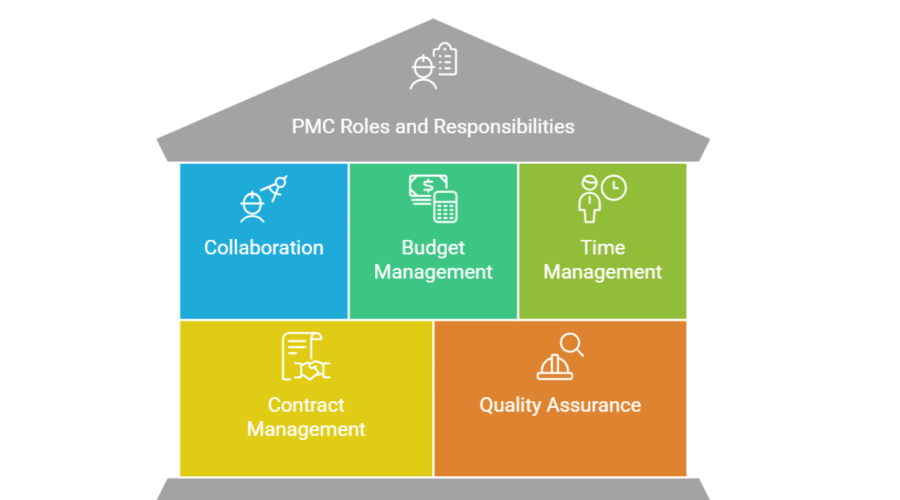
- PMC professionals work closely with architects, engineers, and designers to ensure that the plan and design coincide with the project requirements.
- They prepare and manage the budget to ensure that the project is carried out within the allocated funds. They help estimate and allocate the money spent on different construction activities.
- They keep track of time to ensure that the project is completed within the allocated timeline.
- They prepare and manage contracts of stakeholders involved in the construction process, from contractors to suppliers.
- They ensure that the construction meets the quality standards by performing frequent inspections, corrective measures and other quality checks.
- They help in identifying the potential risks involved in the project and create strategies to mitigate them through early detection and proactive solutions.
- They are responsible for communicating timely updates and sending detailed reports on project progress and challenges to the client.
- After completion, the PMC ensures that everything is done as per the specifications and hands over all the paperwork and documentation.
Types of PMC services in Construction
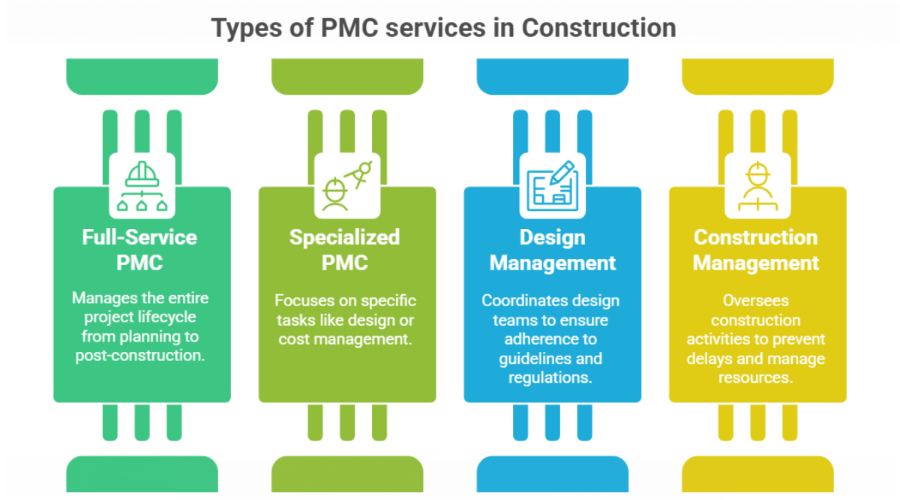
Full-Service PMC
They handle the entire project throughout the span, from planning and design to delivering the project, and even in post-construction activities.
Specialised PMC
These are specialised PMCs that are hired to oversee only a specific task or aspect of the construction, such as design, construction, or cost management.
Design Management
They focus on managing and coordinating with the design team to oversee the planning and designing process. They ensure that the design team follows the project guidelines and adheres to regulations.
Construction Management
They solely focus on the construction of the whole site and coordinate with the builders for their construction activities. They manage resource availability and make sure that no delays happen in the work being done on the construction.
PMC vs Contractor vs Architect
|
Role |
Main Responsibility |
Works For |
|
PMC |
Manages time, cost, quality, coordination, and reporting |
Owner/client |
|
Contractor |
Executes construction work using labour, materials, and equipment |
As per contract |
|
Architect |
Designs spaces, layout, aesthetics, and architectural drawings |
Owner/client |
|
Structural engineer |
Designs structural members such as beams, columns, slabs, and footings |
Owner/client or design team |
A PMC does not replace the contractor or architect. It coordinates and monitors their work so the owner gets better control over the project.
Cost Factors for PMC Services
PMC fees vary based on project size, location, scope, visit frequency, reporting level, and professional experience.
|
Cost Factor |
Impact on PMC Fee |
|
Project size |
Larger projects need more time and coordination |
|
Scope of service |
Full project management costs more than site visits only |
|
Site visit frequency |
Daily supervision costs more than weekly reviews |
|
Project duration |
Longer projects increase professional involvement |
|
Technical complexity |
Structural, MEP, and premium finishes need more expertise |
|
Reporting format |
Detailed reports, dashboards, and documentation add effort |
|
Consultant experience |
Experienced teams may charge higher fees |
|
Location |
Travel and local market rates affect cost |
The cheapest PMC is not always the best choice. A weak consultant may miss defects, delays, and billing issues, which can cost more later.
Benefits of Hiring PMC for Construction
- They help ensure that the project will be completed on time and within the available budget.
- They ensure compliance with quality requirements and assist in limiting potential defects and risks.
- Proactive risk management and mitigation methods also help control risks and enhance the life of the construction
- They work to optimise the use of various resources by projecting queries through suppliers and contractors for progress and saving resources.
- They help to enhance the general success of a project by streamlining and scheduling the construction process.
- They serve as a representative for builders, contractors, suppliers, and homeowners, maintaining an effective channel of communication while keeping it free of any disputes.
- They bring in experience and offer unbiased advice and guidance throughout the entire phase.
Challenges of PMCs in Construction
- The biggest challenge of the PMCs is to define the exact scope of services and responsibilities.
- Managing multiple stakeholders and contractors can be challenging, and it often proves to be a complex task. When not executed properly, it could lead to conflicts or potential delay.
- Building and managing strong client relationships requires effective communication and trust, which is a challenging task.
- Addressing unforeseen issues and resolving conflicts effectively can be challenging.
- The PMCs must be up-to-date on the latest industry trends and use the latest technology to schedule and maintain construction activities and communicate with different stakeholders effectively.
How to Choose the Right PMC for Your Construction?
Experience and Expertise
Select a PMC that has experience handling similar projects and has the expertise that aligns with the specific requirements of the project. Ensure that the PMC has a clear understanding of the local regulations, building codes, and trends in the construction industry to ensure smoother project execution. The PMC team should be highly skilled with technical knowledge in construction materials, methods , and project management tools to keep track of the progress.
Reputation and Track Record
The PMC firm should have a proven track record and a good reputation with its previous clients. Check for the records and feedback from the previous clients, their successful project completion portfolio, and the awards and certifications they were accredited with.
Competitive Team
Ensure that the PMC team includes certified professionals with the necessary qualifications and experience. They should have a dedicated team with distinctive roles and responsibilities. Ensure that the project manager is easily accessible and takes accountability for quick decision-making.
Project Management Methodology
Inquire about the project management approach they practice, and check if it is up to the industry standards. Check if the structured methodology can be customised to suit the specific project needs.
Communication Skills
Effective communication is the key to avoiding misunderstandings and the occurrence of potential disputes. Ensure that the PMC firm is transparent about the project progress, cost, and other project-related challenges. It should act as a liaison between the stakeholders and provide effective communication with the clients.
Cost-Effectiveness
Ask for quotations to analyse the competitive pricing among different PMCs that offer the same services. Ensure that the PMC offers fair and competitive pricing and helps define the budget transparently without any hidden costs. The cost could be the major factor in deciding the PMC firm, and fitting it within the budget is essential.
Practical Example: PMC for House Construction
Consider a homeowner building a two-storey house while living in another city. The architect prepares drawings, the contractor executes work, and vendors supply materials. Without regular monitoring, the owner may not know whether steel reinforcement, concrete grade, waterproofing, or finishing work is being done correctly.
A PMC can review drawings, track milestones, visit the site, check quality, verify bills, coordinate meetings, and send reports. This gives the owner better visibility and reduces the chance of unnoticed mistakes.
Conclusion
PMC in construction means Project Management Consultant or Consultancy appointed to manage and monitor a project on behalf of the owner. A PMC helps with planning, scheduling, cost control, quality checks, contractor coordination, site reporting, risk management, and handover. It is especially useful for full house construction, multi-storey projects, remote owners, premium homes, and projects with multiple agencies. For best results, define the PMC scope clearly, choose an experienced team, and follow documented reports and action points.
FAQs
- What is PMC in construction?
PMC in construction means Project Management Consultant or Project Management Consultancy. It is a professional team appointed to manage planning, coordination, site monitoring, cost control, quality checks, reporting, and project handover on behalf of the owner. - What is the full form of PMC in construction?
The full form of PMC is Project Management Consultant or Project Management Consultancy. It refers to a person or organisation that helps manage construction projects from planning to completion. - What does a PMC do in a construction project?
A PMC prepares schedules, monitors site progress, coordinates contractors, checks quality, reviews bills, tracks risks, manages communication, and supports project handover. Its role is to improve control over time, cost, quality, and scope. - Is PMC the same as a contractor?
No, a PMC is not the same as a contractor. The contractor executes the construction work, while the PMC monitors and coordinates the project on behalf of the owner. The PMC helps check whether work follows drawings, timelines, and quality expectations. - Is PMC needed for house construction?
PMC is useful for house construction when the owner cannot supervise daily, the project is multi-storey, quality expectations are high, or many contractors are involved. For very small repair works, a PMC may not be necessary. - How does PMC help control construction cost?
A PMC helps control cost by reviewing estimates, tracking quantities, checking contractor bills, monitoring variations, reducing wastage, and identifying cost risks early. It does not eliminate cost changes but improves financial visibility. - What should be included in a PMC agreement?
A PMC agreement should include scope of work, site visit frequency, reporting format, fee structure, responsibilities, exclusions, authority level, payment terms, documentation requirements, and closeout support. Clear scope reduces disputes later. - How do I choose a good PMC for construction?
Choose a PMC with experience in similar projects, qualified technical staff, clear reporting systems, strong site inspection methods, transparent fees, and good references. Ask for sample reports and define responsibilities before signing the agreement.
 prasanthkumar
  wordpress-prod