


Choosing which cement is best for plastering is essential for achieving strong, smooth, and durable walls. Cement plaster protects masonry surfaces, improves appearance, and helps reduce damage caused by weather exposure. The right cement type, along with proper sand selection, mixing, curing, and workmanship, plays a major role in plaster quality. This guide explains suitable cement types for plastering, factors to consider before selection, common mistakes, and practical tips for achieving long-lasting wall finishes.
Factors to Consider When Choosing Cement for Plastering
- Strength Requirements
The strength of the cement decides how effectively the plaster can withstand forces like weathering and cracking. For most projects, 43-grade OPC offers an ideal balance of strength and workability, providing a smooth finish for internal and external walls.
In damp areas like bathrooms and kitchens, cement with waterproofing properties or additives is recommended to maintain plaster integrity. For faster setting, Rapid Hardening Portland Cement is an option, though care must be taken to ensure sufficient working time.
- Setting Time
The setting time of cement influences its application process and varies based on climate and project requirements. The initial setting refers to when the mixture begins to harden, and the final setting occurs when it has completely hardened. OPC’s moderate setting time suits most plastering needs. In cold climates, cements with shorter setting times are preferable. In hot climates, those with longer setting times allow for adjustment at application. Retarders or accelerators may also alter the set time to meet specific needs.
- Cost Considerations
Budget plays a significant role in selecting cement. While cheaper options may save costs upfront, high-quality cement ensures durability and reduces long-term maintenance expenses. For instance, 53-grade OPC may have a higher initial cost but offers greater strength and quicker setting, which can save on labour and time.
Buying cement locally and in bulk can help lower costs. However, using additives or special mixes may be expensive but might be needed to ensure the plaster performs well.
- Decision-Making
To choose the best cement, compare quotes from multiple suppliers, balance costs with project requirements, and consider long-term savings over initial expenses.
By factoring in strength, setting time, and budget, you can select cement that ensures durable and high-quality plaster, enhancing the overall structure.
Types of Cement Commonly Used for Plastering
Many different types of cement with unique features are available for plastering. Some commonly used types of cement for plastering are as follows:
- OPC or Ordinary Portland Cement
OPC is the most commonly used cement in construction. It is a combination of limestone and clay, which promotes excellent binding properties. Hence, strength and durability are improved in buildings.
- PPC or Portland Pozzolana Cement
PPC is prepared by mixing Portland cement clinker with pozzolanic materials. It is a thermal and waterproof material that mainly resists cracks and structural damage caused by moisture and changes in weather. This helps improve the construction’s durability.
- RHC or Rapid Hardening Cement
RHC is a specialized cement designed for quick setting and hardening. Available in RHC 43 and RHC 53 grades, the latter is preferred for its faster adhesion. It is commonly used for repairing cracks and creating precast concrete components.
- QSC or Quick Setting Cement
QSC is ideal for small-scale projects requiring rapid setting, such as crack repairs and minor roof fixes. It sets faster than RHC but is not recommended for large-scale applications.
- SRC or Sulphate Resistant Cement
SRC is specifically formulated to resist damage from high sulfate concentrations in the surrounding environment. This makes it ideal for use in areas where sulfate exposure could weaken structures. Due to its unique properties, SRC is more expensive than other types of cement.
- White Cement
The white colour makes white cement unique, easy to work with, and has various applications in roofing and decoration. White cement is more resistant and weatherproof.
- LHC or Low Heat Cement
LHC generates less heat during hydration, making it suitable for large concrete structures like dams and foundations. It is typically available in a 38-grade variant, with a compressive strength of approximately 33 MPa after 28 days of curing.
Which is the Best Cement for Plastering?
The best cement for plastering depends on the requirements of your construction. Ordinary Portland Cement, grade 43, gives a smooth finish for usual plastering. The best cement to be used for high-humidity areas is Portland Pozzolana Cement since it has water-resistant qualities. For urgent repairs, apply Rapid Hardening Cement or Quick Setting Cement. In gravel-rich surroundings, sulphate-resistant cement will work best. Think about the climate, strength, cost, and all other factors to choose the right cement for permanent and beautiful plastering.
Comparison of OPC and PPC for Plastering
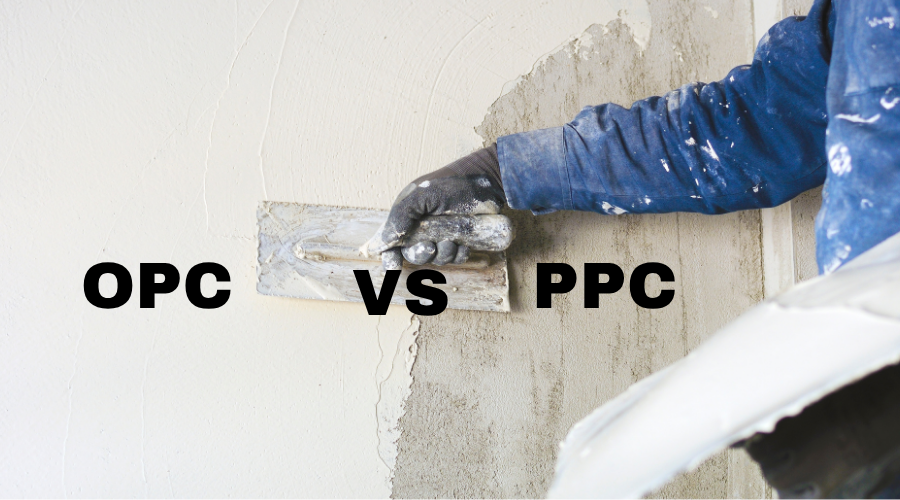
| Features | OPC (Ordinary Portland Cement) | PPC (Portland Pozzolana Cement) |
| Composition | Made from limestone and clay. | It is produced by mixing pozzolanic substances such as fly ash with OPC. |
| Setting Time | The quicker setting time makes it ideal for fast-paced projects. | Slower setting time, ideal for extended working periods. |
| Durability | Offers good strength but is less resistant to moisture. | Highly durable with better resistance to moisture and chemical attacks. |
| Climate Suitability | It is best for dry regions, which are prone to cracks in humid conditions. | Suitable for humid and high-moisture areas, and is resistant to cracking. |
| Cost | Slightly more expensive due to faster setting properties. | It is more affordable because of the presence of pozzolanic materials. |
| Workability | Provides smooth finishes but requires careful application. | Easier to work with, especially for large-scale plastering. |
Final Thoughts
Selecting which cement is best for plastering depends on the application, climate, and construction requirements. PPC cement is commonly preferred for plastering due to its workability and durability, while OPC cement may be suitable when faster strength development is needed. Regardless of the cement type, proper mixing, surface preparation, and curing are essential for achieving strong, smooth, and long-lasting plaster finishes.
FAQs
- Which cement is best for wall plastering?
PPC cement is generally considered suitable for wall plastering because it offers good workability, durability, and better resistance to shrinkage cracks. However, OPC cement may also be used depending on project requirements.
- Can OPC cement be used for plastering?
Yes, OPC cement can be used for plastering. It provides faster early strength development but requires proper mixing and curing practices to reduce the risk of shrinkage cracks.
- Why is PPC cement preferred for plastering?
PPC cement is preferred because it provides better workability, lower heat generation, and improved long-term durability, making it suitable for smooth and stable plaster finishes.
- What is the ideal cement-sand ratio for plastering?
The cement-sand ratio depends on the application and specifications. Common mixes include 1:4 and 1:6 ratios, but the appropriate proportion should be selected based on surface conditions and project requirements.
- Does cement quality affect plaster cracks?
Yes, cement quality can influence plaster performance. However, cracks are also affected by sand quality, water content, surface preparation, curing, and workmanship.
- How long should cement plaster be cured?
Curing duration depends on site conditions and specifications. Proper curing after plastering helps improve strength, reduce shrinkage cracks, and enhance durability.
- Is PPC cement suitable for exterior wall plastering?
Yes, PPC cement can be used for exterior plastering when combined with proper surface preparation, suitable mix design, waterproofing measures where required, and adequate curing.
- What factors affect the durability of cement plaster?
Durability depends on cement quality, sand selection, mortar ratio, application thickness, surface preparation, curing practices, weather exposure, and construction workmanship.
 Sowjanya Siddanoor