

Palladian architecture is a classic architectural style that draws inspiration from the work of the famous 16th-century Italian architect Andrea Palladio. Known for its graceful symmetry, balanced proportions, and timeless elegance, this style continues to influence building design across the world-even today. Whether you are building a classical house or modern structures, the principles of Palladianism remain suitable as a combination of beauty and function.
In this blog, we delve into what makes Palladian architecture unique, highlight its key characteristics, and explain why it remains a cornerstone of building design.
What is Palladian Architecture?
Palladian architecture is a special style created by the architect Andrea Palladio (16th century). He drew inspiration from the traditional architecture of ancient Rome and Greece, attempting to reimagine these ancient principles for his own era.
He highlighted symmetry, mathematical proportion, and the use of classical exterior elements such as columns, pediments, and porticos. Therefore, a Palladian building’s exterior often appears simple and balanced, while the interior features luxurious decorations.
What are the Timeless Palladian Style Architecture Characteristics?
The following are the major Palladian architecture characteristics:
Strict Adherence to Symmetry
Palladian buildings are designed with mathematical precision applied to façades, floor plans, and even window placements. The proportions of each room (like height and width) within the building were calculated using simple ratios like 3:4 and 4:5.
Classical Columns & Pediments
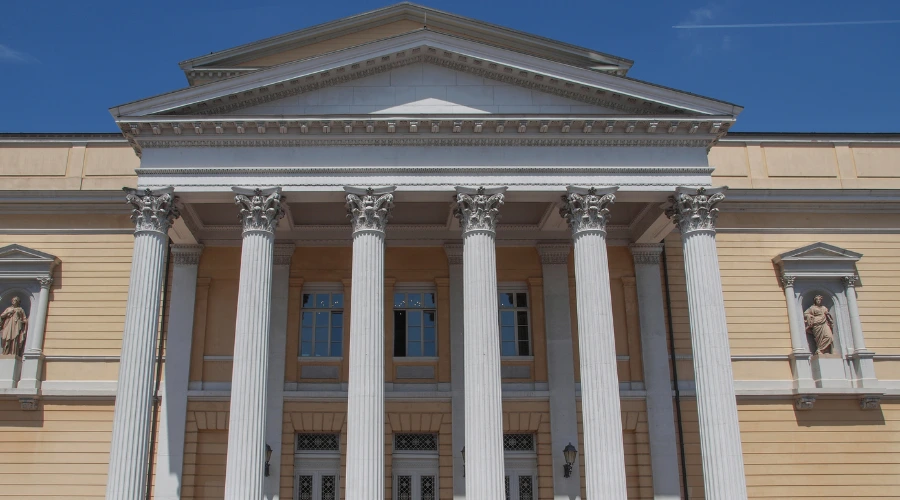
Buildings in Palladian style architecture often include Doric, Ionic, or Corinthian columns to support the structure, forming a portico and triangular pediments. These Palladian architecture features are typically used to create a sense of grandeur and offer a noble entrance to the structure. Arches and arcades are also included, adding depth and visual interest to the exterior of the building.
Palladian Window and Door
A Palladian window is also called a Venetian window or Serlian window. This special architectural feature is made of a central arched window flanked by two smaller rectangular windows. This design can easily balance the symmetry of the building and offer an elegant appearance, allowing light to enter the building.
The doors of the Palladian building are surrounded by pilasters, entablatures, and pediments, highlighting the significance of architectural features.
Use of Light & Space
Palladian architecture gives a lot of importance to natural light and airflow. Large entrances, open floor plans, and big windows help bring in sufficient sunlight and fresh air, making the inside of the building feel bright, open, and connected to the outdoors. Palladio designed his villas in a way that made the most of natural views and sunlight. This helped create a peaceful and balanced feeling throughout the space, which is a major feature of this style.
Palladian Architecture’s Global Influence With Examples
Palladian Architecture in Europe
In Europe, Britain became a key place for Palladian architecture in the 1700s. One of the examples of Palladian architecture in Europe is Chiswick House, designed by Lord Burlington, which shows the style’s love for balance (symmetry) and classical temple-like fronts. In France, architects were also inspired by the Palladian style and created many buildings that created balanced yet grand looks, like the later parts of the Louvre Palace.
Palladian Architecture in America
During the colonial period, Palladian architecture became more famous in America. Some of the most popular Palladian architecture examples here are Thomas Jefferson’s Monticello, the White House, and the Redwood Library in Newport.
Palladian Architecture in India
In India, Palladian design came during the British colonial period, especially in cities like Calcutta (Kolkata) and Delhi. Examples include Raj Bhavan in Kolkata, Gyanbagh Palace in Hyderabad, and St. James’s Church in Delhi. Palladian style, with its focus on balanced plans and clear, logical design, still attracts architects who want to create timeless and elegant buildings.
Why Palladian Design Never Goes Out of Fashion
- Timelessness: Palladian principles like symmetry, proportion, and classical elements have been used for centuries to create aesthetically attractive and functional buildings. With these elements in modern Palladian-style houses, you can achieve a timeless and attractive look that will stand the test of time.
- Elegance: Palladianism is a simple yet appealing design that suits modern style very well. Whether you are building a new home or renovating an existing one, incorporating Palladian principles into your design can help achieve a timeless and elegant look.
- Functionality: Palladianism is one of the styles that highlights functionality. Along with attractive features, you can achieve functionality easily. If you are looking for a comfortable, spacious, or energy-efficient and sustainable home, incorporating Palladian principles into your design will help you achieve your goals.
- Symbol of Prestige: Its association with classical grandeur makes it a favoured choice for banks, universities, and luxury real estate, where it conveys stability, tradition, and refined taste.
- Use of Durable Materials: The use of durable materials like stone and marble not only enhances their visual impact but also ensures longevity, making many Palladian buildings lasting cultural landmarks.
The Future of Palladian Architecture
- Fitting Modern Styles: This style is both practical and attractive. This architectural style suits both traditional and modern tastes. You can create a stylish and timeless building, regardless of whether it has a traditional look or a more contemporary feel.
- Use of Modern Technology: This architectural style is versatile and well-suited for incorporating new technologies. You can build them with eco-friendly materials and energy-saving systems. This helps to build structures that are not only beautiful but also functional and sustainable. By including modern features with Palladian design, future buildings can be both elegant and energy-efficient.
- Expansion into Various Regions: You don’t have to worry about the region or culture; this architectural style blends in very well, irrespective of these factors. As more people around the world are exposed to Palladian principles, the style will continue to evolve and extend into new regions and cultures, making it even more suitable in the future of architecture and design.
Designing a Modern Palladian Home: Practical Tips & Ideas
A Palladian home can be constructed even in modern times. Here are some practical tips you can follow:
- Opt for Functional Plans: Although Palladianism used very traditional plans, open floor plans may be more practical for many modern families. Include modern spaces like bedrooms, utility rooms and attached washrooms as per your current and future needs. However, you can still make the plan symmetrical and geometrical to retain the Palladian essence. Consult an architect to design the right plans for you.
- Blend the Old With the New: Include modern technology like smart features, modular kitchens and energy-efficient electrical fittings to make your home future-proof. These can have Palladian-style finishes (such as brass finish lights or gypsum finished ceilings to cover electrical systems) to retain the traditional look.
- Use Cost-Effective Materials: Many Palladian architectural features, such as Classical columns and pediments made of stone can be expensive to build in today’s times. You can instead create regular concrete columns and use gypsum or laminated finishes to recreate the stone aesthetic. Old columns and elements can also be sourced from existing or demolished buildings to save money.
The Cost of Building a Palladian-Style Home
The cost of normal construction generally starts around ₹1900/ sq ft. However, the cost of building a Palladian-style home may be as follows:
- Basic Construction: ₹2500/ sq ft
- Average Construction: ₹3100/ sq ft
- Luxurious Construction: ₹4500/ sq ft
These values may vary based on the type of materials used, project size, design complexity and other such factors.
Conclusion and Key Takeaways
Palladian architecture is a style and set of principles that proceed to have an impact on architecture and design. Whether you are constructing a new home or renovating an existing one, including Palladian principles in your design will help you achieve a timeless and attractive look that will stand the test of time. From historic landmarks to contemporary homes, Palladian design adapts well to new technologies, sustainable materials, and changing design preferences.
Its global influence and endless appeal show that true architectural glow never goes out of style. If you’re planning to build or renovate your home using Palladian design, hiring a professional construction company can help bring your dream to life with ease and expertise.
Frequently Asked Questions (FAQs)
- What are the principles of Palladian design?
Palladian architecture is based on the principles of Classical Architecture, which include symmetry, order, proportion and balance.
- What are the common motifs in Palladian design?
Some of the common motifs used in Palladian design are floral, geometric and nature-based patterns such as scallop shells.
- How to identify Palladian architecture?
Palladian architecture can be identified by prominent features like Classical columns, tripartite divisions, Greek temple fronts, large Venetian windows and the use of rough materials on the ground floor with smoother finishes on upper floors.
- What is the difference between Baroque and Palladian architecture?
Baroque is an architectural style that emphasises grandeur with flowing curves and dramatic light patterns, while Palladian architecture is more simple and based on Classical principles like symmetry and geometric designs.
- Who created Palladian architecture?
Andrea Palladio, a famous Venetian architect of the 16th century, is credited with the creation of Palladian architecture.