


You can transfer property without a succession certificate in many Indian cases because succession certificates mainly relate to debts and securities, not routine immovable property transfer. For houses, land, or flats, the usual route depends on whether there is a valid will, clear legal heirs, mutation requirements, and local authority rules. The documents may include a death certificate, legal heir certificate, registered will, probate where required, family settlement, release deed, or partition deed. This blog explains when a succession certificate may not be needed, which alternatives are commonly used, and what owners should check before updating property records.
Quick Summary
To transfer property without a succession certificate, legal heirs usually rely on documents such as a death certificate, legal heir certificate, will, probate where applicable, no objection certificate, family settlement, release deed, or partition deed. For immovable property, the required process depends on title documents, local mutation rules, family consent, and whether any dispute exists.
When You Can Transfer Property Without a Succession Certificate?
You may be able to transfer property without a succession certificate when the property is immovable and the legal heirs can prove their relationship to the deceased. This is common when there is no dispute among heirs and the property records only need mutation or transfer for tax and municipal purposes.
Common situations include:
- The deceased left a valid will.
- All legal heirs agree on who will keep the property.
- Heirs want to update municipal or revenue records.
- One heir releases their share in favour of another.
- Family members divide inherited property through settlement or partition.
- The local authority accepts a legal heir certificate or surviving member certificate.
State portals also show that legal heir certificates are treated as citizen services in several jurisdictions. For example, Tamil Nadu’s e-Sevai portal lists “Legal Heir Certificate” among Revenue Department services.
Understanding the Succession Certificate

A succession certificate is a legal document, as you are aware, that is issued by the court to an heir that verifies their right to inherit the deceased’s estate. The succession certificate includes details about all the debts, securities, and other crucial information, namely bank statements, investments, and other assets that are under the deceased’s name.
In many jurisdictions, you can transfer a property without a succession certificate. Especially if it is an immovable property like a house, unless an authority needs the certificate, you don’t have to produce a succession certificate. Moreover, immovable property transfers are taken care of by other documents, namely a will, a legal heir certificate, or a letter of administration.
Why You Might Not Need a Succession Certificate?
There are certain reasons why you might not need a succession certificate for property transfer:
- Will: If you have a valid will, which is left by the deceased, mentioning the role and the property, then you no longer need a succession certificate.
- Joint Ownership: In case a property is owned and looked after jointly, then the property legally and automatically transfers to the surviving one, which means you need no succession certificate.
- Legal Heir Certificate: Having a legal heir certificate is sufficient to facilitate the transfer of the property.
- Nominee in Records: If the deceased nominated you in housing societies or documented the transfer of property, this can confirm your nomination and bypass the need for a succession certificate.
Steps to Transfer Property Without a Succession Certificate
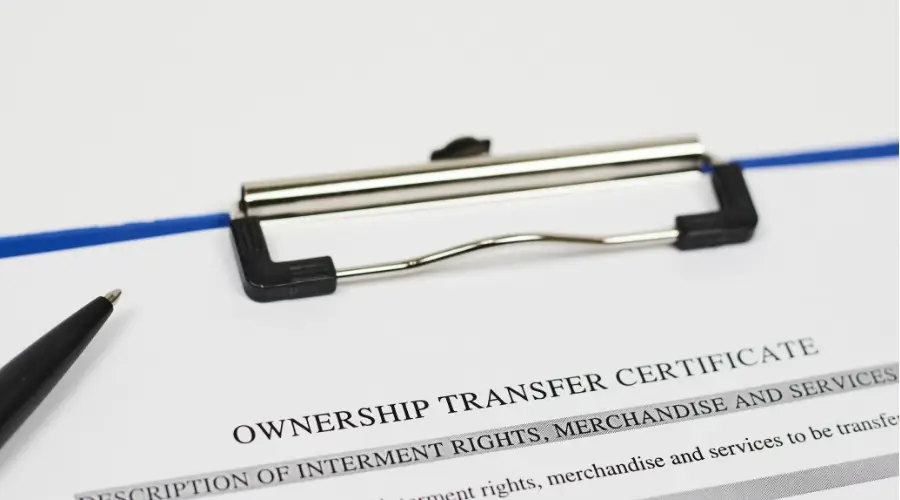
Since there are alternatives to transferring property without a succession certificate, let’s look into the steps to proceed.
1. Verification of the Existence of a Will
The primary and most fundamental step in transferring a property is verifying the existence of the will. The legally available will should outline the details and beneficiaries of the property.
To locate your will, visit your lawyer or any legal authorities. You can also probate the will in court and enforce the terms of the will.
2. Identify Legal Heirs
In case there is no will, then locate a legal heir, which can be identified through a legal heir certificate or via family tree documentation.
You can get a legal heir certificate by visiting your local revenue or municipal office with a death certificate. You have to submit the related documents to get the certificate. However, the authorities will verify the claim to see if there is any conflict of interest.
3. Collect Required Documents
It is important to gather the necessary documents before a property transfer.
- A death certificate of the deceased is mandatory.
- Collect property documents, including sale deeds, ownership documents, or title deeds for the original property.
- A family tree document or a legal heir certificate that recognises the heir for the property.
- Gather all the address proofs of all the beneficiaries.
4. Settle Outstanding Dues
Before focusing on property transfers, make sure that the outstanding dues, such as utility bills, property tax, and any loan against the property, are paid. This will avoid any future legal disputes. Check with the property tax departments or local municipalities to see if there are any pending dues. Settle any loans or encumbrances on the property.
5. Proceed with the Transfer Deed
Depending on the mutual agreements, you can proceed with the transfer deed using. the collected documents, either with a transfer by will, a gift deed, or a partition deed.
6. Register the Transfer
Once all the documents are secured, you can register the property transfer in the local sub-registrar’s office. This will make the transfer document legally recognised and recorded.
- Prepare the Deed: Make sure that the transfer deed is prepared with all the legal stamps and drafted according to the format.
- Registration Process: In the presence of a witness, submit the legal document to the sub-registrar’s office.
- Pay Fee and Stamp Duty: The local laws will have a designated stamp duty and registration fee. It is important to attach this document to the other required documents.
Challenges of Transferring Property Documents Without Will
- Conflict Among Heirs: In the absence of will, there is always chaos among the heirs. Each heir may expects a share and make claims, leading to litigation. The process of putting off the dispute is often a costly and lengthy one that requires court interventions.
- Incomplete Documentation: The transfer of property can be delayed if essential documents like the death certificate or property ownership papers are missing. The property transfer cannot proceed with incomplete documentation, thus complicating the process.
- Cost Involved: The transfer of property often has associated costs that are used for registrations and more. If legal issues arise, these costs can increase significantly, especially if the court becomes involved. This adds further complexity to the transfer process.
When a Succession Certificate May Still Be Needed
A succession certificate may still be needed for financial assets, debts, and securities. For example, banks, companies, or financial institutions may ask for it before releasing money or securities where nomination or heirship documents are insufficient.
It may also become necessary if the estate includes movable financial claims along with immovable property. In such cases, heirs may need different documents for different assets. A property transfer may proceed through legal heirship and mutation documents, while financial claims may require a succession certificate.
Conclusion
A succession document is not mandatory for property transfers on immovable properties all procedures should be done with the deed of the surrender period. However, other documents, such as a death certificate, will, and legal heir certificate, are essential. It is crucial to be aware of potential disputes among legal heirs, which can complicate the transfer process. Given the variability in laws across jurisdictions, seeking legal counsel is advisable to ensure compliance and mitigate challenges.
FAQs
- Can I transfer property without a succession certificate in India?
Yes, you can transfer property without a succession certificate in many immovable property cases. Legal heirs often use a death certificate, legal heir certificate, will, probate where required, NOC, release deed, or partition deed. The correct document depends on local rules and whether the heirs agree. - Is a succession certificate required for house property?
No, a succession certificate is usually not the main document for house property transfer. It is mainly used for debts and securities. For a house, authorities commonly ask for proof of title, death certificate, legal heir certificate, will, consent documents, and mutation application papers. - What document is needed if there is no will?
If there is no will, legal heirs usually need a death certificate, legal heir certificate, identity proofs, property documents, and consent documents. If one heir wants full ownership, other heirs may need to execute a registered release deed, partition deed, or family settlement. - Can property be transferred using only a legal heir certificate?
A legal heir certificate may help with mutation, but it may not be enough for final ownership transfer where shares are being changed. If heirs are giving up rights or dividing property, a registered deed may be needed. Local authority requirements should be checked. - Is mutation proof of ownership?
No, mutation is not final proof of ownership. It updates municipal or revenue records for tax and administrative purposes. Ownership is normally proved through title documents, succession, a valid will, registered deeds, or a court order. - Do all legal heirs need to sign for property transfer?
Yes, all legal heirs usually need to participate if the property is being transferred to one heir or divided among heirs. Their consent may be recorded through an NOC, affidavit, release deed, partition deed, or family settlement, depending on the legal requirement. - Is probate required to transfer inherited property?
Probate may be required in some cases, especially where a will must be proved before it is acted upon. The requirement depends on the location, religion, property facts, and applicable succession law. A lawyer should review the will before mutation or sale. - Can inherited property be sold without mutation?
Inherited property may be difficult to sell without updated records, even if legal title exists through succession. Buyers, banks, and authorities often expect mutation and clear heirship documents. Updating records before sale reduces objections and improves transaction confidence.
 wordpress-prod