


Conversion of land from agricultural to residential means obtaining legal permission to use farmland for residential construction. Agricultural land cannot usually be used for houses, layouts, villas, apartments, or residential plots unless the land use is permitted by the local planning and revenue authorities. The process may involve title checks, zoning verification, land conversion application, payment of conversion charges, and building plan approval. This guide explains the meaning, process, documents, fees, risks, and checks required before converting agricultural land for residential use.
Quick Summary
Conversion of agricultural land to residential use is the legal process of changing land use from farming to housing. The owner usually applies to the revenue or planning authority, submits land records and layout details, pays applicable charges, and receives conversion or change-of-land-use approval before starting residential construction.
This article will explain the key steps, challenges, and effects of turning farmland into residential areas.
What is Agricultural Land?
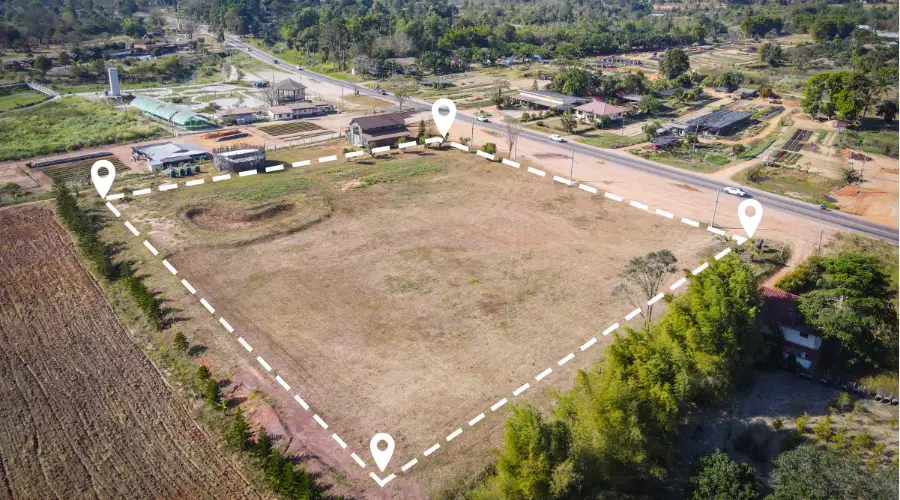
Agricultural lands are used for farming activities. It involves the production of crops and plants as food for humans and other living beings. It also requires an interest, knowledge, and specialised skills in various farming methods, irrigation, pest control, etc. A farmer can cultivate his food from his agricultural land and lead a sustainable lifestyle without depending on anyone.
What Is Agricultural to Residential Land Conversion?
Agricultural to residential land conversion is the legal approval that allows land recorded for agricultural use to be used for residential purposes. After conversion, the land can be considered for residential development, subject to zoning, building approval, layout approval, infrastructure requirements, and local development rules.
This conversion does not automatically permit any type of construction. A converted plot may still need:
- Building plan approval
- Layout approval
- Road access approval
- Drainage and utility clearance
- Environmental or water-related clearance, if applicable
- Gram panchayat, municipality, or development authority permission
In simple terms, conversion changes land-use permission, while building approval permits construction.
Why Is Land Conversion Required?
Land conversion is required because land use is regulated through revenue records, master plans, zoning rules, and local development regulations. A plot marked for agriculture may not be legally usable for residential construction until the competent authority approves the change.
The Delhi Development Authority, for example, publishes master plan documents, land use maps, development controls, and land use modification notifications for planned development. This shows why checking official land use and planning documents is essential before assuming that land can be used for housing.
Conversion is needed to:
- Legally use agricultural land for residential purposes
- Avoid unauthorised construction
- Obtain building plan approval
- Improve loan and resale eligibility
- Update revenue records
- Pay applicable conversion charges
- Align land use with the master plan or zoning rules
Without proper conversion, even a structurally sound building may face legal and approval issues.
Conversion of Land from Agricultural to Residential: Key Difference Before and After
|
Factor |
Before Conversion |
After Conversion |
|
Land use |
Agricultural or farming use |
Residential use, if approved |
|
Revenue record |
Recorded as agricultural land |
Updated as non-agricultural or residential, where applicable |
|
Construction permission |
Usually restricted |
Can be considered after building approval |
|
Loan eligibility |
May be difficult for housing loans |
Easier if title and approvals are clear |
|
Resale clarity |
Lower if use is disputed |
Better if records are updated |
|
Development rights |
Limited by agricultural use |
Subject to residential zoning and building rules |
|
Risk level |
Higher if construction starts |
Lower if approval is valid and complete |
Conversion only creates legal eligibility for residential use. The owner must still follow building bye-laws and sanctioned plan requirements.
Who Gives Permission for Land Conversion?
The approving authority depends on the state and location. It may be one or more of the following:
|
Authority |
Possible Role |
|
District Collector or Deputy Commissioner |
Revenue-level land conversion approval |
|
Tehsildar or Tahsildar |
Site inspection and land record verification |
|
Sub-Divisional Magistrate |
Review or recommendation in some states |
|
Revenue Department |
Change of land use and record updates |
|
Town Planning Authority |
Zoning, master plan, and land use verification |
|
Development Authority |
Layout or building plan approval |
|
Municipality or Panchayat |
Local construction and occupancy permissions |
In Karnataka, the 2023 amendment to the Land Revenue Act states that Deputy Commissioner permission is not required for diversion of agricultural land for non-agricultural purposes if the land use matches the published Master Plan, subject to fee and self-declaration conditions. For land outside a local planning area without a published Master Plan, the amendment provides an application and affidavit process before the Deputy Commissioner, with specified timelines and deemed provisions.
This example shows why the local master plan and state rules must be checked first.
Key Factors to Consider Before Conversion
The major factors that influence the conversion of agricultural land into residential land are as follows:
- Environmental effect
- Zoning Rules and Regulations
- Land quality
- Infrastructure needs
- Local economic impact
- Local community impact
- Urban Expansion
- Long time sustainability
Required Documents to Convert Agricultural Land to Residential Land
For any kind of conversion, the paperwork plays a crucial role. In this aspect, several documents are mandatory for converting the agri-land to residential land, but it depends upon the state and authorities.
Here are the documents listed below,
1. Application form requesting the conversion of agricultural land to residential land submitted to the relevant local authority (such as the Revenue Department or Urban Development Authority).
2. A copy of the Sale Deed/Title Deed
3. Khata Certificate(Karnataka)/Patta(Tamil Nadu)/ Pune (7/12 property card)/ Faridabad (Intkal).
4. RTC (Record of Rights, Tenancy, and Crops)
5. Land Revenue Receipts
6. Zonal Certification
7. Mutation Document
8. No Objection Certificate (NOC) from panchayat or local council
9. Land Map/Survey Map
10. Affidavit
12. Tax Clearance Certificate
13. Power of Attorney (if applicable)
Once these documents are ready, they must be submitted to the relevant local authorities for review. After verifying the documents, they will conduct necessary inspections; then, the authority will grant approval for the conversion of agricultural land to residential land. These are subject to any applicable conditions.
The Application Process for Converting Agricultural Land to Residential Land
In India, land conversion involves a specific process that can vary depending on state and local regulations. It can be done either online or offline.
Let’s look at the general steps involved in both methods.
Offline Application Process
- Keep all the documents ready to begin the application process.
- Approach the revenue department that handles land-related issues in your zone. The specific department can vary by state; for example, in some regions, the local urban development authority or the panchayat handles these matters. Usually, this department is in the District Collector’s office, Tahsildar, or local urban development authorities.
- Enter the necessary details, enclose the required documents, and submit the form. Fees may be applicable depending on the size of the land and locality.
- Next, the authorities will verify your documents and inspect your property.
- If the application is approved, the authorities will issue an official Conversion Order, allowing you to change your agricultural land use to residential.
- After receiving the Conversion Order, the landowner must register it with the local land records office. This ensures that the conversion is legally recognised.
Online Application Process
In many states, the land conversion process can be completed online through the respective state government portals. Here’s a general overview of the online process:
- Initially, research and get into the official state portal of the Urban Development Authority or Revenue Department.
- Create an account and log in.
- You will enter the “Land Conversion” or “Change of Land Use” section of the portal. Enter accurate details about the land, owner, and requested conversion.
- The requested documents should be uploaded as the scanned copy.
- The next step is paying the application fee or conversion fee. The fee structure varies significantly by state, and there may be other financial obligations, such as development charges or infrastructure-related fees. Use the convenient payment gateway mode provided on the portal to make a payment. Keep the record of your payment copy safe.
- Next, you will receive an acknowledgement receipt with a reference number. You can use this to track application status.
- The next step is the verification process. Authorities will conduct a site inspection to carefully review all the submitted documents.
- Once they have done so, you will receive the conversion order. You can download it directly from the portal.
Conversion Charges and Cost Factors
|
Cost Factor |
What It Depends On |
|
Conversion charge |
State rules, land area, and land value |
|
Scrutiny fee |
Application and technical review |
|
Development charge |
Local infrastructure requirements |
|
Betterment charge |
Increase in land use value |
|
Survey and mapping cost |
Site plan, boundary marking, and layout preparation |
|
Legal verification |
Title check and document review |
|
Consultant fee |
Architect, planner, surveyor, or legal professional |
|
Building approval fee |
Local authority plan sanction charges |
Conversion cost should be checked before buying land. A low purchase price may become expensive if conversion fees, access issues, development charges, or approvals are difficult.
Common Reasons for Rejection or Delay
|
Issue |
Why It Creates Problem |
|
Land not in residential zone |
Master plan may not permit housing |
|
Ownership dispute |
Authority may not approve unclear title |
|
Missing land records |
Application cannot be verified |
|
No legal road access |
Residential use may be impractical |
|
Government restriction |
Land may be reserved, acquired, or protected |
|
Co-owner objection |
All legal owners may need consent |
|
Pending dues |
Tax or revenue dues may block approval |
|
Incorrect survey details |
Boundaries or area may not match records |
|
Environmental or water restrictions |
Special clearances may be needed |
|
Unauthorised prior construction |
May trigger penalty or regularisation process |
Many problems can be avoided by checking title, zoning, access, and land records before payment.
Legal Consequences of Unauthorised Land Conversion
- If unauthorised conversion involves forged documents or false declarations, you may face charges under Sections 420 (cheating) and 468 (forgery for the purpose of cheating) of the IPC. When there is evidence of fraud or forgery in land conversion processes. Unauthorised conversions without such activities may still lead to penalties but not necessarily criminal charges.
- You will be fined by the local authorities, such as the Revenue Department or Urban Development Authority. The amount fined may depend on factors such as the size of the land, the extent of unauthorised construction, and the deviation from approved land use.
- Demolition orders can also be issued for unauthorised structures even if the land was converted properly but the construction violated building codes.
- If a property is sold after unauthorised conversion, the sale deed may be declared invalid by the courts under the Transfer of Property Act of 1882.
Buyer Checklist Before Purchasing Agricultural Land for Housing
Use this checklist before buying:
- Confirm the seller’s clear title and ownership chain.
- Check whether the land is recorded as agricultural.
- Verify master plan and zoning status.
- Confirm whether residential conversion is allowed.
- Check road access and right of way.
- Review encumbrance, litigation, and acquisition status.
- Ask about conversion charges and development fees.
- Verify whether the land falls near forest, water body, highway, or restricted zone.
- Check whether all co-owners have signed.
- Do not rely only on broker assurances.
This due diligence is essential because conversion risk should be known before registration.
Practical Example
Suppose a buyer wants to purchase agricultural land near a growing town and build a farmhouse-style residence. The land looks suitable, but the revenue record still shows agricultural use.
Before construction, the buyer should check whether the master plan allows residential use, whether the land has legal road access, whether conversion is permitted, and what charges apply. If conversion is approved, the buyer should then obtain building plan approval. If the land falls in a restricted agricultural, green, or reserved zone, residential construction may not be allowed.
Common Mistakes to Avoid
Avoid these mistakes:
- Buying agricultural land without checking conversion possibility
- Assuming all farmland can become residential land
- Starting construction before approval
- Ignoring master plan zoning
- Not checking access road legality
- Paying advance without title verification
- Missing co-owner or family consent
- Confusing conversion approval with building permission
- Not updating revenue records after conversion
- Depending only on unofficial agents or verbal promises
These mistakes can create legal disputes, financial loss, and construction delays.
Conclusion
The change from agricultural to residential use requires formal approval from local authorities and the submission of the necessary documents along with an affidavit. As it favours urbanisation and responds to housing needs, it brings some problems, including the destruction of farmland and environmental pollution. Conversion of land includes the legal formalities, tendering of relevant papers, and adhering to the set legal requirements of the regions. This is because as city areas expand, it will be challenging to manage growth and the effects on farmland and the general environment.
FAQs
- What is conversion of land from agricultural to residential?
Conversion of land from agricultural to residential is the legal process of changing farmland use to housing use. It allows the land to be considered for residential construction, subject to zoning, conversion approval, and building plan permission. - Is land conversion required before building a house on agricultural land?
Yes, land conversion is usually required before building a house on agricultural land. Without approval, the construction may be treated as unauthorised, and the owner may face penalties, loan issues, or demolition risk. - Who approves agricultural to residential land conversion?
The approving authority depends on the state and location. It may be the Collector, Deputy Commissioner, Revenue Department, Tehsildar, SDM, planning authority, development authority, municipality, or panchayat. - What documents are needed for land conversion?
Common documents include title deed, revenue records, mutation record, survey map, site plan, tax receipts, identity proof, affidavit, and NOCs if required. The exact list should be checked with the local authority. - How much does agricultural land conversion cost?
The cost depends on state rules, land area, circle rate, location, proposed use, and local authority charges. It may include conversion charges, scrutiny fees, development charges, survey costs, and consultant fees. - Can all agricultural land be converted to residential land?
No, not all agricultural land can be converted. Land in restricted zones, green belts, reserved areas, acquisition zones, or non-residential master plan areas may be rejected or need additional approvals. - Is land conversion the same as building plan approval?
No, land conversion changes the permitted use of land, while building plan approval permits a specific construction design. A landowner may need both approvals before starting residential construction. - What should I check before buying agricultural land for residential use?
Check title, land records, zoning, master plan use, road access, conversion possibility, pending disputes, acquisition status, fees, co-owner consent, and local approval requirements before buying.
 prasanthkumar
  wordpress-prod