


Affidavit based land conversion is a simplified process where a landowner declares through an affidavit that agricultural land will be used for a permitted non-agricultural purpose, such as residential, commercial, industrial, or institutional use. Instead of going through a long traditional approval route in every case, some states use affidavit-based or online systems to make land conversion faster and more transparent. However, this does not mean land can be converted without rules. Zoning, master plan use, ownership, survey records, fees, restrictions, and local laws must still be checked before construction or sale.
Quick Summary
Affidavit based land conversion allows eligible landowners to apply for changing agricultural land to non-agricultural use by filing a declaration or affidavit with required documents and fees. It is used in some states, including Karnataka in specific cases, but eligibility depends on location, land use, master plan, survey records, and state rules. Always verify current requirements with the revenue or planning authority.
What is Affidavit-Based Land Conversion?
Affidavit based land conversion is a land-use change process in which the applicant submits a sworn declaration stating the intended use of the land and confirming compliance with applicable conditions. The purpose is to simplify the conversion of agricultural land into non-agricultural use where the law permits it.
Brick & Bolt’s existing explanation describes affidavit-based land conversion as an easier procedure used to change agricultural land for non-agricultural use through an affidavit-based system, and notes that it has been adopted in some states such as Karnataka and West Bengal.
The process is especially relevant where governments are trying to reduce delays, digitise land records, and make land-use approvals more predictable. Still, an affidavit is not a free pass. It is a legal declaration, and false information can lead to penalties, cancellation, or legal action.
Why Land Conversion Is Needed?
Agricultural land cannot usually be used directly for housing, commercial buildings, industries, warehouses, layouts, or other non-agricultural purposes unless conversion is permitted. Land-use conversion updates the legal status of the land so that it can be used for the approved purpose.
Land conversion may be needed for:
- Building a house on agricultural land
- Developing residential layouts
- Constructing commercial buildings
- Setting up warehouses or industries
- Applying for building plan approval
- Selling land as converted property
- Getting bank loans for non-agricultural use
- Updating revenue and land-use records
Without proper conversion, the land may remain agricultural in government records even if construction has started. This can create legal, approval, resale, loan, and penalty issues.

Affidavit Based Land Conversion at a Glance
|
Factor |
What It Means |
|
Main purpose |
Change agricultural land to permitted non-agricultural use |
|
Main document |
Affidavit or self-declaration by landowner |
|
Common uses |
Residential, commercial, industrial, institutional use |
|
Authority involved |
Revenue or planning authority, depending on state |
|
Key checks |
Ownership, land use, zoning, survey records, restrictions |
|
Benefit |
Faster and simpler than traditional conversion in eligible cases |
|
Risk |
False declaration or rule violation can invite penalties |
|
Final output |
Conversion order, certificate, receipt, or updated record, depending on state process |
The exact process differs across states, so local verification is essential.
The key aspects of affidavit-based land conversion are:
1. Self-Certification:
The landowner affirms, under penalty of perjury, that land use has changed. They affirm that zoning laws have been met and that the provided data is correct. This does away with the significant necessity of government checks and initiation.
2. Online Application:
Most states allow land conversion through affidavit filing. They process it with web applications, which adds to the ease.
3. Reduced Fees:
Affidavit-based land conversion is cheaper than formal conversion. The latter has a bureaucratic process, making it costly for landowners.
4. Faster Turnaround:
The affidavit-based mechanism speeds up land use’s turnaround time. It avoids long government approval procedures.
The Process Of Affidavit-Based Conversion of Land
1. Preparation of Affidavit:
The landowner makes an affidavit. It describes the land’s features, its current and potential usage, and how it does not violate the zoning ordinances.
2. Online Application:
Often, the landowner can start the affidavit-based land conversion process through an online form on the state’s land record website.
3. Document Submission:
The landowner submits soft copies of the affidavit and other documents, including certificates of title, survey plans, and records of title deeds.
4. Verification and Approval:
The Deputy Commissioner or Collector specialized in the specific area, or the Proper Officer referred to in the application, may check the applications and documents. In this case, the info that led to the land’s conversion is true. The planned use is legal under zoning laws. This led to the authorities’ approval.
5. Payment of Fees:
Other conversions may require fees per the law and filing costs. But, the landowner pays the state’s prescribed fees and the property’s fees.
6. Issuance of Conversion Certificate:
The government sends the land conversion certificate to the applicant. They do this once they approve the application. They send it through the quez system. The landowner can print it.
Affidavit-based land conversion status
Land conversion based on affidavits is a simpler process. It allows Indian landowners to legally change the use of their agricultural land. They can change it for non-agricultural purposes, like residential, commercial, or industrial development. This method removes the need for long government approvals. It is a more efficient option for landowners.
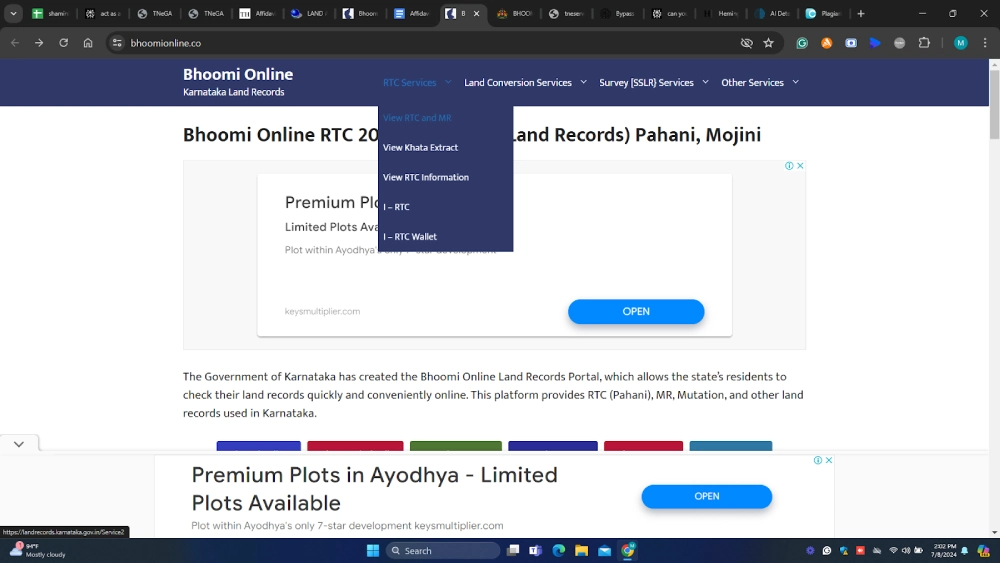
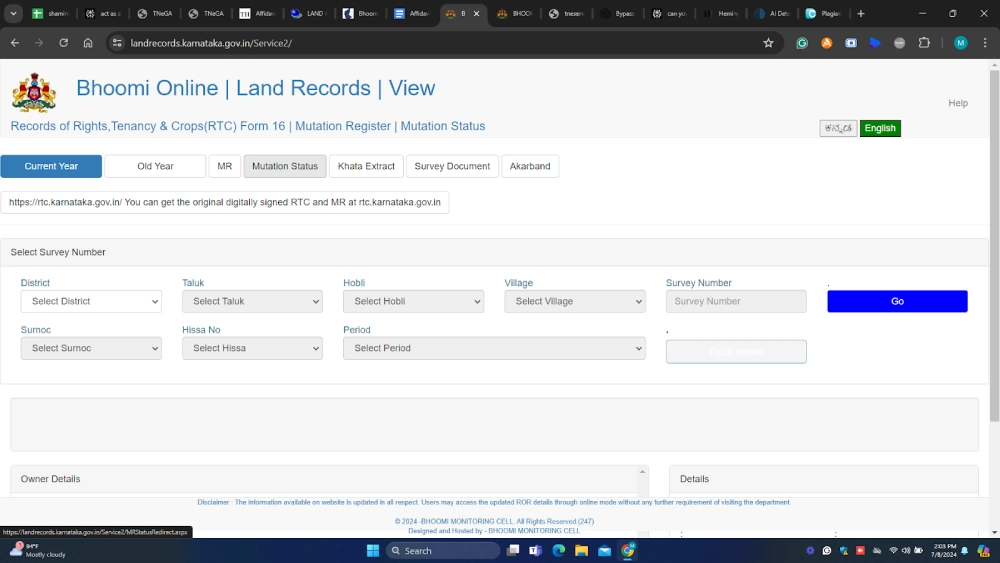
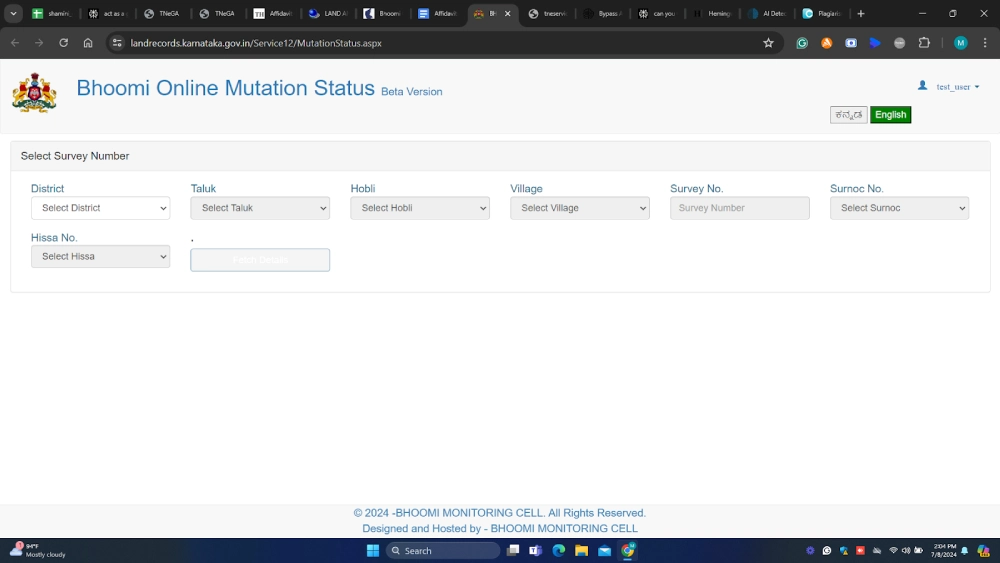
Karnataka: Landowners can check the status of their affidavit-based land conversion application on the Bhoomi portal (https://bhoomionline.co/) by selecting the ‘View RTC and MR’ option and then ‘Mutation Status’.
a.
b.
c.
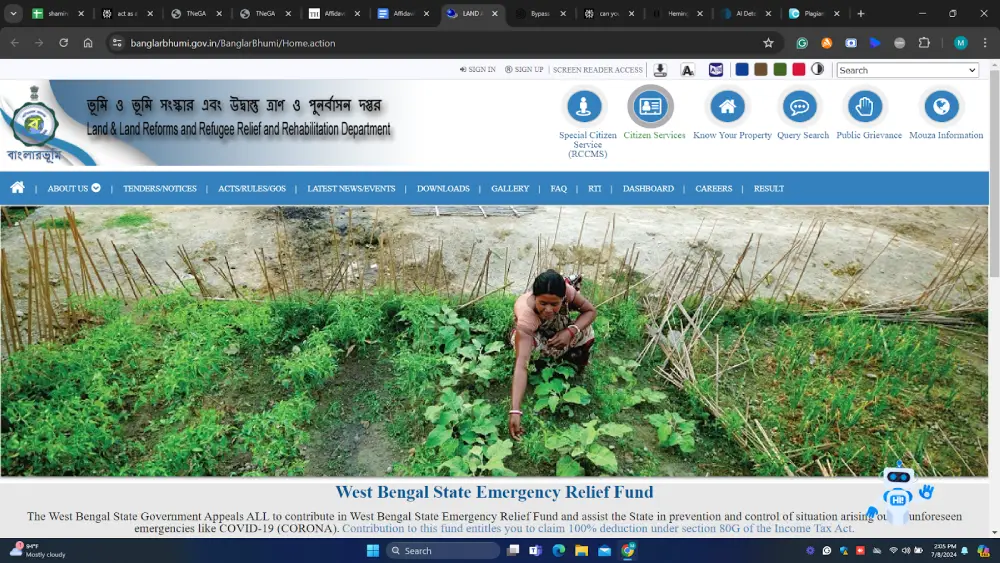
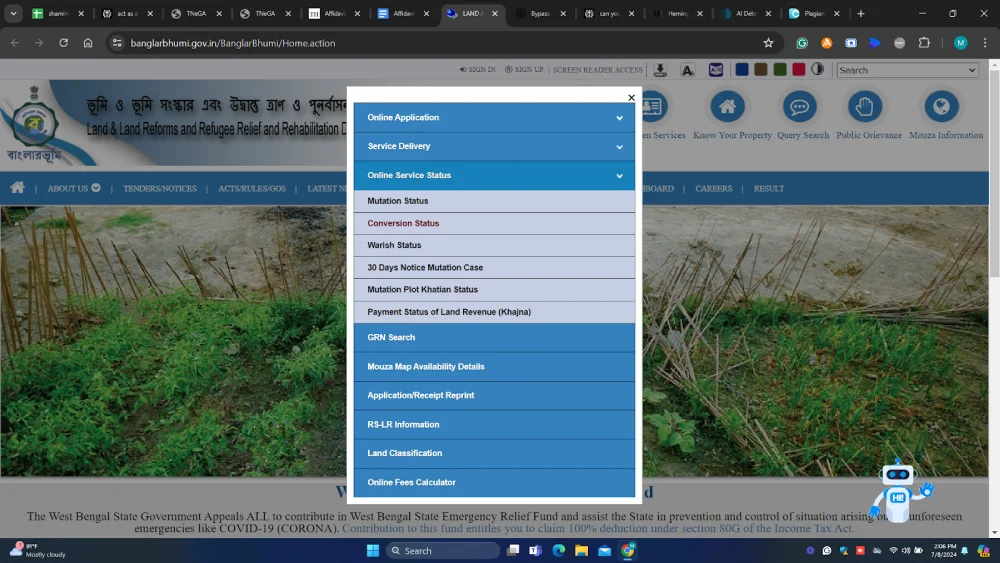
West Bengal: Landowners can log into the Banglarbhumi portal (https://banglarbhumi.gov.in/) go to the ‘Citizen Services’ tab, and then click on ‘Online Service Status’ and ‘Conversion Status’ to check the status of their application.
a.
b.
Tamil Nadu: Landowners in Tamil Nadu can check the status of their land conversion applications through the TN e-Sevai online portal (https://www.tnesevai.tn.gov.in/) by providing the application number or other details. They can also visit the local revenue office or contact the Town and Country Planning Department.
The land conversion process is governed by the Tamil Nadu Change of Land Use Rules, 2017, but the state lacks a centralized online platform to track application status.
Other States: The process may vary, so landowners should check with the relevant state revenue or land records department.
Traditional Land Conversion vs Affidavit Based Land Conversion

|
Point |
Traditional Land Conversion |
Affidavit Based Land Conversion |
|
Process style |
Application and departmental approval |
Self-declaration with documents and verification |
|
Time taken |
Often longer |
Usually faster in eligible cases |
|
Department role |
Detailed scrutiny before approval |
Verification may be simplified or time-bound |
|
Applicant responsibility |
Provides records and waits for approval |
Gives legal declaration of compliance |
|
Best suited for |
Complex or restricted land cases |
Clear-title eligible land under permitted zones |
|
Risk |
Delay due to departmental checks |
Penalty if affidavit is false or conditions are violated |
Affidavit-based conversion shifts more responsibility to the landowner. The applicant must ensure the declaration is accurate.
Land Conversion Status: How to Check?
Online Land Records Portals
Most states in India have dedicated online portals where you can check land details, including conversion status (Agricultural to Non-Agricultural).
Steps to Check Online:
- Visit the official land records portal of your state (e.g., Bhoomi Karnataka, Dharani Telangana, Bhulekh Uttar Pradesh, etc.).
- Navigate to the “Land Conversion” or “RTC (Record of Rights, Tenancy, and Crops)” section.
- Enter your survey number, village, taluk, or district details.
- Click on search to check if the land has been converted from agricultural to non-agricultural.
Checking the RTC, Patta, or 7/12 Extract
- RTC (Record of Rights, Tenancy, and Crops) – Karnataka
- Patta (Tamil Nadu)
- 7/12 Extract (Maharashtra, Gujarat, MP)
- If the document mentions “Agricultural,” then the land is not converted.
- If it mentions “Non-Agricultural” or “NA Order issued”, the conversion is approved.
Eligibility Conditions to Check
Affidavit based land conversion usually applies only when the land satisfies legal and planning conditions.
Check whether:
- The applicant has clear title to the land.
- The land use permits the proposed conversion.
- The land is not under acquisition or reservation.
- The land is not in a prohibited or restricted zone.
- There is no court dispute or ownership conflict.
- Survey number and extent match government records.
- Required access road exists.
- Conversion fees can be paid.
- NOCs are available where required.
- The proposed use matches master plan or planning rules.
Land near lakes, forests, coastal zones, highways, government land, buffer zones, or reserved areas may need additional scrutiny.
Benefits of Affidavit Based Land Conversion
Faster Processing
The main benefit is speed. Since the applicant submits a declaration and documents through a simplified process, eligible cases may move faster than traditional conversion applications.
Reduced Red Tape
Affidavit-based systems reduce repeated visits and manual follow-up where portals and digital workflows are available.
Better Transparency
Online application, fee payment, acknowledgement, and status tracking can make the process easier to monitor.
Useful for Clear-Title Land
If ownership, survey records, zoning, and land-use eligibility are clear, affidavit-based conversion can help landowners proceed with planned development more efficiently.
Supports Construction Planning
Converted land is easier to use for building approval, layout planning, bank loans, and resale compared with land that remains agricultural in records.
Risks and Limitations
Affidavit based land conversion should be used carefully because the affidavit places responsibility on the applicant.
False Declaration Risk
If the affidavit contains false information, the applicant may face cancellation, penalties, or legal action. Recent reporting on Karnataka’s land-conversion reforms also noted penalties for misuse, including fines and possible criminal consequences in certain violations.
Not Available Everywhere
Not every state or district follows the same affidavit-based system. Some locations may still require traditional conversion approval.
Not Valid for Restricted Land
Land under restrictions, disputes, acquisition, reservation, or environmental controls may not qualify.
Does Not Replace Building Approval
Land conversion only changes permitted land use. It does not automatically approve building construction. You still need building plan approval, layout approval, or other permits where applicable.
Future Verification May Still Happen
Authorities may still verify records later. If violations are found, conversion may be challenged or cancelled.
Common Reasons for Rejection or Delay
Applications may be delayed or rejected due to:
- Incorrect survey number
- Ownership mismatch
- Land extent mismatch
- Pending mutation
- Disputed title
- Joint-owner consent issue
- Land falling under restricted category
- Proposed use not allowed under zoning
- Missing affidavit or incorrect affidavit format
- Unpaid conversion charges
- Missing NOC
- Incomplete document uploads
- Subdivision or sketch problems
- Court case or acquisition notice
Most delays happen because land records are not checked before applying.
What to Check Before Buying Converted Land
If you are buying land that is claimed to be converted, verify the conversion documents carefully.
Check:
- Conversion order or certificate
- Survey number and extent
- Owner name in revenue records
- Approved land use
- Whether conversion is for residential, commercial, or other use
- Layout approval, if plots are being sold
- Road access and civic amenities
- Encumbrance certificate
- Zoning and master plan status
- Building approval possibility
- Any cancellation, dispute, or restriction
Do not buy land only because the seller says it is “converted.” Ask for official documents and get legal due diligence done.
Affidavit Based Conversion vs Land Conversion Certificate
Affidavit based conversion is the process or route used to apply for conversion. A land conversion certificate or conversion order is the proof that the land has been converted for the permitted non-agricultural use.
In simple terms:
|
Term |
Meaning |
|
Affidavit based conversion |
Application process using a sworn declaration |
|
Land conversion certificate |
Final proof or document confirming conversion |
|
Conversion order |
Official approval or order allowing changed land use |
|
Converted land |
Land whose use has been legally changed in records |
Always keep the final certificate or order, not only the affidavit.
Challenges and Considerations
1. Compliance with Zoning Regulations: A farmer has to ensure the land’s planned non-agricultural use complies with local zoning laws. The following are the consequences of failing to follow the rules that have been set for a student: Legal consequences may be imposed on a student.
2. Accuracy of Information: The affiant gives details on the subject. So, the landowner is responsible for their accuracy. Fraudulent documents come with severe legal repercussions, and one can be charged in court for filling in fake documents.
3. Verification and Monitoring: Though affidavits decrease the government’s role in the preliminary assessment, it has the right to do instant checks and inspections.
4. Disputes and Objections: Nearby land owners and others may cause controversies. They can make the process slow or hard.
5. Coordination with Local Authorities: Every landowner should consult with the local authorities. They must ensure that communication with the revenue department and the town planning office is constant and proper.
Conclusion
Affidavit based land conversion can simplify the process of changing agricultural land to permitted non-agricultural use, especially where state governments have introduced online or self-declaration systems. It can reduce delay, improve transparency, and help landowners proceed with residential, commercial, or industrial development. However, it is still a legal process, not a shortcut. Before applying, verify ownership, survey details, zoning, master plan use, restrictions, fees, and required documents. For any dispute, inheritance, subdivision, or restricted land, consult the revenue authority or a property lawyer before proceeding.
FAQs
- What is affidavit based land conversion?
Affidavit based land conversion is a process where a landowner files a sworn declaration to convert agricultural land for permitted non-agricultural use. The affidavit is submitted with ownership documents, survey details, and required fees. It is available only where state rules allow it. - Is affidavit based land conversion legal?
Yes, affidavit based land conversion is legal where it is permitted by the relevant state law or government process. However, the applicant must provide correct information and follow zoning, land-use, fee, and documentation requirements. False declarations can lead to penalties or cancellation. - Does an affidavit automatically convert agricultural land?
No, an affidavit alone does not always complete conversion. It is part of the application or self-declaration process. The land must still satisfy eligibility conditions, and the applicant must obtain the required receipt, certificate, conversion order, or updated record as per state rules. - Which documents are needed for affidavit based land conversion?
Common documents include sale deed, title records, RTC or patta, mutation record, encumbrance certificate, survey sketch, identity proof, tax receipt, affidavit, zoning details, NOCs if required, and fee payment receipt. The exact list depends on the state and land category. - Can agricultural land be converted for residential use by affidavit?
Agricultural land may be converted for residential use through affidavit-based conversion if the state permits it and the land satisfies zoning, ownership, access, and planning conditions. If the land is restricted, disputed, reserved, or outside eligible zones, additional approval may be needed. - Is building approval still needed after land conversion?
Yes, building approval is still needed after land conversion. Land conversion only changes the permitted land use. To construct a house, apartment, commercial building, or layout, you may still need building plan sanction, layout approval, local body permission, and other clearances. - Why can affidavit based land conversion be rejected?
It can be rejected due to survey mismatch, ownership dispute, missing documents, unpaid fees, incorrect affidavit, zoning restriction, land reservation, acquisition notice, lack of NOC, or proposed use not being permitted. Checking records before applying reduces rejection risk. - How do I verify if land is converted?
Verify the conversion order, land conversion certificate, updated revenue record, survey number, extent, owner name, approved use, and layout approval if plots are being sold. Cross-check with the revenue or planning authority and take legal advice before buying converted land.
 wordpress-prod