


Choosing the right types of soil for building foundations is essential for creating a safe and durable structure. Soil provides the support required to carry the weight of a building, and its strength, stability, and moisture behavior directly affect foundation performance. Different soil types have different properties, including load-bearing capacity, drainage ability, and settlement behavior. Understanding soil characteristics helps engineers select suitable foundation designs and prevent issues such as cracks, uneven settlement, and structural problems. This guide explains common foundation soils, their properties, testing methods, and suitability for construction.
Quick Answer
The types of soil for building foundations include sandy soil, clay soil, gravel soil, rocky soil, loamy soil, and black cotton soil. Strong, stable soils with good bearing capacity are generally preferred, while weak or expansive soils may require special foundation solutions.
Types of Soil
Here are the types of Soil mentioned below
- Clay Soil
- Silt Soil
- Loamy Soil
- Peat Soil
- Sandy Soil
- Gravel Soil
Understanding Soil Composition
The soil is a combination of minerals, organic matter, water, and air, varying in composition. It generally contains sand, silt, and clay. It’s constituents determine its properties and suitability for different purposes.
Soils are often more stable when they include a higher proportion of rock and compacted sand or gravel. During the home foundation process, the soil must be capable of staying stable during wetting and drying cycles so that foundations do not crack because of normal expansion and contraction.
Good soil for construction is that which is capable of capturing precipitation, preventing runoff and erosion from causing structural damage. A good infrastructure soil should be chemically balanced to prevent material deterioration. It should also contain minimal organic material, which can decay over time and cause movement beneath the foundations.
Types of Soil for Building Foundation
The following are the major types of soil for building construction:
Clay Soil
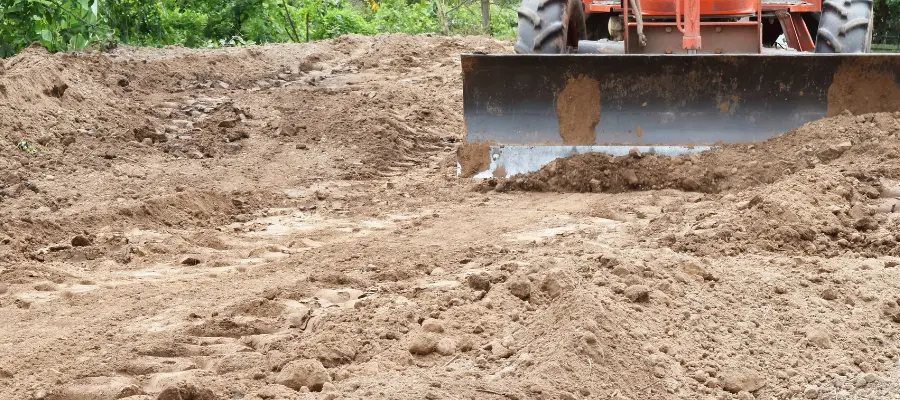
Clay is made of fine mineral materials and little organic material. It’s generally found where streams and rivers once flowed or in an area where water tends to sit after heavy rainfall. It becomes sticky when wet and does not drain effectively. Its small particles cause it to expand and push on the foundation’s wall when moist. And when it dries, it shrinks, causing the foundation to shift. It can cause fissures and unequal levels in a building if not amended. Hence, it is unsuitable for foundation construction due to its instability.
To construct the right type of home foundation, the ground must be dug deeper to ensure stability. A drilled pier or a slab foundation appears best suited to clay soil.
A slab-on-grade foundation controls the soil’s tendency to expand and contract after construction, but a drilled-pier foundation improves structural firmness or stability when dug deeper.
Advantages of clay soil
It’s the perfect stuff for a tropical climate place.
- Clay soil has excellent thermal insulation properties. This helps to maintain cooler temperatures in structures during hot weather and reduces the need for air conditioning.
- Clay soil retains water well, where dry periods can follow heavy rainfall. This property helps sustain plant life and maintain lush, green landscapes.
- Clay soil is rich in nutrients, making it an excellent choice for gardens and agricultural purposes.
- When compacted, it can support heavy loads, making it suitable for building foundations. Its dense nature educes the risk of shifting or settling over time.
Silt Soil
Silt soil is composed of rock and other mineral materials. It also includes tiny particles and can retain water for a long time. Compared to sandy soil, it has considerably smaller particles, making it easily transported by moving water flows. This soil type can be seen near rivers, lakes, and other water bodies.
It is not suitable soil for building a foundation because it stresses the building. These types of soil for building construction does not dry quickly or readily when it contains water. It drains poorly and grows, pressing against the foundation. This results in relatively poor support for construction. The RCC spread, and isolated pad footings are suitable for this silt soil. The foundation’s depth should be more than the erosion, swelling, and shrinkage zones.
Advantages of silt soil
Silt has fertile ground, can hold more water, and is easier to work with than other soils.
- Silt provides a moderate load-bearing capacity, making it suitable for supporting various types of structures, such as small buildings and road bases.
- When compacted, silt exhibits low compressibility and reduced risk of sinking. This is essential for maintaining structures over time, particularly in areas prone to heavy rainfall.
- Silt acts as an insulator, helping to regulate temperatures and reduce energy costs, where maintaining a stable indoor temperature is crucial.
- It has the ability to retain moisture, which can be advantageous for landscaping and agriculture.
Loamy Soil
Loamy soil is the most suitable for building foundations. Generally, farming areas contain this type of soil. It contains the right combination of sand, silt, and clay constituents. Loamy Soil can retain moisture and nutrients. It also has a higher pH and calcium level when compared to other types of soil.
Loamy soil manages moisture effectively since it absorbs water and dries out consistently. It also allows for air circulation and drains well. However, before starting the construction, the soil should undergo filtration to eliminate any undecomposed particles or elements. This is to prevent further terrible effects.
Loamy soil is suitable for the construction of isolated pad footings. The area and depth are again decided by bearing capacity, groundwater table depth, and load-bearing stratum depth. Isolated pad footings are provided beneath columns and joined/tied together by connecting beams. If the structure has only one story, a continuous strip foundation can be employed; however, isolated RCC pad foundations are preferable if they are cost-effective.
Advantages of loamy soil
It’s good for construction because it holds water at a balanced rate. It controls air humidity if applied as a layer to interior walls. It’s best when combined with straw to build walls.
- When applied as a layer to interior walls, loam soil can help regulate indoor air humidity.
- The fertile nature of loam supports healthy plant growth which can enhance the aesthetic appeal of construction projects.
- The combination of sand, silt, and clay in loam soil provides good structural stability. This ensures that buildings and other structures are less likely to settle unevenly, reducing the risk of cracks and other structural issues over time.
Peat Soil
The peat soil is generally available in brown or black. It’s commonly seen in bogs and wetlands. Peat contains organic matter that can hold a lot of water, making it easily compressible. Also, the soil can become extremely dry during the hot summer months. Thus, this is also comparatively good soil for construction. If you build on peat soil, the building is very vulnerable to cracks or other types of damage. Isolated and beam foundations will be anchored to a firm soil layer beneath the surface. Without firm subsoil, a raft foundation will be used to extend support for the structure beyond the peat soil.
Sandy Soil
Rock soil or sand soil is formed from the decomposition of rocks such as granite, quartz, and limestone. It cannot retain water. This is the best soil for building foundations, as it won’t hold the minimum risk of putting a building under stress.
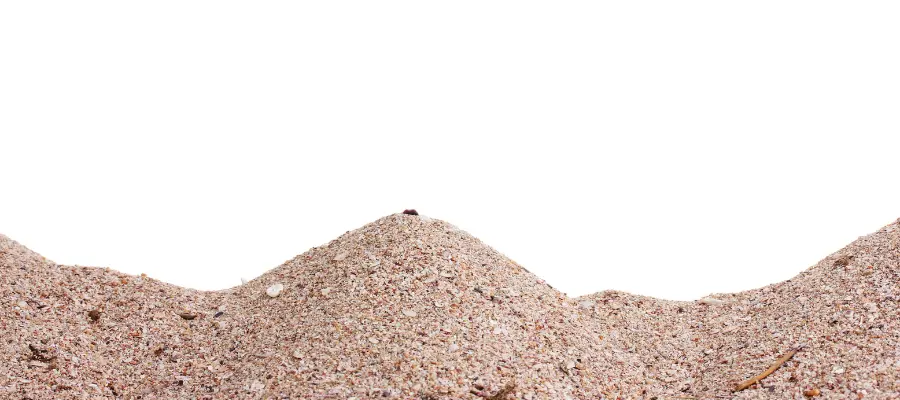
- Fine Sand: Fine sand has tiny particles. They measure 0.075 to 0.425 millimeters. It feels silky when you rub it between your fingers.
- Medium Sand: Medium sand is different. Its particles range from 0.425 to 2 millimeters. It has a noticeably grainy texture.
- Coarse Sand: The largest particles are in coarse sand. It ranges from 2 to 4.75 millimeters. They make the soil feel rough and chunky. When you try to mold wet or dry sandy soil, the larger particles resist. They cause the soil to crumble and fall apart.
Advantages of sandy soil
- This material excels in construction projects because it effortlessly handles heavy loads. Its drainage capabilities are excellent.
- It is completely free of organic and impure substances.
- Sand, particularly coarse sand, provides a stable foundation that can support substantial loads. Its granular structure helps distribute weight evenly, reducing the risk of structural failure.
- Sand compacts well and has low compressibility. This minimizes the risk of sinking or shifting over time.
- Sand is an insulator by nature, helping to regulate temperature by reducing heat transfer.
Stress in a building can cause structural and non-structural fissures to form, potentially leading to the building’s collapse. Hence, for sandy soil, sand and gravel can be compacted with other high-quality soil types, such as loam soil, to improve stability. Deep foundations like screw piles or helical pliers are good long-term foundation techniques for this soil type. It keeps the sand from washing away while also holding the foundation solid.
Gravel Soil
Rocky or gravelly soil is full of small, irregular rocks and stones. Imagine walking by a river or in the mountains. The ground is rough and uneven. This soil is rougher than sand but smoother than stones. The rocks and gravel are tough to dig and plant in. Mountains and eroded areas expose gravel soil.
Water relentlessly breaks down rocks into small pieces. This soil’s nutrient scarcity makes it a challenging environment for plant growth. However, some tough plants have adapted to thrive in these harsh conditions.
Advantages of Gravel Soil
Gravel soil has many benefits in construction and landscaping. It is a top choice for builders, architects, and landscape designers. One of gravel soil’s significant benefits is excellent drainage. Gravel lets water pass through it quickly. This stops waterlogging, which can harm structures or cause erosion.
Some other advantages are:
- It’s high load-bearing capacity. It support substantial loads, making it ideal for constructing roads, driveways, and building foundations.
- It is known for reduced sinking risk especially beneficial for heavy structures and high-traffic areas.
- Gravel helps prevent soil erosion by allowing water to drain through while holding soil particles in place.
- This makes it best choice for landscaping, retaining walls, and embankments.
- It is a cost-effective option for various construction projects as only low maintenance are required to add.
Conclusion
Understanding the types of soil for building foundations is essential for safe and durable construction. Different soils have different strengths, drainage properties, and settlement behavior, which directly influence foundation design. Strong soils such as rock and well-compacted gravel generally provide better support, while expansive or weak soils may require specialized solutions. Conducting proper soil testing before construction helps identify ground conditions and allows engineers to design suitable foundations. Choosing the right approach based on soil characteristics reduces risks and improves the long-term stability of a building.
FAQs
- What are the main types of soil for building foundations?
The main types of soil for building foundations include sandy soil, clay soil, gravel soil, rocky soil, loamy soil, black cotton soil, silt soil, and peat soil. Each soil type has different properties that affect foundation performance.
- Which soil is best for building foundations?
Rocky soil and well-compacted gravel soil are generally considered strong foundation bases because they provide good load-bearing capacity and stability. However, suitability depends on site conditions and soil test results.
- Why is soil testing important before construction?
Soil testing identifies soil strength, composition, moisture conditions, and settlement risks. It helps engineers select the appropriate foundation design and reduces the possibility of future structural problems.
- Is clay soil suitable for building foundations?
Clay soil can support buildings, but its expansion and shrinkage behavior may create challenges. Proper foundation design, drainage management, and soil evaluation are important when constructing on clay.
- What is black cotton soil and why is it a concern?
Black cotton soil is an expansive soil that swells when wet and shrinks when dry. These volume changes can affect foundations, so special design considerations may be required.
- Can construction be done on weak soil?
Yes, construction can be done on weak soil after suitable improvement methods are applied. Techniques such as soil stabilization, compaction, replacement, or deep foundations may improve ground support.
- How does soil affect foundation design?
Soil affects foundation depth, type, size, and construction method. Engineers consider soil bearing capacity, settlement behavior, groundwater conditions, and building loads while designing foundations.
- What happens if a building is constructed on unsuitable soil?
Building on unsuitable soil may lead to foundation settlement, cracks, uneven movement, water-related problems, and reduced structural stability. Proper soil investigation helps prevent these issues.
 Sowjanya Siddanoor