


Uses of silt soil in construction include brickmaking, mud mortar, mud plaster, soil stabilisation, road subgrade improvement, land reclamation, and controlled filling work. Silt has fine particles, a smooth texture, and better water retention than sand, which makes it useful when mixed and treated properly. However, it should not be used blindly because poor drainage and moisture retention can reduce stability. This guide explains what silt soil is, its properties, construction uses, limitations, improvement methods, testing needs, and site precautions. Brick & Bolt notes that silt is often used with other materials for construction applications such as brickmaking and foundation-related work.
Quick Summary
Silt soil is used in construction for brickmaking, mud mortar, mud plaster, soil stabilisation, filling depressions, land reclamation, and road base improvement. It is valued for its fine texture and workability, but it needs proper drainage, compaction, and stabilisation because it retains water and can become unstable under load.
In this article, we will explore why silt soil is commonly used in construction, particularly for creating strong and stable foundations, while also considering its potential drawbacks.
What Is Silt Soil?
Silt soil is one of the key soil types, alongside clay and sand. Its particle size ranges from 0.002 mm to 0.05 mm, making it finer than sand but coarser than clay. The word ‘silt’ comes from Old English, meaning something that flows or is poured.
While silt soil is smooth in texture, it is fertile with a rich nutrient content ideal for farming. When wet, it feels slippery, as if one is walking over flour. Its colour usually varies from brown to greyish, depending on the minerals and organic components it holds.
Properties of Silt Soil
Here is how silt differs from clay and sand:
- Texture: Dry silt has a smooth, powdery texture, similar to flour. When pressed between the fingers, dried silt easily crumbles into fine particles. But dry clay forms hard, compact clumps that are hard to break, while sand feels gritty and remains loose when dry.
- Adhesion: Wet silt becomes slippery and can be moulded but loses its shape easily. Clay, on the other hand, has high adhesion and cohesion when wet. Wet sand can be moulded but tends to crush easily once dried or disturbed.
- Shape: Silt particles have a spherical shape. Clay particles are flat, and sand particles are angular.
- Moisture retention: Silt retains water better than sand but is less effective than clay. This is because the small particles have a large surface area that enables more water molecules to hold onto them. Clay retains most of the water, but it drains poorly, whereas sand drains fast and retains minimal water.
Uses of Silt Soil in Construction
Silt soil plays a crucial role in construction because of its special properties. Though it is not used as the primary material for foundations, it is used for many purposes in construction projects:
- Brickmaking
The fine texture of silt soil makes it suitable for brickmaking. Combining it with other materials, like clay, creates bricks strong enough to build walls and other structures.
- Mud Mortar and Mud Plaster
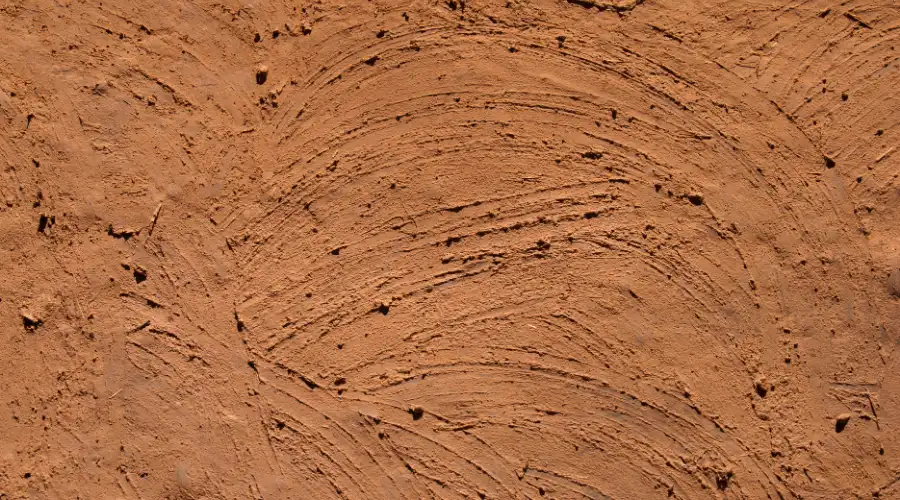
Mud houses often use mud plaster and mortar for construction. Silt is an important component in these materials, which also include clay (the finest), silt, and sand (the coarsest). The fine particles of silt improve the texture and make the plaster easier to apply, helping to create a smooth finish. In mud houses, this combination helps ensure walls are durable and well-finished. Adding silt to mortars also improves their performance by enhancing the mixture’s ability to stick together and making it easier to work with, allowing for better application and setting.
- Soil Stabilisation
In some locations, silt is used for soil stabilisation in road construction. It improves the compactness and strength of the soil, which helps create stable bases for roadbeds and foundations.
- Fill and Remark
Sometimes silt soil is also used as filling material for construction, mainly in land reclamation projects or to fill ground depressions.
Overall, silt-soil properties make them greatly useful in construction with other materials for strength and stability.
How to Improve Silt Soil for Construction Use?
The most common problem associated with silty soil is the retention of large quantities of water, resulting in poor drainage and leading to instability in construction. On the other hand, if improvements are correctly applied, silt soil can be modified to make the foundation more stable and allow better performance in construction.
- Mixing with Sand or Gravel
The most common method for the stabilization of silt soil is to mix it with sand or gravel. Sand will break down the fine particles in silt, allowing for a free and easy flow of water. Using this way, the soil won’t compact too much. Gravel adds strength and stability to soil. This mixture of both tends to create a much more compact and stable foundation, which will then have the ability to carry heavier loads.
- Organic Matter Addition
Organic materials such as compost or manure increase soil aeration and improve its nutrient content. Organic matter also reduces compaction and, therefore, makes it easier to work with the soil while increasing the stability of the soil in the structure. This is helpful for agricultural or light construction projects.
- Soil Stabilizers
Adding stabilizers like lime, cement, or polymers to the silt soil enhances its strength and durability. Lime reduces plasticity and water retention, whereas cement improves the binding property of the soil. Such stabilizers prevent the soil from becoming too soft or unstable under load.
- Compaction
Silt soil for construction requires proper compaction. Mechanical compactors are used to remove air pockets and increase the density and strength of the soil, which is important for making a stable base for foundations.
These techniques can effectively modify silt soil for different construction applications, ensuring durability and stability.
Conclusion
Uses of silt soil in construction include brickmaking, mud mortar, mud plaster, soil stabilisation, road base improvement, controlled filling, and land reclamation. Its smooth texture and moisture-retention ability make it workable, but those same properties can create drainage and stability problems if not managed. Silt soil performs best when mixed with suitable materials, compacted properly, stabilised where needed, and protected from waterlogging. It should not be treated as a universal foundation soil. Before using silty soil in any structural work, conduct soil testing, plan drainage, and follow engineer-approved improvement methods.
FAQs
- What are the main uses of silt soil in construction?
The main uses of silt soil in construction include brickmaking, mud mortar, mud plaster, soil stabilisation, road subgrade improvement, controlled filling, and land reclamation. It is usually combined with other materials to improve strength, texture, and performance. - Can silt soil be used directly for construction?
No, silt soil should not usually be used directly for construction without testing and improvement. Brick & Bolt states that silt soil requires mixing or stabilisation methods for effective construction use because of its moisture-retention and stability issues. - Is silt soil good for foundations?
Silt soil can be used for foundation-related work only after proper treatment, compaction, drainage control, and soil testing. Untreated silt may retain water, lose strength, and settle under load, which can affect foundation stability. - Why is silt soil used in brickmaking?
Silt soil is used in brickmaking because its fine texture improves workability and helps create smoother brick mixtures. Brick & Bolt notes that silt can be combined with clay and other materials to produce bricks suitable for walls and structures. - How can silt soil be improved for construction?
Silt soil can be improved by mixing it with sand or gravel, adding stabilisers such as lime or cement, compacting it mechanically, improving drainage, and controlling moisture content. These methods increase stability and reduce water-related weakness. - What are the problems with silt soil?
The main problems with silt soil are poor drainage, water retention, instability when wet, erosion risk, and settlement under load. Brick & Bolt identifies moisture retention as a common issue that can create construction instability if not managed. - Is silt better than clay for construction?
Silt is not automatically better than clay. It drains better than clay but does not have the same cohesion. Clay can shrink and swell strongly, while silt can lose stability when wet. Both soils need testing and suitable foundation design. - What precautions are needed when using silt soil?
Precautions include soil testing, proper drainage, layer-wise compaction, stabilisation with sand, gravel, lime, or cement where required, erosion control, and avoiding organic-rich or waterlogged silt for structural filling. Brick & Bolt also recommends drainage, compaction, and stabilisation.
 prasanthkumar
  wordpress-prod