


Curing of concrete is required to maintain suitable moisture and temperature conditions after concrete is placed so that cement hydration can continue effectively. Proper curing helps concrete develop its intended strength, reduces excessive moisture loss and supports better durability. Without adequate curing, concrete can lose moisture too quickly, increasing the risk of surface defects, cracking and reduced performance. The appropriate method and duration depend on factors such as concrete type, weather, member size and project requirements. This guide explains why curing is required for concrete, when it should begin, common curing methods, curing duration, mistakes to avoid and practical site considerations.
Quick Answer
Curing of concrete is required to maintain adequate moisture and suitable temperature after placement so cement hydration can continue. Proper curing helps concrete develop strength, reduce moisture-related cracking and improve durability. Common methods include water curing, wet coverings, membrane curing and steam curing. The required curing period depends on the concrete, environmental conditions and applicable specifications.
Benefits of Concrete Curing
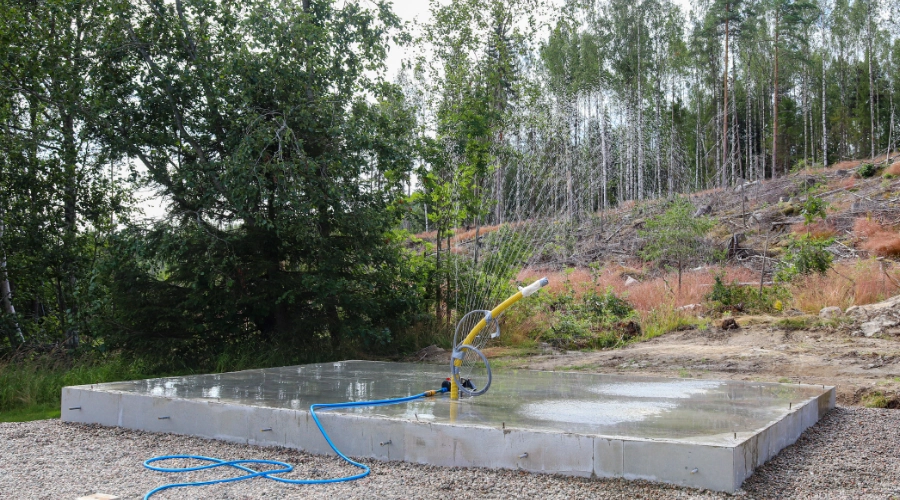
Proper concrete curing benefits the construction in many ways, and are explained below:
Improves Strength
The hydration process is triggered by sufficient moisture content that provokes chemical reactions between cement and water. This process builds strong bonds between the ingredients of concrete, leading to attaining maximum strength. A well-cured concrete has maximum compressive strength that can withstand heavy loads.
Enhance Durability
Concrete curing promotes durability, helping prevent water penetration and other potential risks, such as spalling, cracking, and freeze-thaw damage. This is because well-cured concrete becomes denser and provides a uniform structure. A properly cured surface is less susceptible to wear and tear, leading to enhanced durability.
Appealing Appearance
In addition to strength gain and versatility, curing provides a glossy and perfect finish to the concrete surface. It helps avoid uneven textures, stains, and discolouration. Maintaining a smooth texture and uniform colour throughout the surface is an added advantage to the structure. Proper curing positively influences the overall aesthetics of a building and improves long-term appearance.
Reduce Shrinkage
Curing helps prevent shrinkage, minimising the risk of cracking in concrete. Choosing a proper curing technique is essential for large structures, particularly in areas with significant temperature fluctuations. Ensure that it creates a denser and impermeable concrete surface, which is less likely to water absorption and staining.
Saves Money
Proper curing practices extend the life of concrete structures, reducing the need for regular or frequent maintenance. It results in increased service life and long-term cost savings. Whether it is a small or large-scale structure, well-planned ideas are needed for proper curing.
Specific Factors Influencing the Concrete Curing
When it comes to concrete curing, not all situations and constructions are the same. One of the major factors is the optimal temperature range, which should exist between 50 to 75 degrees Fahrenheit. If it extends this range, it may hinder crystal growth and make concrete weaker.
Other significant factors that you must be aware of, such as:
- Weather Condition: Similar to temperature, the humidity level also plays a vital role in the curing process, especially if you are using a misting technique. Higher humidity levels prevent the rapid evaporation of water and increase the curing time, leading to the occurrence of the hydration process.
- Size and Shape of the Concrete: To achieve consistent durability throughout the structures, the water should be evenly distributed. When planning for curing procedures, consider the thickness, size, and shape of the concrete. Choosing appropriate methods according to the dimension ensures even curing.
- Don’t be Fast in Further Steps: One of the common mistakes is to start painting the structures before the concrete is completely ready. Providing a sufficient time gap allows the concrete to set and harden properly.
Points to Be Noted During the Concrete Curing Process
- Freshly prepared concrete structures shouldn’t be exposed to harsh sunlight, dry winds, or rain.
- Cover the concrete with a tarpaulin, especially if the weather is too hot and dry.
- For curing, water should be poured at least 24 hours after the concrete has been made.
- Curing practices need a minimum of 15 days from the day of concreting.
- The water used for curing technique should be clean and chemical-free, including alkalis, oil, vegetable matter, acids, etc.
- Saltwater should be strictly avoided for any construction purpose at all. It causes rapid reinforcement corrosion and salt crystallisation, which gives a poor lifeline.
- Ensure the pH range of the water is between 6 and 8.5, which is almost neutral.
The Connection Between Proper Concrete Curing and the Longevity of Concrete Resurfacing
A well-cured concrete is directly related to the longevity of concrete resurfacing. It provides a strong and durable surface to the structure without causing any damage in the long run.
When the original concrete is cured well, it is less likely to encounter cracks or shrinkages. Therefore, planning your investment for a proper curing technique significantly benefits your structure with enhanced effectiveness and lifespan.
Final Thoughts
Curing of concrete is required to provide moisture and temperature conditions that support cement hydration and the development of concrete properties. Proper curing can help improve strength development, reduce excessive moisture loss, control certain forms of early cracking and support durability. The appropriate method depends on the concrete mix, structural element, weather and project requirements. Water curing, wet coverings, sheet protection, membrane curing and steam curing are among the available approaches. Rather than treating curing as an optional finishing activity, it should be planned as an essential part of concrete construction and quality control.
FAQs
- Why is curing required for concrete?
Curing is required to maintain suitable moisture and temperature conditions so cement hydration can continue after concrete placement. Proper curing supports strength development, limits excessive moisture loss and helps improve concrete performance. It also reduces the risk of certain surface defects and cracking associated with premature drying.
- How long should concrete be cured?
The required curing period depends on the concrete mix, cementitious materials, temperature, humidity, member type, curing method and applicable specifications. There is no single duration suitable for every project. The curing period should be determined according to the concrete specification and relevant construction standard.
- What happens if concrete is not cured properly?
Poor curing can affect strength development, surface quality and durability. Concrete may experience excessive moisture loss, surface cracking, dusting or increased permeability. The severity depends on the concrete mix, environmental conditions and extent of inadequate curing. Proper curing should therefore be included in the construction plan from the beginning.
- What is the best method of curing concrete?
There is no single best curing method for every situation. Water curing, wet coverings, sheet protection, membrane curing and steam curing can all be suitable when correctly applied. The best option depends on the concrete element, site conditions, weather, available resources and requirements of the applicable project specification.
- When should concrete curing start?
Curing should begin as soon as practical after finishing, while ensuring that the curing operation does not damage the concrete surface. The exact timing depends on the concrete and curing method. Early protection is particularly important during hot, dry or windy conditions because these conditions can accelerate surface moisture loss.
- Is water curing necessary for all concrete?
No, water curing is not the only acceptable curing method. Other approaches, such as curing compounds, impermeable sheets or controlled steam curing, can be used where appropriate. The selected method should provide the required moisture and temperature conditions and comply with the project’s concrete specifications.
- Does curing increase concrete strength?
Proper curing supports the hydration process that allows concrete to develop its intended strength. It does not independently make an unsuitable concrete mix strong. Concrete strength depends on several factors, including mix design, materials, water-cement ratio, compaction, curing conditions and age.
- What is the difference between curing and drying concrete?
Curing and drying are different processes. Curing aims to retain or provide adequate moisture and suitable temperature so cement hydration can continue. Drying removes moisture from concrete. Newly placed concrete therefore needs controlled curing rather than simply being left exposed to dry naturally.
