


Cement concrete flooring in construction is a durable floor system made with cement, sand, coarse aggregate, and water laid over a prepared base. It is widely used in homes, garages, basements, commercial spaces, warehouses, and outdoor areas because it offers strength, long service life, and easy maintenance. A good concrete floor depends on proper base preparation, mix quality, level control, compaction, finishing, joints, and curing. This article explains the materials, construction process, advantages, limitations, finishing options, maintenance needs, and common mistakes to avoid before flooring work begins.
Quick Summary
Cement concrete flooring is a hard, durable floor made by laying and finishing a concrete mix over a prepared base. It is used in residential, commercial, and industrial spaces because it can handle wear, load, and regular use. Good results depend on correct mix proportion, compaction, surface finishing, joint cutting, and proper concrete curing.
What is Cement Flooring Concrete?

Cement concrete flooring is created in the form of a mix of cement, sand, water, and aggregate gravel laid on a prepared base for flooring. This gives a solid framework that is a hard, stable, and smooth surface that can able to bear very heavy loads,. It has proven to deliver excellent service for many years. It can also be used in basements, garages, outdoor patios, and other areas such as warehouses.
Materials of Cement Concrete Flooring
The major materials usually used in cement concrete flooring include:
- Cement: OPC—Ordinary Portland Cement acts as the cementing material while the following are the components that make up the mix.
- Sand or fine aggregate: This helps to fill the space between the cement and the gravel and gives the face of the concrete smooth surface.
- Gravel – This component contributes to compounding concrete strength.
- Water: Water activates the cement and helps it form a bond with the sand and gravel.
- Admixtures: Chemical ingredients that are optional and added in to positively influence the properties of the concrete, such as setting time and strength.
|
Material |
Purpose |
|
Cement |
Binds the concrete mix and supports strength gain |
|
Fine aggregate |
Fills voids and improves workability |
|
Coarse aggregate |
Provides bulk, strength, and stability |
|
Water |
Activates cement hydration and supports workability |
|
Admixtures |
Improve workability, setting, or durability where specified |
|
Reinforcement or mesh |
Controls cracking where required by design |
Clean materials should always be used. Dirty sand, weak aggregate, excess water, or expired cement can reduce floor strength and durability.
Process in Cement Concrete Flooring
The cement concrete flooring process consists of several operations that create a durable and leveled finish, which is completed in steps.
1. Sub-Base Preparation
Before laying the concrete, the ground must be prepared.
This involves:
- Leveling: The ground must be compacted to achieve a smooth, level surface using a roller or tamper.
- Compacting: The nature of the soil is compacted to minimise the chances of the floor sinking abnormally in the future.
- Damp-Proof Course: A protective layer is installed to prevent moisture from rising into the concrete, which can be detrimental.
2. Placing the Base Concrete
The base concrete is the first concrete laid down. Let’s take a look aton how it’s done:
- Mixing the Concrete: The cement, sand, gravel, and water are also blended in a specific proportion.
- Concrete Laying: The mixed concrete is then placed on the prepared sub-base.
- Leveling: The poured concrete is leveled in a manner where it is as flat as possible using a straight edge, also known as a screed.
- Compacting: Compaction is normally done using a mechanical vibrator, which helps to drive out the air bubbles in the concrete, thus compacting it.
3. Laying the Finishing Layer
The finishing layer of concrete gives the floor a smooth, polished look. This layer is usually thinner than the base layer and follows these steps:
- Mixing the Finishing Concrete: A finer mix of concrete is prepared.
- Pouring and Spreading: The concrete finishing is poured on the base and spread properly with a trowel.
- Floating: After placing, the concrete is floated with a wood or a magnesium float to level it and to bring a layer of cement paste to the surface.
- Troweling: The surface is troweled further with a steel trowel to bring about shine to the finish.
4. Concrete Curing
Curing is a very important process that is required to maintain a moist condition in concrete for several successive days, allowing adequate hardening. This can be done by:
- Wet Burlap Cover: Wet burlap or cloth is placed on the concrete, with the burlap being kept wet.
- Water Sprinkling: Water is sprinkled on the concrete surface several times a day.
- By applying Curing Compounds: A chemical curing compound can be sprayed on the surface to keep it moist.
- Curing commonly varies by roughly 7-10 days.
5. Final Finishing
Any final finishing touches to the surface can be done once the concrete has completely cured:
- Polishing: The surface can be polished to attain a glossy finish.
- Application of Sealants: Sealers may be used on concrete to prevent stains and wear.
Pros and Cons of Cement Concrete Flooring
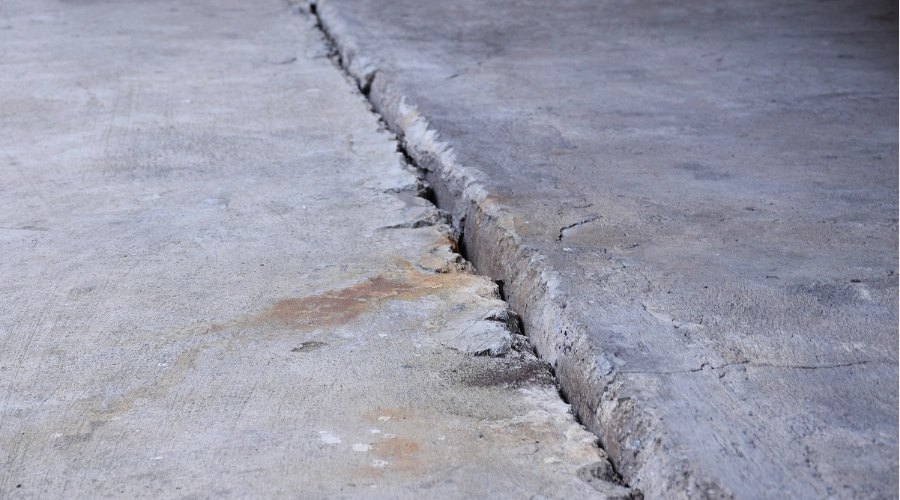
Cement concrete flooring, like any construction material, has its advantages and disadvantages.
Types of Cement Concrete Floor Finishes
Cement concrete flooring can be finished in different ways depending on use and appearance.
|
Finish type |
Best use |
|
Plain trowel finish |
Utility rooms, stores, basic floors |
|
Broom finish |
Outdoor areas, ramps, anti-slip surfaces |
|
Polished concrete |
Modern interiors, showrooms, offices |
|
Coloured concrete |
Decorative residential or commercial floors |
|
Stamped concrete |
Patios, walkways, landscape areas |
|
Epoxy-coated concrete |
Garages, factories, workshops |
|
Hardened industrial finish |
Warehouses and heavy-use floors |
Concrete flooring can be made glossy, matte, textured, coloured, or stamped depending on design and finishing method.
Advantages of Cement Concrete Flooring
Cement concrete flooring offers several practical benefits.
High durability
Concrete floors can handle regular foot traffic, furniture loads, vehicles, and heavy use when designed and finished properly. This makes them useful for garages, warehouses, factories, and commercial spaces.
Low maintenance
A properly finished and sealed concrete floor is easy to clean. Regular sweeping, mopping, and periodic sealing are usually enough for many applications.
Cost-effective for many areas
Concrete flooring is often economical for large areas because it uses commonly available materials and can work as both base and finish.
Design flexibility
Concrete floors do not have to look plain. They can be polished, stained, coloured, textured, stamped, or coated for different styles.
Suitable for heavy-use spaces
Industrial floors, parking areas, workshops, and storage spaces often use concrete because it can be designed for higher load and abrasion resistance.
Limitations of Cement Concrete Flooring
Concrete flooring also has some limitations that should be considered before selection.
The surface is hard underfoot and may feel uncomfortable in living spaces without rugs or softer finishes. It can feel cold in some climates. It may also develop hairline cracks due to shrinkage, settlement, temperature changes, or poor curing.
Concrete floors can become slippery when polished or wet, especially in kitchens, bathrooms, ramps, or outdoor areas. In such places, a non-slip finish is safer. UltraTech also notes that concrete flooring is strong and long-lasting, but hardness and possible cracking should be considered before choosing it.
Cement Concrete Flooring vs Tile Flooring
|
Factor |
Cement Concrete Flooring |
Tile Flooring |
|
Durability |
High when properly laid |
Depends on tile and adhesive quality |
|
Cost |
Often economical for large areas |
Varies by tile type |
|
Appearance |
Plain, polished, coloured, or textured |
Wide design variety |
|
Maintenance |
Low if sealed |
Easy but grout needs care |
|
Repair |
Crack repairs may remain visible |
Individual tiles can be replaced |
|
Comfort |
Hard underfoot |
Depends on tile type |
|
Best use |
Garages, industrial floors, outdoor areas, modern interiors |
Homes, bathrooms, kitchens, living areas |
The better choice depends on budget, design preference, usage, maintenance, and comfort expectations.
Where Cement Concrete Flooring Is Best Used
Cement concrete flooring is suitable for:
- Garages and parking areas
- Basements
- Warehouses
- Factories and workshops
- Utility rooms
- Outdoor patios
- Verandas
- Storage areas
- Modern interiors with polished finish
- Commercial spaces with high foot traffic
For bedrooms or living rooms, concrete flooring can still work if the finish, colour, sealing, and comfort needs are planned carefully.
Common Defects in Concrete Flooring
Common defects include:
- Hairline cracks
- Surface dusting
- Uneven levels
- Hollow patches
- Poor slope
- Water stagnation
- Surface scaling
- Shrinkage cracks
- Weak edges
- Poor finish marks
Most defects come from poor base preparation, excess water, inadequate compaction, wrong finishing time, missing joints, or improper curing.
Maintenance Tips for Cement Concrete Floors
Concrete floors are low maintenance, but they are not maintenance-free.
Use these tips:
- Sweep dust and grit regularly
- Mop with mild cleaner
- Avoid harsh chemicals unless approved
- Seal exposed or polished floors periodically
- Repair cracks early to reduce water entry
- Avoid dragging heavy sharp objects
- Use mats in wet or slippery areas
- Keep outdoor drains clear
If the floor is polished or coated, follow the coating manufacturer’s maintenance instructions.
Site Quality Checklist Before Flooring
|
Checkpoint |
Why it matters |
|
Subgrade compacted |
Prevents settlement |
|
Levels marked |
Avoids uneven floor height |
|
Slope checked |
Prevents water stagnation |
|
Mix controlled |
Maintains strength |
|
Water measured |
Reduces shrinkage and dusting |
|
Reinforcement placed correctly |
Controls cracking where required |
|
Surface finished at right time |
Prevents weak top layer |
|
Joints provided |
Reduces random cracks |
|
Curing started on time |
Supports strength and durability |
This checklist should be followed before, during, and after concrete placement.
Common Mistakes to Avoid
The first mistake is pouring concrete over loose soil or debris. The floor may settle even if the concrete mix is good.
The second mistake is adding extra water for workability. This weakens the floor surface and increases shrinkage.
The third mistake is skipping joints. Concrete naturally shrinks, and without control joints, random cracks may form.
The fourth mistake is over-trowelling. This can trap water near the surface and cause dusting or weak finishing.
The fifth mistake is poor curing. Concrete should not be left to dry too quickly after laying.
Expert Note
Cement concrete flooring should be planned according to floor use, load, base condition, thickness, mix quality, joint layout, finish type, and curing method. For industrial floors, parking areas, structural slabs, or large floor panels, the floor should be designed and inspected by a civil engineer or flooring specialist.
Conclusion
Cement concrete flooring in construction is a strong, practical, and economical flooring option when executed correctly. It works well for homes, garages, warehouses, basements, commercial areas, and outdoor spaces. Its success depends on proper base preparation, correct mix, controlled water use, compaction, finishing, joints, and curing. Before starting flooring work, confirm the floor thickness, finish, slope, and quality checks with a site engineer or experienced flooring contractor.
FAQs
- What is cement concrete flooring?
Cement concrete flooring is a floor made by laying a concrete mix of cement, sand, coarse aggregate, and water over a prepared base. It is levelled, compacted, finished, and cured to create a hard and durable surface. It is used in homes, garages, warehouses, basements, and commercial spaces. - Where is cement concrete flooring used?
Cement concrete flooring is used in garages, factories, warehouses, basements, parking areas, verandas, utility rooms, outdoor spaces, and modern interiors. It is preferred where strength, durability, and low maintenance are important. The floor specification should match the expected load and usage. - What are the advantages of cement concrete flooring?
The main advantages are durability, strength, low maintenance, cost-effectiveness, and design flexibility. Concrete floors can be plain, polished, coloured, textured, stamped, or coated. They are suitable for heavy-use areas when the base, thickness, mix, joints, and curing are handled properly. - What are the disadvantages of cement concrete flooring?
The main disadvantages are hardness, possible cracking, cold feel underfoot, and slipperiness when polished or wet. Repairs may also remain visible. These issues can be reduced through proper design, non-slip finishes, rugs, sealers, control joints, and good curing. - Does cement concrete flooring need curing?
Yes, cement concrete flooring needs proper curing. Curing helps concrete gain strength, reduce shrinkage cracks, and improve durability. If the surface dries too quickly, the floor can become weak, dusty, cracked, or less resistant to wear. Curing should start as specified after finishing. - Why do cracks appear in concrete flooring?
Cracks appear due to shrinkage, excess water, poor curing, weak base, settlement, missing joints, temperature changes, or overloading. Some hairline cracks are common, but wide, growing, or uneven cracks should be inspected. Good base preparation and joint planning reduce crack risk. - Is cement concrete flooring good for homes?
Yes, cement concrete flooring can be good for homes, especially in garages, utility areas, basements, patios, and modern interiors. For living spaces, comfort and appearance should be planned with polishing, sealing, rugs, colour, or other finishes. It is durable but hard underfoot. - Who should inspect cement concrete flooring work?
A site engineer, civil engineer, or experienced flooring contractor should inspect the work. They should check base preparation, levels, thickness, mix quality, compaction, finishing, joints, slope, and curing. Inspection before and during placement helps prevent cracks, uneven floors, and weak surfaces.
 prasanthkumar
  wordpress-prod