

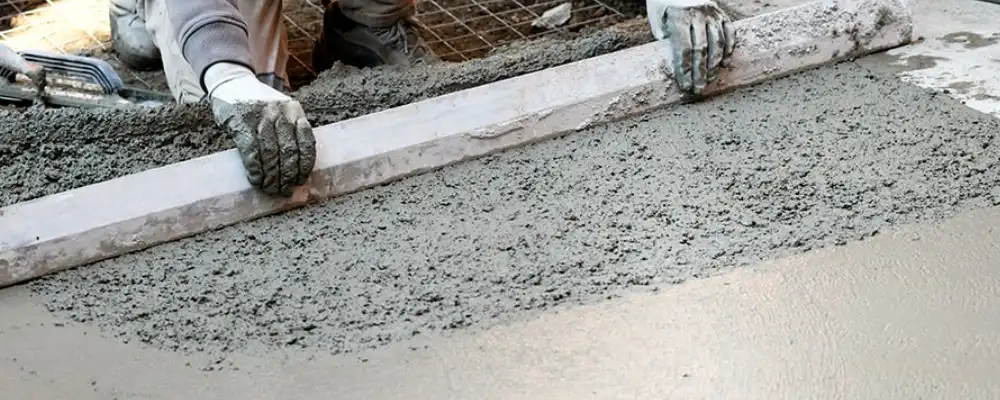
What is lean concrete? It is a low-cement concrete mix used mainly as a stable, level, and protective base under structural concrete, slabs, roads, and foundations. Lean concrete contains less cement and more aggregates than regular concrete, making it economical for non-load-bearing applications. It is commonly used where strength is not the main requirement but surface preparation, levelling, moisture protection, and cost control matter. This blog explains lean concrete meaning, components, mix ratios, properties, uses, benefits, preparation steps, and how it differs from regular concrete.
Quick Summary
Lean concrete is a low-strength concrete mix with less cement and higher aggregate content. It is mainly used as a sub-base, levelling layer, filling material, or protective layer below foundations, slabs, and pavements. Common lean concrete mix ratios include 1:4:8 and 1:5:10, depending on project requirements.
Estimate Staircase Costs: Use our Staircase Cost Calculator to get an accurate cost estimate for your concrete or RCC staircase based on size, design, and materials.
What is Lean Concrete?
Lean concrete is a mix where the cement amount is much lower than that of water and aggregate. A higher aggregate-to-cement ratio makes the mix “leaner.” This results in less binding paste for each unit of aggregate. Common lean concrete mix ratios are approximately 1:4:8 or 1:5:10 (cement:sand:aggregate).
Cement usually constitutes under 10% of the total mix. Although its strength is lower than structural concrete (5 MPa to 10 MPa), it performs well for non-structural applications such as sub-base layers for foundations, floors, and roads. Its primary function is to provide a clean, level, and moisture-resistant base, protecting structural concrete from direct contact with soil and enhancing long-term durability.
Build Your Dream Home: Planning a new home project? Explore expert-led home construction in Bengaluru with Brick & Bolt for transparent pricing and quality assurance.
Components of Lean Concrete
| Component | Their Role in The Mix | M5 Grade | M7.5 Grade | M10 Grade |
| Cement | Binding material (reduced quantity) | 1 part | 1 part | 1 part |
| Fine Aggregates (Sand) | Fills voids, provides workability | 5 parts | 4 parts | 3 parts |
| Coarse Aggregates | Main filler (gravel/crushed stone) | 10 parts | 8 parts | 6 parts |
| Water | Hydration and workability | As required | As required | As required |
Properties of Lean Concrete
The properties of lean concrete are as follows:
1. Low Cement Content
Lean concrete usually has a cement content of less than 10% by weight. Low cost and lower cement usage, lean concrete is an economical choice when using large volumes of concrete.
2. High Aggregate Content
Contains a higher percentage of coarse and fine aggregates than compared with cement. Boosts the volume and stability of the concrete mix. This helps it fill voids with greater effectiveness and spread evenly on the surface.
3. High Workability
Lean concrete mix is very workable and flows smoothly into place. It needs little handling and works well for filling high or uneven patches. It’s also great as a base layer.
4. Low Strength
Compressive strength ranges from 5 MPa (M5) to 10 MPa (M10). Not good for structural applications but great for a stable base or filler.
5. Low water-cement ratio
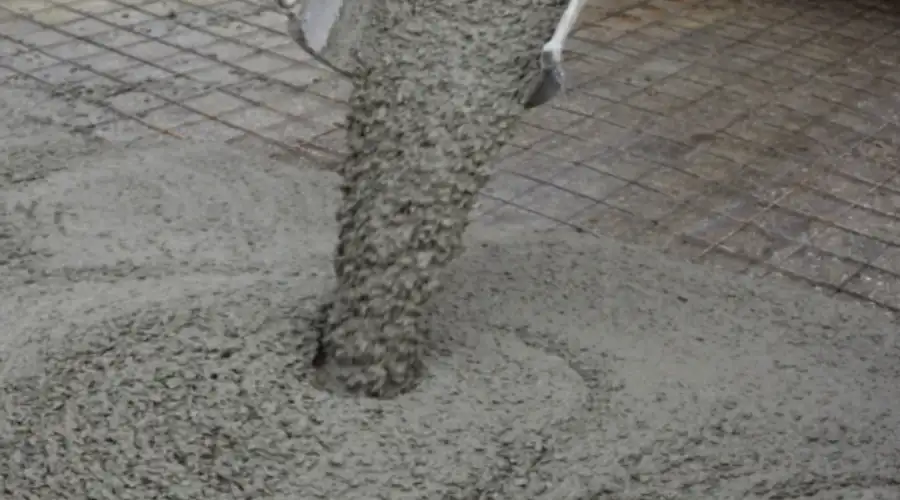
Water-cement ratios are normally higher than structural concrete but controlled to prevent excessive bleeding and segregation. Workability achieved without compromising the integrity of the lean concrete mix.
6. Durability
Not designed to withstand extremes in environmental conditions, or chemical attack. Intended for temporary or protected use, such as sub-bases or blinding layers.
7. Economic
Lower cement content, plus using local aggregates, makes it an attractive option for large-scale groundwork.
8. Shrinkage and Cracking
Generally it has lower cement content, this reduces the potential of shrinkage cracking and thermal cracking when compared to the richer mixes.
9. Placement
Typically can be placed and compacted with little effort, and often without sophisticated machines.
10. Environmentally Sensitive
Environmental Impact- since lower cement content can significantly reduce the carbon footprint and impact of construction activities.
Understand Property Taxes: Alongside concrete planning, calculate your yearly dues easily with our Property Tax Calculator for hassle-free budgeting.
Uses of Lean Concrete in Construction
Lean concrete appears in many applications, including:
- Sub-base for Foundations: A lean concrete gives a flat, solid bed for raft slabs, single pads, and footing blocks so the whole frame sits steady.
- Protection Layer: This thin layer serves as a protective barrier, preventing moisture from the ground from seeping into the main concrete pour and safeguarding the fresh concrete against sulfates and other harmful chemicals.
- Pavement Base: Usually placed under roads or shop floors, it boosts strength, resists cracking, and helps the surface last far longer than normal.
- Filling Voids: Lean concrete quickly levels out hollows, pockets, or rough spots in the subgrade, making the base even and reliable before heavier pours.
Trusted Builders in Chennai: Looking for professional guidance and reliable services? Check out our Construction Company in Chennai for end-to-end home building solutions.
Benefits of Lean Concrete
The key advantages of lean concrete are as follows:
- Cost Efficiency: A lower cement mix trims material bills, keeping spending in check.
- Material Conservation: Using less cement saves resources and eases supply chain pressure.
- Foundation Durability: The mix protects against moisture and soil chemicals that harm standard mixes.
- Simplified Application: Lean concrete flows freely, levels itself, and cuts back on finisher’s hours.
Method of Sustainable Construction: Cutting cement demand reduces carbon emissions and lessens project impact.
Preparation and Placement of Lean Concrete
1. Material Selection & Proportioning
- Cement, sand, graded stone, and potable water are required.
- Standard mix: 1:4:8 (cement:sand:aggregate) by volume, or as specified by the job.
2. Batching
- Weigh all materials accurately, using a weighing balance.
- Strict tolerances: cement ±4%; aggregates ±2%; water ±1%.
3. Mixing
- Add the dry materials to a mixer. Then, add water and any admixtures needed. Blend the concrete until its color and texture are even. It should be free from lumps.
- Although workability may be improved by using a higher water-cement ratio, practices should be in place to control segregation.
4. Quality Control
- Perform trial mixes to confirm strength (≥7 MPa at 7 days).
- Inspect for uniformity and adjust water or admixtures as needed.
5. Subgrade Preparation
- Subgrade compacted and graded to the required profile, moist and firm.
- Soft spots fixed prior to pouring.
6. Placing
- Concrete is transported from the batching plant by manual, chutes, conveyors, or Concrete pumping as per the convenience and site conditions.
- Concrete is evenly spread to the required thickness and shape, by hand or machine.
7. Compaction
- Compact immediately after placement with rollers/vibrators.
- Focus on joints, edges, and obstructions.
- Achieve at least 97% of trial section density (95% at edges).
8. Finishing & Curing
- Repair surface defects; start curing with water spray or compounds to prevent moisture loss.
- Cure lean concrete for at least 7 days. Then, place the main or structural concrete layer.
This streamlined process ensures lean concrete is produced and placed efficiently and to specification.
Lean Concrete Mix Ratio
Common lean concrete mix ratios include 1:4:8 and 1:5:10, where the numbers represent cement, sand, and coarse aggregate. Brick & Bolt also lists M5, M7.5, and M10 lean concrete grades with typical proportions such as 1:5:10, 1:4:8, and 1:3:6.
|
Grade |
Common Mix Ratio |
Typical Use |
|
M5 |
1:5:10 |
Basic levelling and filling |
|
M7.5 |
1:4:8 |
Foundation bed and sub-base |
|
M10 |
1:3:6 |
Stronger base or protective layer |
These ratios are general references. Actual mix design should follow project drawings, site conditions, soil condition, and engineer specifications.
How Lean Concrete Differs from Regular Concrete
| Feature | Lean Concrete | Regular (Standard/Rich) Concrete |
| Cement Content | Less than 10% of the total mix | 10–15% of the total mix for Standard concrete and more than 15% of the total mix for rich concrete. |
| Aggregate Content | High | Moderate to low |
| Strength | Low (5–10 MPa) | Moderate to high (15 to 30 MPa and more than that) |
| Workability | High | Moderate |
| Main Use | Sub-base, leveling, protection | Load-bearing elements, foundation |
| Cost | Lower | Higher |
Lean concrete is not strong enough for load-bearing or structural use. However, it works well for sub-bases and protective layers.
Estimate Boundary Costs: Plan your complete project cost effectively with our Compound Wall Cost Calculator and ensure your site is safe and well-defined.
How to Prepare and Place Lean Concrete
Lean concrete must be prepared carefully even though it is not a structural-grade mix.
1. Select Materials
Use good-quality cement, clean sand, graded coarse aggregate, and clean water. Avoid dirty aggregates, organic matter, clay lumps, and contaminated water.
2. Fix the Mix Ratio
Use the specified mix ratio from the drawing or engineer. Common ratios include 1:4:8 or 1:5:10, but the final choice depends on the application.
3. Batch the Materials
Measure cement, sand, aggregate, and water accurately. Brick & Bolt recommends controlled batching and quality checks during preparation.
4. Mix Uniformly
Mix the dry materials first, then add water gradually. The final mix should have uniform colour and texture without dry patches or lumps.
5. Prepare the Subgrade
Before placing lean concrete, compact the ground properly. Remove loose soil, debris, roots, water pockets, and weak spots. A poorly compacted subgrade can cause settlement later.
6. Place and Spread
Place the lean concrete evenly over the prepared surface. Spread it to the required thickness and profile using hand tools or mechanical methods.
7. Compact the Layer
Compact the lean concrete to remove air gaps and improve stability. For larger areas, rollers, plate compactors, or vibrators may be used as per site requirement.
8. Finish and Cure
Finish the surface to the required level. Start curing after the surface hardens enough. Brick & Bolt recommends curing lean concrete for at least 7 days before placing the main structural concrete layer.
Lean Concrete vs Regular Concrete
Lean concrete and regular concrete serve different purposes.
|
Feature |
Lean Concrete |
Regular Concrete |
|
Cement content |
Low |
Moderate to high |
|
Aggregate content |
High |
Balanced |
|
Strength |
Low |
Medium to high |
|
Cost |
Lower |
Higher |
|
Main use |
Base, filler, levelling, protection |
Beams, columns, slabs, foundations |
|
Structural role |
Non-structural |
Structural or load-bearing |
Regular concrete is designed to carry loads. Lean concrete is designed to support, level, protect, and prepare surfaces.
Where Lean Concrete Should Not Be Used
Lean concrete should not be used in structural members unless specifically approved by a structural engineer. It is not suitable for columns, beams, RCC slabs, load-bearing walls, retaining walls, or heavily loaded foundations.
It should also not be used where high durability, heavy traffic resistance, or chemical resistance is required unless the design allows it. For critical work, use the concrete grade mentioned in the structural drawings.
Common Mistakes to Avoid
Do not use lean concrete as a replacement for structural concrete. Its low cement content makes it unsuitable for load-bearing work.
Do not add too much water. Excess water can cause segregation, bleeding, and weak surface quality.
Do not place lean concrete on loose soil. The subgrade must be compacted and stable before pouring.
Do not skip curing. Even lean concrete needs moisture to gain strength and avoid surface defects.
Do not guess the mix ratio. Follow project specifications or engineer instructions.
Conclusion
Lean concrete is a low-cement, high-aggregate concrete mix used for levelling, filling, protection, and sub-base preparation. It is economical, easy to place, and useful below foundations, slabs, roads, and pavements. However, it has low strength and should not be used for structural members. Proper material selection, batching, compaction, placement, and curing are essential for good performance. For safe construction, always use lean concrete according to approved drawings and engineer recommendations.
FAQs
- What is lean concrete?
Lean concrete is a low-cement concrete mix with more sand and coarse aggregate than regular concrete. It is mainly used for non-structural work such as base layers, levelling, void filling, and protection below foundations, roads, and slabs. - What is the common lean concrete mix ratio?
Common lean concrete mix ratios include 1:4:8 and 1:5:10 for cement, sand, and aggregate. M5, M7.5, and M10 grades are also used depending on the project requirement. The exact ratio should follow the engineer’s specification. - Where is lean concrete used?
Lean concrete is used below foundations, raft slabs, footings, roads, pavements, industrial floors, and structural concrete layers. It is also used for blinding, surface levelling, void filling, and separating structural concrete from soil. - Is lean concrete strong?
No, lean concrete is not very strong compared with structural concrete. It is designed for base preparation and protection rather than load-bearing work. Brick & Bolt notes that lean concrete strength commonly ranges from about 5 MPa to 10 MPa. - Why is lean concrete used below foundations?
Lean concrete is used below foundations to create a clean, level, and stable working surface. It also prevents the main foundation concrete from directly touching soil, moisture, mud, and possible contaminants. - Can lean concrete be used for RCC slabs?
No, lean concrete should not be used for RCC slabs unless specifically designed and approved. RCC slabs need structural-grade concrete with adequate strength, reinforcement bonding, and durability. Lean concrete is mainly for non-structural base work. - How long should lean concrete be cured?
Lean concrete should generally be cured for at least 7 days, especially before placing structural concrete above it. Curing helps the mix gain strength and reduces surface defects. Project specifications should always be followed. - What is the difference between lean concrete and PCC?
Lean concrete is often used as a type of plain cement concrete for low-strength applications. PCC is a broader term for concrete without reinforcement. Lean concrete usually refers to a low-cement PCC mix used for levelling, filling, and protection.
 prasanthkumar
  wordpress-prod