

Bengaluru
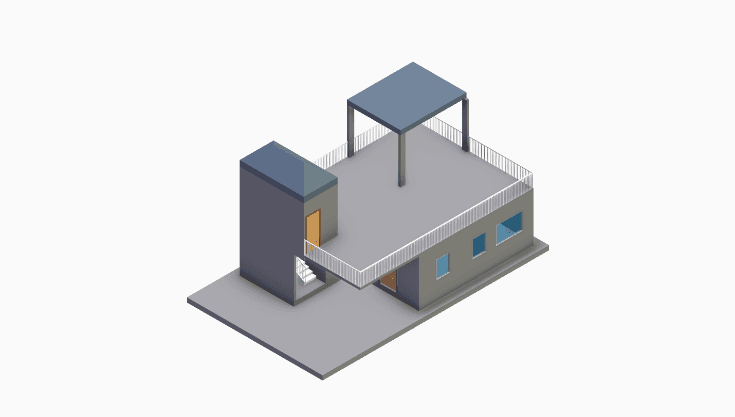
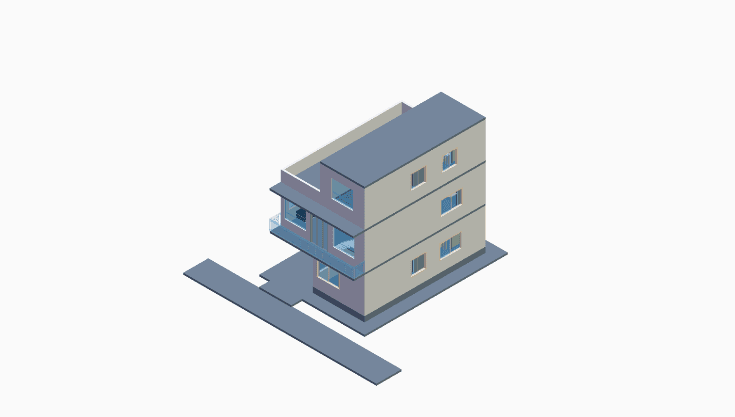
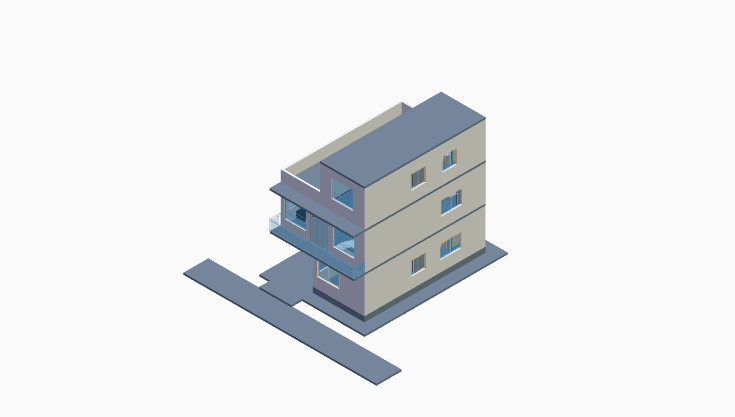
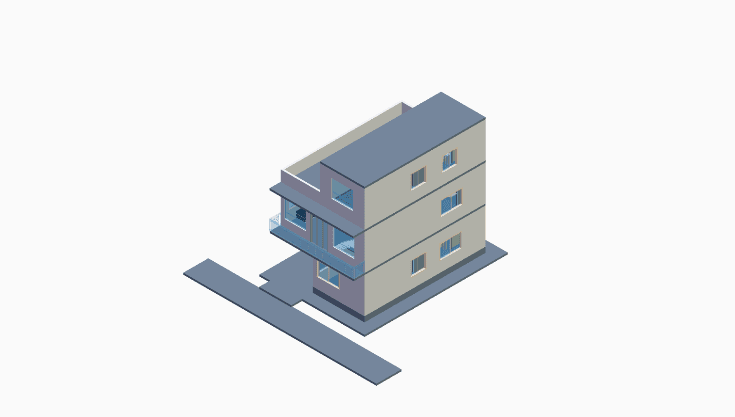
G+2 house floor plans give three habitable levels for joint families or owners planning rental income, across Bengaluru, Hyderabad, Chennai, Pune, and Delhi NCR. Ground floor handles living and parking. First floor holds family bedrooms. Second floor adds independent space for elders, guests, or tenants. Every plan is backed by ESCROW-secured payments and a 10-year structural warranty.

Filter by Plot:
Road Facing Directions:
Filter by BHK:
AllShowing 896 G+2 floor plans
30×40 | East Facing
50×80 | West Facing
30×40 | East Facing
30×40 | West Facing
20×30 | West Facing
30×80 | East Facing
G+2 construction cost depends primarily on plot size and city. Three levels add two slab-and-finish cycles above ground — cost scales with total built-up area. Metro cities run 15–25% higher than Tier-2 cities. The number you agree at signing is what you pay at handover. Brick&Bolt releases payments through ESCROW only after each stage is approved.
| Plot size | Approx. G+1 built-up area | Starting estimate |
|---|---|---|
| 20×30 | ~1,080 sq ft | |
| 20×50 | ~1,800 sq ft | |
| 30×40 | ~2,160 sq ft | |
| 30×50 | ~2,700 sq ft | |
| 30×60 | ~3,240 sq ft | |
| 40×40 | ~2,880 sq ft | |
| 40×60 | ~4,320 sq ft |
Want a detailed cost estimate for your G+2 plot and city?
Shortlist the right G+2 floor plan for your plot and family.
Tell us your city and plot size. A Brick&Bolt advisor will shortlist G+2 floor plan designs that match your site, walk you through BHK options across 3 levels, and give you a clear starting cost range at no cost to you.
Start with plot size if you know your land dimensions. Filter by BHK count if you know how many bedrooms your family needs across 3 levels. Choose facing direction or Vastu compliance if those matter. Each filter narrows the G+2 floor plan library to designs that actually fit what you have described.
A G+2 house has a ground floor plus 2 upper floors, giving 3 habitable levels on one plot. Each level adds floor area for bedrooms, family spaces, or independent rental units.
A G+2 home has 3 levels: ground floor for living, kitchen, and parking, plus 2 upper floors for bedrooms, family spaces, or rental units.
G+2 plans work from 25×40 to 50×80 and above. Larger plots of 30×40 and above give each of the 3 levels comfortable room dimensions and good natural light.
G+2 house plans in the Brick&Bolt library range from 2–6 BHK. The right count depends on your plot size and how you distribute rooms across 3 levels.
G+2 construction cost depends on plot size, package tier, and city. Three levels add two slab-and-finish cycles above ground — cost scales with total built-up area. Metro cities like Bengaluru and Chennai run 15–25% higher than Tier-2 cities.
A G+2 home typically takes 9–12 months from foundation to handover. Each upper floor adds roughly 1.5 months beyond a single-level build.
G+2 is well-suited for rental income. Ground floor for the owner and one or both upper floors as independent rental units, each with separate access.
Bengaluru needs BBMP or BDA sanction. Hyderabad requires GHMC or HMDA permission. Chennai needs CMDA clearance, Pune needs PMRDA sanction, and Delhi NCR requires MCD approval. Brick&Bolt prepares drawings and manages submission for you.
Main entrance should face east or north. Kitchen in the south-east corner. Master bedroom in the south-west. Staircase in the south, west, or south-west — never at the plan centre.
A G+2 home has 3 levels. A G+3 adds one more floor, increasing total built-up area by the plot footprint per level. Each extra floor adds structural cost but delivers a full additional living or rental level.
Brick&Bolt runs 470+ QASCON quality checks at every project stage. An expert team inspects each phase before the next begins, and all reports are logged in the real-time tracking app so you can follow along from your phone.
Your funds are held in an ESCROW-secured account and released to the contractor only after each stage is inspected and approved. You never pay in advance — every payment follows verified, completed work.
Yes. The price agreed at contract signing is what you pay at handover — no hidden markups, no material-cost revisions mid-build, and no surprises on the final invoice.
The warranty covers foundation, columns, beams, and slabs. If a structural defect appears within 10 years, Brick&Bolt addresses it at no cost to you.
Use the form on this page to share your city and plot details. A Brick&Bolt advisor will call you, shortlist matching plans, and walk you through options and starting costs — at no cost.

14,000+
Floor plans

10,000+
Homes Delivered

10+
Cities across India
10+
Cities across India
10,000+
Homes Delivered
14,000+
Floor plans
Share your city, plot size, and BHK needs. A Brick&Bolt advisor will shortlist G+2 designs and give you a starting cost at no cost to you.
1. What is a G+2 House Plan?
2. G+2 House Plan — Quick Reference
3. How a G+2 Home Is Laid Out
4. Who Builds a G+2 Home?
5. What to Look for in a G+2 Floor Plan
6. Building a G+2 Home with Brick&Bolt
7. Why Brick&Bolt
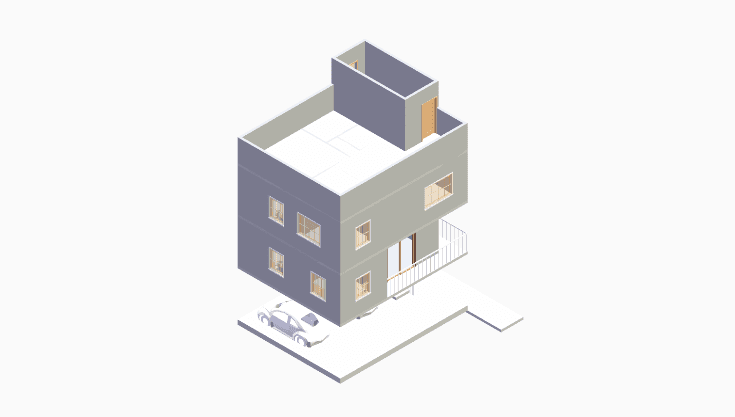
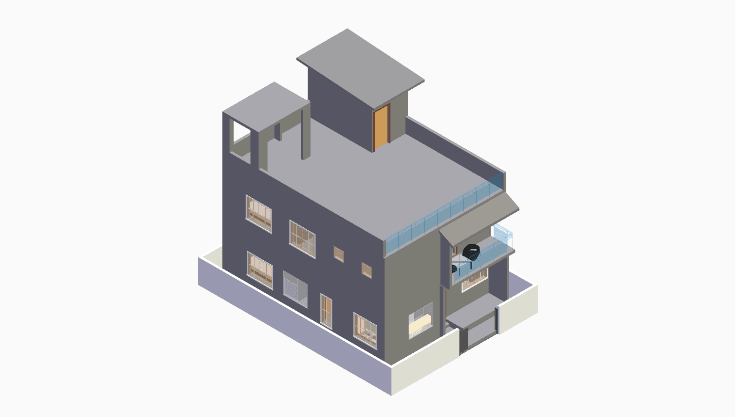
A G+2 house plan is a 3-level residential layout — a ground floor plus 2 upper floors — built on one plot. G+2 house floor plans give three habitable levels for joint families or owners planning rental income, across Bengaluru, Hyderabad, Chennai, Pune, and Delhi NCR. Ground floor handles living and parking. First floor holds family bedrooms. Second floor adds independent space for elders, guests, or tenants. Brick&Bolt's library includes G+2 designs across plot sizes from 25×40 to 50×80, covering 2–6 BHK configurations and all road facings.
Key specifications for a G+2 home across standard plot sizes and configurations.
| Detail | G+2 Reference |
|---|---|
| Total Levels | 3 (Ground + 2 upper floors) |
| Plot Range | 25×40 to 50×80 |
| BHK Options | 2–6 BHK |
| Build Timeline | 9–12 months |
| Ideal For | Large joint families, multi-unit rental, phase-by-phase builds |
| Vastu Staircase Zone | South or west wall — never the plan centre |
| Facing Options | All road facings — east, north, south, west, south-east, south-west |
Ground floor handles the main living areas — living room, dining space, kitchen, and parking. One or two bedrooms on the ground floor suit elders or guests who prefer to avoid stairs. The kitchen sits in the south-east corner.
First floor holds the main family bedrooms. Master bedroom in the south-west zone, second bedroom in the south or west. Both bedrooms ideally have attached bathrooms and direct staircase access from the ground floor.
Second floor adds an independent level suited for elders, grown children, or a rental unit with separate access. If rented, this floor needs its own kitchenette, bathroom, and independent staircase access from outside. If used by family, it connects to the internal staircase and serves as a quieter, more private living zone.
G+2 homes are chosen by families and investors with specific needs that this 3-level configuration uniquely serves.
Three levels accommodate three family units — parents, married children, and grandchildren or a second married sibling — each with their own floor for privacy while sharing the property.
Ground floor for the owner, first and second floors as independent rental units. G+2 is the configuration most commonly chosen by owner-investors who want meaningful rental income while retaining their own home on the land.
Families who build in phases — G+0 first, G+1 addition later, G+2 addition after that — choose this configuration when the structure is designed from the start to support additional floors without core reconstruction.
On a G+2 home where upper floors will be rented or occupied by separate family units, each floor needs its own entrance staircase — not shared access through another unit. This is more difficult and costly to add after construction; it must be in the original design.
G+2 brings the total built-up area to three times the single-floor footprint. Confirm your city's FAR permits this before starting design. BBMP in Bengaluru, GHMC in Hyderabad, CMDA in Chennai, PMRDA in Pune, and MCD in Delhi NCR each have specific FAR limits by zone.
At G+2, a lift is not mandatory but worth planning for. A lift shaft can be included in the original structure as a future provision — even if the lift itself is not installed immediately. Adding a shaft after the building is complete requires breaking structural elements.
On a G+2 home with multiple occupants, a single overhead tank may not give adequate pressure to all three levels simultaneously. The plumbing design should include a dedicated pump or separate water metre provisions for each floor.
A G+2 structure carries three slab loads on the foundation and columns. The column grid, footing sizes, and rebar specification must be designed by a structural engineer for the three-floor load — not simply scaled from a G+1 drawing.
Brick&Bolt builds G+2 homes across Bengaluru, Hyderabad, Chennai, Pune, and Delhi NCR under a fixed-price contract. A G+2 home typically takes 9–12 months from foundation to handover. The number agreed at signing is what you pay at handover — no mid-build cost revisions.
All payments are held in ESCROW and released to the contractor only after each stage clears Brick&Bolt's 470+ QASCON quality inspections. Every home comes with a 10-year structural warranty on foundation, columns, beams, and slabs. Browse Brick&Bolt's library of 14,000+ architect-curated G+2 floor plans, shortlist a plan that fits your plot and city, and use the form on this page to get a starting cost estimate at no cost.
Six things that make Brick&Bolt the right choice.
Browse plans across every standard plot size, BHK count, floor configuration, and road facing. Every plan is architect-curated and drawn to actual buildable dimensions — not generic illustrations.
The number in your contract is the number you pay at handover. No mid-build material price revisions, no scope changes to the bill, no surprises on the final invoice.
Your funds are held in ESCROW and released to the contractor only after each stage is inspected and approved. You never pay in advance — every payment follows verified, completed work.
An independent team inspects every construction stage against 470+ quality parameters. Every inspection is photo-documented and uploaded to your project app in real time.
Every Brick&Bolt home carries a 10-year structural warranty on foundation, columns, beams, and slabs. If a structural defect appears within that period, Brick&Bolt addresses it at no cost to you.
One point of contact from plan selection to handover. Your relationship manager coordinates approvals, contractor work, quality inspections, and payments — you are not chasing multiple vendors separately.